
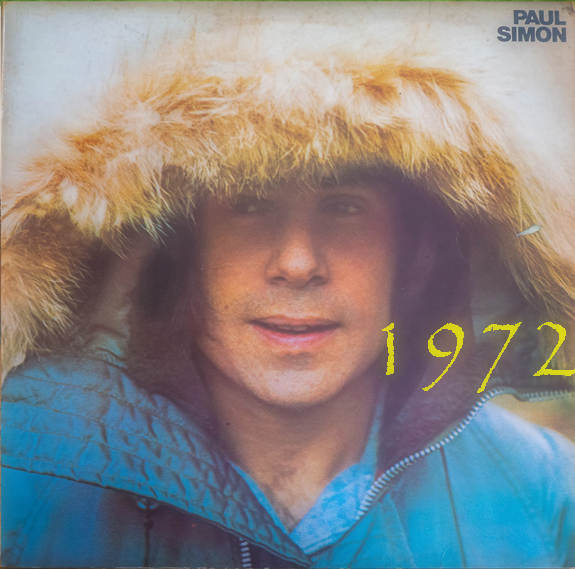

Paul Simon – Paul Simon
Paul Simon released his second solo album in early 1972, having spent two years moving forward from the breakup of his partnership with Art Garfunkel. Looking back some fifty years from the release of this album you can see the template for Simon’s love of using varying styles of music gathered from all over the world. There is a sense of release from the constraints of working as a duo in this work. It is intensely personal, as is most of Simon’s writing. The album represents a crossroads for him but one that he negotiates with a fresh impetus to his writing, but most especially to his musicality. This has a feel of a great starting album from an exciting new artist, one not fully developed, but one of exceptional promise of what is to come. It does not sound possible he could have made this with Garfunkel. This is a fresh start and one of the best albums from the early 1970’s band of singer songwriters. Simon writes a new CV with this album, and he will deliver what he promises on here with some remarkable work to come, culminating of course with Graceland. The seeds of being able to construct the Graceland album are contained here in ‘Paul Simon.’
The album has a strong start by any standards. Few white musicians, if any, had got to grips with using reggae influences in their work. Simon pulls this off on ‘Mother and Child Reunion.’ Great lyric but as so many have already gone over the chicken and egg scenario let us concentrate on the musicality here which you tend to forget was remarkable for the time. The isolated drum beat start takes us right into ‘Graceland’ territory some fifteen years later. An effective device that Simon will exploit effectively on his journey into world music. Simon at this point realizes that if he is to succeed in adding authenticity to his attempts at varied musical styles then he must travel. The music needs to envelop him and of course we see that in its full fruition with ‘Graceland.’
Occasionally a band of musicians can effectively recreate music that is outside of their culture, but it is rare. Simon here appreciates that, so he travels to Dynamic Sound Studios, Kingston, Jamaica to record just this one track – what the CBS accountants’ thought is anyone’s guess. It was worth the effort and expense as this captures the spirit of the reggae rhythms as fine as any white artist has achieved. Granted, he uses the finest reggae session musicians CBS can afford, but this is still resolutely a Paul Simon track. He will go on to absorb so many influences over the years to come. A track of pure joy and musical energy, with a fabulous percussion track underpinning the whole musical journey. Unusually for him at that time, but not of course for his later work, was that he recorded the soundtrack before the vocal had been written. I remember on first listening I was surprised with Simon’s vocal – it sounds quite affected as opposed to his standard vocal style with Art Garfunkel. It works beautifully on here however, a New York drawl merging into a Jamaican rhythmical lilt. A feature of this album is how Simon is experimenting with his voice, as he will continue to do over the years. It is as if he is trying to prove that although Garfunkel had the sweet high voice, he also could produce a gorgeous vocal if only you could hear him – now he sings alone with nowhere to hide.
An interesting singer in the credits is Cissy Houston who had a daughter that went on to make quite a career for herself before her tragic early death. ‘Mother and Child Reunion’ was a decent worldwide hit for Simon which must have been a relief – number 5 in the UK. Of interest because of his later journey into world music is that this track was number one in South Africa.
Ok then, we must ask what does the song mean? Many discussions on this of course but I like to put it as a divorce/estrangement scenario. Having said that, the chicken and the egg must die to be together again, so as the song says, maybe just ‘let it be.’
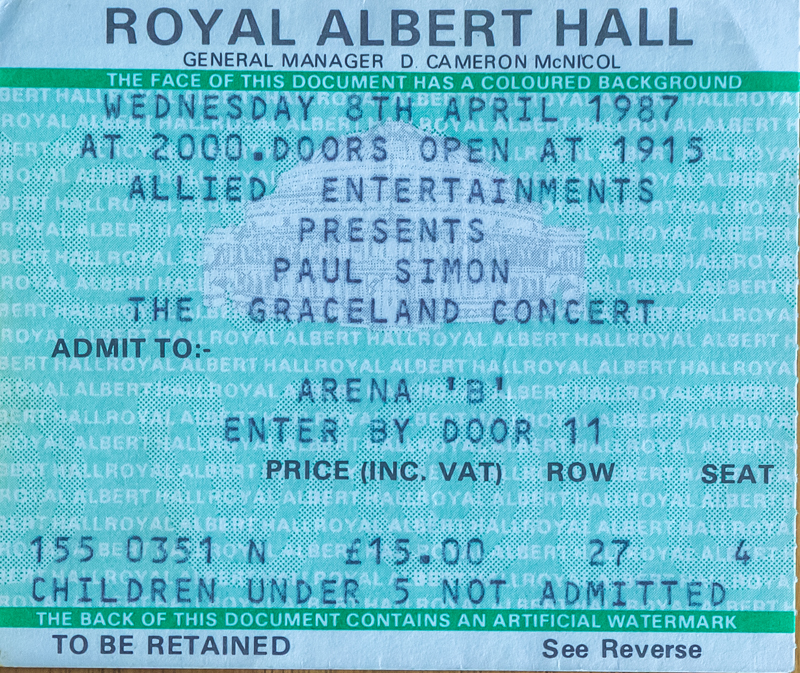
So, we are now off to Paris where Simon records ‘Duncan’ with old friends Andean group Los Incas who will later be known as Urubamba when they play live with him over the next few years. Los Incas he knew from early days in Paris, so it is appropriate they record together with Simon here. The band were part of one of Simon’s first forays into world music with ‘El Condor Pasa.’ They are the perfect accompanists to Simon on ‘Duncan.’ They were on stage with him the first time I saw him in concert. That was a night that was marred by two theatre employees chattering endlessly away behind us about Art Garfunkel being in the building ready to come on to restore the duo again. Bit too young and retiring to have said something but definitely my older self would have told them to please shut up.
‘Duncan’ was the first track I heard from the album. Back in the day there used to be such a thing as record stores – yes children, shops that sold music. Even larger general stores such as Woolworths had a record department. It was in one of these – Boots the Chemist actually – that I first heard this much anticipated album. I was a bit obsessed to say the least about when this new solo offering was going to appear. I must have driven the staff mad in the shops continually asking for an update on the release date. On my lunch hour it was my custom to visit the record stores and have a good browse through the racks, even taking advantage of the listening booths in shops such as Reidys in Blackburn to try before I bought – usually just skipping out unseen before I felt obliged to make a purchase.
Anyway, this lunch hour I could hear this captivating South American flavoured tune. Then, surely that is Paul Simon’s voice. I just stood there spellbound. If the rest of the album was this wonderful then what a treat was in store. Problem was it wasn’t payday; I had no money in those pre-credit card days to buy it. I was flustered as I self-consciously went to the young lady at the counter to confirm that this was indeed THE album. She confirmed it was but only a pre-release copy sent to trial in the store – a couple more weeks at least before general sale. Oh, the pain and suffering, but at least I now knew when, so that I would have the money. I must have looked a right gibbering idiot at the counter but then I suppose we all have our moments. About twenty years later that same young lady became my close working colleague and lifelong friend. Fortunately, she recalls nothing.
Back to ‘Duncan.’ Musically it has a foreboding feel to the tune and the lyrics. Although the young man seems happy with his experience, the tone of the song tends to make me feel that all will not turn out for the best. His observation ‘that sweet memory lingers’ suggest his salvation was short lived. His name Lincoln Duncan suggests the assassinated President and the murdered King in MacBeth – not boding well for the poor boy. It is a beautifully observed tale though, one of my favourite Paul Simon songs – such an atmospheric creation by him. The boy repeats the thought ‘I know, I know’ over again as if to say, ‘I should have known better.’ Maybe he was OK but there has been no sequel.
Just as an aside – I find it hard to get past the line about his mother being a ‘Fisherman’s Friend.’ It is on the face of it a clever line but as a Northern Englishman a ‘Fisherman’s Friend’ will always be a famous warming throat sweet produced ‘up North’ in their millions. Simon is familiar with the UK and particularly the Northwest, having written ‘Homeward Bound’ there, so I find it impossible to believe that he was not aware of this. Still, he used the term anyway, but unfortunately, I see the ubiquitous packet of sweets every time I hear the line. Maybe it’s just a Northern sense of humour and I should get over it.
After such a strong start the album has a quality control break. ‘Everything Put Together Falls Apart’ sounds like a bleak reworking of ‘Song for the Asking’ and ‘Run that Body Down’ is an uninteresting insight into the domesticity of the Simon household. Neither should have seen the light of day. ‘Armistice Day’ starts a theme that lasts for the next couple of albums of Simon’s concerns about the state of the Union. These were troubling times in America. Simon was a concerned citizen and not slow at making his point. Not one of his great songs but redeemed by some superb guitar work.
We flip the vinyl, and things take a considerable turn for the better. The third song on here to become a classic Simon song is ‘Me and Julio Down by the Schoolyard.’ This will open most Paul Simon concerts over the next decades and is a joyous celebration of him using other world influences in his music. The lyrics are obscure, deliberately so. In the same manner that his namesake never tells us definitively who is so vain, he will not let us in on what the mama saw. Musically it is Latin, or reggae influenced but the lyric refers to Corona, a part of Queens, New York, so he is drawing on the multi-cultural aspect of his home city. Not one of his most profound lyrics but playful and set to a memorable soundtrack. One of his most beloved songs.
Simon returns to his disenchantment with the powers that be in the States with ‘Peace like a River.’ An interesting song with not the first Biblical reference we get from him. He will return to the theme with much more power and effect with ‘American Tune’ on his next album, but again the seeds are sown.
‘Papa Hobo’ and ‘Paranoia Blues’ are solid songs with intriguing lyrics combined with some complex and gorgeous musicality, particularly with Stefan Grossman’s slide guitar on ‘Paranoia Blues.’ Not quite sure how popular Simon might have been with the New York tourist board with this one, but I suspect it stems from an unpleasant encounter. Simon stretched his vocal range and style on these tracks and the result is some fine work, underrated in his catalogue.
‘Congratulations’ (No, not the Cliff Richards ditty) ends the album. I am sorry but this song may be quite a fine one, but my vinyl copy was badly pressed and plays this at a slow speed and totally ruined it forever for me. I should have taken it back to the store, but I was shy and retiring in those days. So, for me the album always ends with ‘Paranoia Blues’ and maybe better for that.
‘Reunion,’ ‘Duncan’ and ‘Julio’ are the only songs from this album that really ever feature in live performance. That probably tells you that Simon also views this album as a stepping stone. He tries out so many things on here both musically and lyrically with some exceptional high points, others with varying degrees of success. His next album ‘There Goes Rhymin’ Simon’ successfully fuses these ideas together and is a much more complete package as is ‘Still Crazy’ which is a sophisticated masterpiece. Despite its flaws I always enjoy this album, and it can rightly be included in a run of superb music he produces through to the mid-seventies. Simon was interviewed at the time and made the point that although he was in his thirties all great composers did their best work in their forties. The groundwork he was doing here was vital for what was to come.
Yes, the young man did fulfil his promise.

Please Enjoy my Travel, Music & Ancestry Books on Amazon – FREE on Kindle Unlimited https://bit.ly/bookneal
For more life, times, and music from this golden era
CLICK ON IMAGE BELOW TO GO TO my AMAZON Page

 French Travel Books - France, Paris, Provence & French Food & Wine