
This is a well known documented story from Cornwall of late Georgian Times – It is only when I did the family research that I discovered it related to direct ancestors.
Please Enjoy my Travel, Music & Ancestry Books on Amazon – FREE on Kindle Unlimited https://bit.ly/bookneal
Taken from my Family Ancestry book – A Bullet for Life


The people of the remote county of Cornwall have long had a tradition of having an interest in superstition and the ‘unexplained’. Even today there is still to be found by the curious tourist a thriving trade in visitor attractions that trace their origins back to such matters and times. Thankfully at least the Cornish people have by Thomas’s day in the early 1800s finally stopped bringing potential witches to trial but that does not stop children to be still chasing and harassing old ladies that ‘looked the part’ through the streets of Truro. Education comes slowly to the poor of the parish and the parents of these children see no harm in upholding the long traditions of this isolated and independent county.
The year is now 1821 and in May of that year we find that Thomas Ashburner is in a dreadful state both physically but more especially mentally. It is now that our Surgeon L H Potts re-joins our story by taking it upon himself to pen an extraordinary and detailed letter to the Royal Cornwall Gazette. In it he first paints a picture of the Ashburner family’s home circumstances.
Thomas is to his regimental surgeon a person that ‘no man has deserved or enjoyed greater confidence and respect from men or officers than he’. It is a fine tribute to a soldier that has now served in the army for some 17 years and suffered greatly in his service to the King. On his visit to the house Potts sees in the room Edward 17, Thomas 16, Jane 6, and John 3 and Henry ‘a fine infant’ of 7 weeks. The previous son also named Henry has died in infancy the year before the new baby is born. He affectionately refers to the little five year old Margaret as Peggy, denoting that he has gained a closeness to the family. He has though grown to have severe reservations about the two boys who have come back to family fold from their grandmother in Preston, Lancashire. She is a woman who he says kept them in a state of ‘immorality and hardihood’ and they appear to him to have come back to their real family as feral children and completely out of control. This he says is after he had repeatedly remonstrated with Thomas to go to Lancashire and bring the two boys out of the clutches and influence of their neglectful grandmother in Preston. Surgeon Potts does appear to have gone well beyond the normal work definition of a Regimental surgeon but for whatever reason he feels his opinion should be heard by the family and there is no doubting his genuine concern for the Ashburners. From his writings we can gather that the discipline applied to the two boys on their return to try to ‘correct them’ is extreme. They continually run away from home to escape a situation that was alien to them and perhaps seems more disturbing than being back in the mill system in Preston. The elder boy Edward is being employed by a Mr Guthrie in Kenwyn Street, Truro as a currier – one who starts the finishing process to leather after it has been tanned. Whether this disgusting trade of a process that was appallingly dirty and coupled with the acrid stench of the tanning process filling the putrid air is any more cheerful to Edward than the cotton mill we do not know. My family back in Lancashire of the same time period were also engaged in this tanning process and it is not something to read about before enjoying a fine meal. Let us move swiftly on.
Potts then relates that there are lately sinister goings on at the army depot i.e. the Regimental Armoury that Thomas works and appears to live in when on duty. (Photo at start of chapter) There are several instances where windows have been smashed and mysterious noises and other breakages have been occurring while Thomas has been on the premises.
On 19th April Captain Forster and Potts find Thomas very ill and mentally disturbed due to the mysterious events that have been continuing for some time. He arranges for the family to move away from the depot/house and he separates Thomas from the family, taking him to his own home. Here he makes a good enough recovery to go back on regular duty in early May. He explains about the dreadful injuries the soldier sustained in the Peninsula campaign in Portugal and that Thomas is constantly subject to fits and depression. Potts feels that the balance of this man’s mind is clearly disturbed and he points out that Thomas is most certainly a believer in the superstitious powers that he is convinced are at work against him. However not long afterwards on the 4th of May Surgeon Potts is urgently sent for. He comes to see Thomas prostrate in his regimental stores , finding him insensible and convulsing with all gathered around him fearing that he is dying. Thomas briefly comes around before falling into floods of violent tears. He is fully convinced his death is imminent and in fact Thomas says that he wishes to die. Potts once again conveys him to his home and Thomas has constants fits on the journey to the house and is oblivious as to all those around him.
If you are of a nervous disposition and visiting the doctors even under our normal modern day circumstances fills you with dread then look away now.
Once he is back at Surgeon Potts house Thomas undergoes treatment that would have been very common and familiar to people of the time period. It seems to be quite horrific and a seemingly useless procedure to us today, one that causes unnecessary suffering to the patient. Thomas is bled by Potts, a fairly routine procedure of the time that is thought to be helpful in purging the body of some toxins and infections. For us that are used to the medicines of today the obvious result in most cases we would expect to be simply a weakening of the patient. Potts also applies to Thomas’s head a procedure to cause a blister and again this is thought to be a way of removing infection and ‘badness’ in the patient’s body. To achieve a blister of this type on the exposed skin the doctor will quite incredibly apply a caustic substance such as mustard powder to the skin and leave it to take effect. Once a blister had been fully achieved to the satisfaction of the doctor it will be drained, again with the thought that this will extract from the body the impurities that are deemed to be causing the patient to be unwell. This to us would seem to be the worst possible treatment that Thomas could have received in view of the condition he appears to be in but such were the treatments of the times. This was the curative prescribed and no one would have been surprised or objected and probably Thomas was not in a position to do so anyway.
Surgeon Potts unbiasedly describes Thomas as ‘becoming much better’ after this ordeal at his hands. Perhaps the excruciating pain and suffering of the actual treatment he has endured takes Thomas’s mind off the mental turmoil he is clearly in. Thomas continues to be cared for by Potts and also by some of the non-commissioned officers of the regiment – ones that Potts has vetted and is happy to feel that they do not believe in ‘superstition, witchcraft and the evil eye’. This paints quite some picture of the mind-set of the town of Truro back in Georgian times. Thomas is clearly a deeply troubled individual who has been caught up in the views and beliefs of life in these times as well as suffering from the pain and after effects of his old wounds – no doubt we would today group his sufferings under the banner of post-traumatic stress disorder.
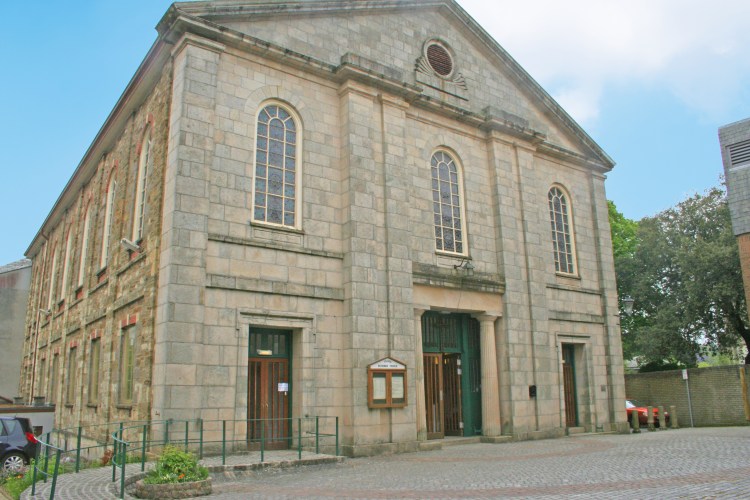
Sometime later Surgeon Potts is called over to the premises of a baker named Trebilcock, possibly in premises located in Union Place near to the Methodist or Wesleyan Church. It is here that Thomas and his family become members and they will have some of their children baptized in the church. It is in an upstairs room above the shop that Potts now finds the younger Thomas Ashburner lying on a bed in a state that apparently shows him having a fit and in some considerable distress. Potts does not believe this to be the true case and sends his companion Sergeant Sampson off to get a horse whip to encourage Tom to recover from this perceived deception. Fortunately for young Tom the efforts of Sampson only results in him finding a small cane but this implement Potts now uses on young Tom. Immediately the beating does have the desired effect of rousing him from the bed and the ‘fit’ miraculously disappears from his body. Potts certainly does have his methods.
Potts feels that Tom’s father is on the verge of melancholy madness because of his firm belief that he is being plagued by supernatural superstition. Potts want to disprove once and for all to Sergeant Thomas Ashburner that this understanding of events is all pure nonsense. Young Tom Ashburner he feels is the perpetrator of this ongoing persecution of his father and wants a confession from him but even the cane does not produce this from the boy.
It is later on in the same week that the boy, with the promise of a pardon, confesses that it has indeed all been his doing and claims his other brother is not in any way involved in the perpetrating of this mischief. The Truro ‘ghost’ is revealed to be Thomas’ son. Young Tom clearly has a familiarity with the superstitions of Cornwall and many of the things he has done over these past few weeks will have been familiar to ones in Truro of a superstitious disposition. He breaks windows around his father, pulls up gooseberry bushes and leaves coins at the scene of his mischief. Tom breaks a looking glass belonging to his father in one of his attempts to unsettle him and he places a grouping of stones in a disturbing format. Young Tom is obviously a boy that has a clever and devious mind and is lightning quick with his hands and reactions as he goes on to relate that most of the mysterious stone throwing and noise making was actually carried out by him even with others around him in the room as he takes advantage of brief moments of distraction with his quick hands. Nobody had spotted any of this at the time and he made no mistakes carrying out all this plaguing of his father until he tries to fool Potts with his attempted mimicking of his father’s illness.
Young Tom Ashburner said he does all of this because of his harsh treatment by his parents in attempting to change his pattern of life and particularly by what he felt was severe and unfair treatment by his mother. He claims that she often beat him severely, even with a poker. He paints a picture of his mother ‘lying in’ while the rest of the house are up and about doing their duties for the day. By implication she is making the children do the all chores of the house. When she rises he says that he is beaten and he goes on to claim that she draws blood by the implements of punishment that she uses on him. It seems to be a family in complete turmoil at this point. There would appear to be little doubt from the account of Potts that due to their appalling start in life the two boys recently returned from Lancashire are extremely wild in behaviour and their manners quite disgusting to parents who have become a respectable and valued part of the community. Thomas and Jane are at a loss as to how to reform them and as is the case in these times have resorted to physical correction as probably the first and only resort. It is a sad picture of a fractured family that also had a separate new group of children that had grown up with them from birth. That as a family group they will be able to recover to a degree and at least some members including the parents go forward with relative success is remarkable.
To conclude his letter on this extensive and detailed account to the local newspaper Surgeon Potts calls on a multitude of local characters for supporting evidence to confirm his findings. He makes witnesses attest to what they have observed and formally presents further evidence as fact. He has the backing of Sergeant Major Roger Candy of the regiment who attests that he was present when a disturbance by throwing stones occurred at the home of Thomas Ashburner. Others were present and Roger Candy immediately chases after the culprit but he has stealthily removed himself from the scene. Young Tom is found on the premises though by Edward Milford and Roger Candy and at that time denies all, but the evidence and his eventual confession make it all clear. This seem worthy of one of Agatha Christie’s Poirot or Miss Marple stories. It seems from all the evidence gathered and from the confirmation of the townsfolk that it is all absolutely true. Potts finishes his account with a tirade against superstition and the uneducated ignorance of the people who he trusts will now make substantial efforts to improve themselves with the new enlightened knowledge of the times. The witnesses Potts call are all clearly upstanding citizens of the town or members of the Regiment – Roger Candy for instance served for some 40 years, even longer than Thomas Ashburner. He goes a step farther and calls on Captain Forster of the Regiment as a supporter of his views about the inadequacies and ignorance of the Truro population that they are protecting and living amongst.
It is a quite amazing story and certainly one you do not expect to find to have taken place in your own family. Surgeon Potts comes across as a conflicting character, undoubtedly he has a very inflated opinion of himself and would be looking down his nose at the ‘ignorant’ population he finds he has to currently share his space with. On the other hand he clearly has a very high regard for Thomas Ashburner as a soldier and a man and did everything he felt was within his power to aid his recovery both physically and mentally. His interest in bringing the family together by recovering the two boys from immoral Preston did unfortunately backfire and he perhaps regretted his interference in view of the consequences. This traumatic and divisive episode passed and the family moved on and we head towards Victorian times and closer to the meeting of the family lines.
Thomas is my wife Lorna’s 5th Great grandfather born in Tatham Lanacashire but ended a long life near St Austell in Cornwall. She is glad he survived his eventful life.