Please Enjoy my Travel, Music & Ancestry Books on Amazon – FREE on Kindle Unlimited https://bit.ly/bookneal
Seafront light at Lyme Regis Dorset
Lyme Regis holds special memories for us. We first visited on our honeymoon and returned shortly afterwards with our toddler son. For us now, it is a short trip to the south coast from our Somerset home, but back then it was a good six-hour journey from the North of England. This West Dorset coastal town is a firm favourite with us and the thousands of visitors that come every year.
Lyme Regis is often used by film and TV producers to depict period drama locations. Even if you have never visited you will surely be familiar with some of its landmarks. It has a charm but not a faded one – Lyme Regis is a vibrant modern town that cherishes its past. It requires little disguising of the 21st Century to be transformed into a film location.
Lyme’s claim to fame though goes back far earlier than the advent of TV and Film productions. This high spot of the Jurassic coast is known the world over for the quality and quantity of the fossils found on this stretch of coast. For this the thanks for starting the discovery of this treasure trove goes to a local girl Mary Anning, who is now commemorated with a sculpture on the seafront. From around 1811 she was involved in the discovery of an extraordinary range of fossils that attracted worldwide attention. One of the reasons to come to Lyme Regis for many people is to stroll the extensive stretch of coast in the hope of discovering that latest dramatic find. If you would rather find them in a shop or on a sale table outside one of the seaside cottages along the seafront or in a winding street, then you will be spoilt for choice. The fossil industry is still thriving here. I suppose the provenance of some will be dubious but an enjoyable hour or two can be spent searching for a small treasure.
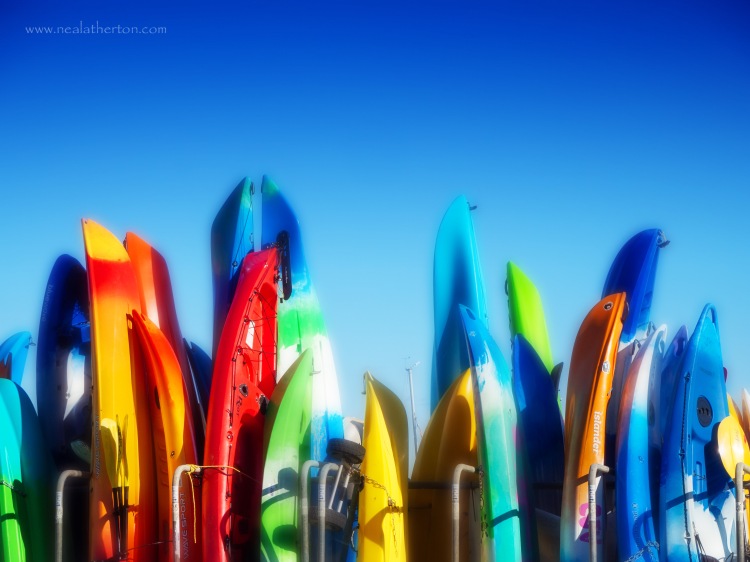
Colourful Surf boards in Lyme Regis Harbour Dorset
Lyme is blessed with many independent shops, antique shops and local food outlets. You will not starve here and my wife Niamh settled on a Chinese takeaway from Red Panda, located on the raised section of Broad Street just before reaching the seafront. Exceptionally fine it was. However, I wanted Fish and Chips but the most popular one was really busy. But, I waited, and waited, and waited. By the time I was served Niamh was long finished eating and ready to move on.
Broad Steet is indeed broad but it also rises steeply away from the seafront. It is worth the climb, up one side and down the other taking in the shops, looking down the old alleyways to see if there are more gems to be found. Depending on how much you enjoy shopping and browsing this could take some time.
It was a ideal time to wander over to the Cobb once again as the sun started to slip away.
Before that thought we headed up to the old church of St Michael the Archangel located on the cliff higher up Church Street from the end of Broad Street. Mary Anning is buried here and the views back over the old town that it dominates are worth the climb.
The Cobb is the most well known and filmed feature of Lyme Bay. Built centuries ago and reinforced over the years this solid structure has provided the harbour that made possible the ability of ships to land here.
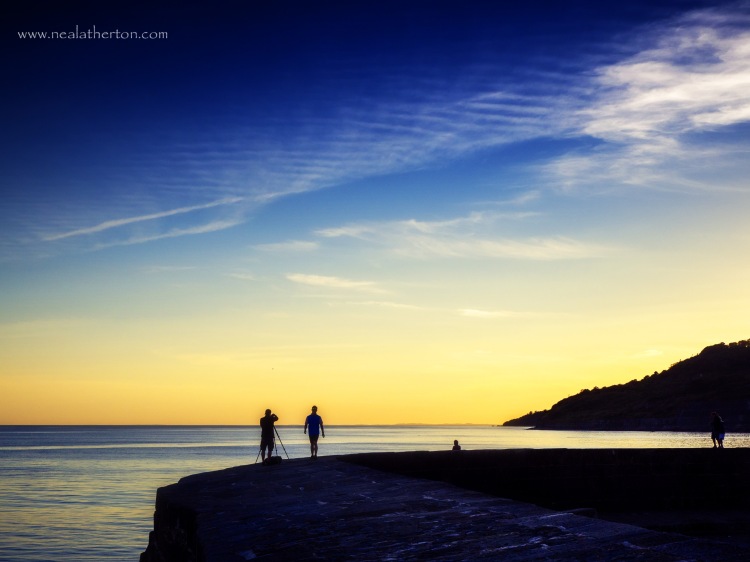
Photographing the evening light on Lyme Regis Cobb
I saw the Cobb recently featured once again in a TV period drama. However, it will be forever associated with the film French Lieutenant’s Woman starring Meryl Streep and Jeremy Irons. Much of the film was shot in Lyme but the dramatic action scenes filmed on the Cobb are memorable. Jane Austen also used the Cobb in her novel Persuasion. The town and the Cobb are perfect for conveying a sense of place and time in filming of these novels.
The Cobb is a quite extraordinary structure and one that retains its character. There are no unsightly safety features desecrating this ancient landmark. For that reason care needs to be taken if you decide to make the walk to the end of the pier. The Cobb is wide but it has a dramatic camber. Yes, by all means stroll but do not daydream as the camber will take you inexorably towards the edge and the drop into the sea. It is also prone to having waves break against it, throwing spray or even the residue of the wave over the walkway. It is not to be attempted in any kind of poor weather. If you keep your head and watch your feet you can be rewarded with fantastic views and some great photography possibilities. I find you do spend a fair amount of your time on the Cobb worrying about some of the more brave or foolhardy ones taking risks to get that extra view or photo opportunity. One of England’s more dramatic man made edifices but take care – sea to your right and a long drop to the harbour floor to your left.
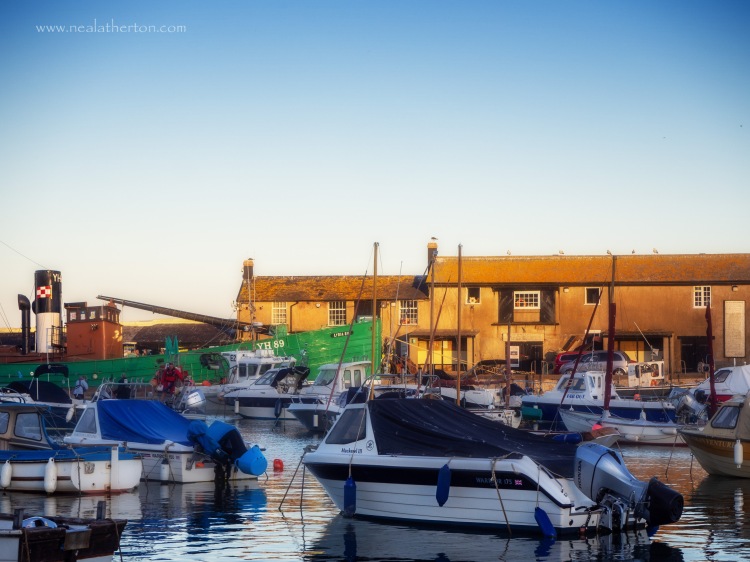
The harbour at Lyme Regis in Evening Light
The harbour that the Cobb facilitates is packed with all kinds of boats and vessels. So many in fact that you wonder if some could ever make the journey to the harbour entrance. It seems possible to reach the other side of the harbour by stepping on the boats. Again, this a wonderful spot for photography, especially in fading summer light. At low tide we walked across the sand to the other side, slightly safer and lower than the Cobb. It was pleasant to sit there overlooking the Cobb and the swaying boats in the harbour but remembering to keep an eye on the incoming tide. The sun sets in a colourful swathe of light on the seafront, changing the colour of the line of bathing huts. Swimming and water sports continue into the darkness until you can see no more but still hear the voices and laughter coming from the sea.
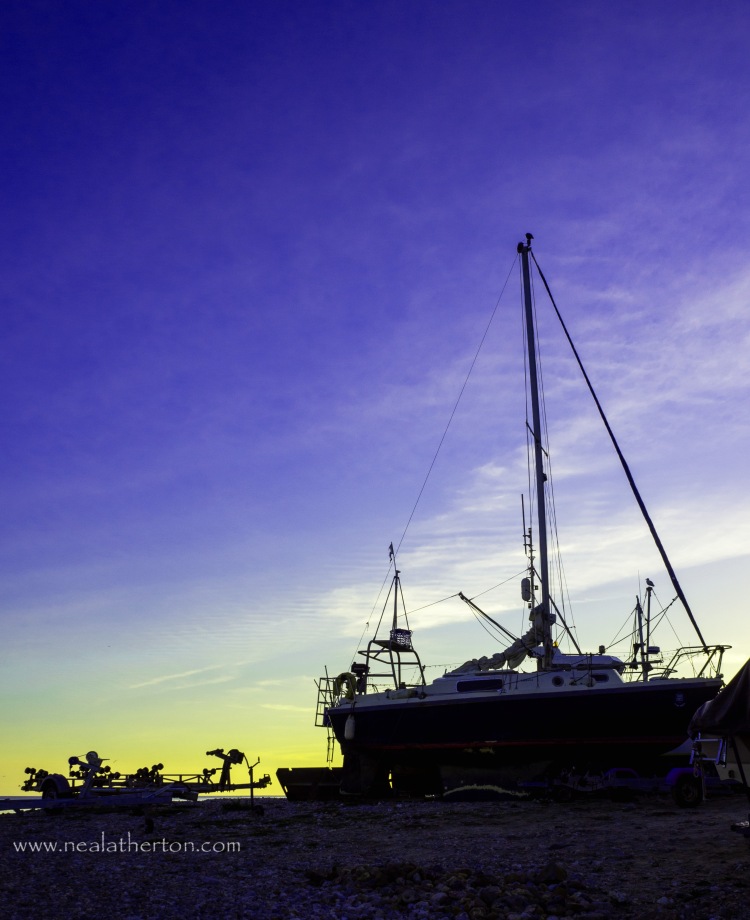
Sunset over a yacht on Lyme Regis beach
It is time to take our leave. Walking the incline from the beach to the car park to Holmbush Car Park at the top of Cobb Road we take time to turn and take in the late evening view. The harbour lights reflect into the harbour and sea, making a peaceful, engaging sight to bring our visit to a close.
We linger but eventually turn and promise another visit soon.
Dramatic Sunset at Lyme Regis DorsetOUT NOW on Amazon for Kindle, Kindle Unlimited, paperback & hardback
This destination is one of our favourites – Northern Burgundy. It is a much neglected part of France from a tourist standpoint. To the north is Champagne with its landscape of gently rolling vine covered hillsides. The towns of Champagne are steeped in wine making history and the money coming into the area keeps it looking expensively maintained. It is an area that will always delight but just to the south is a less travelled region that is more warts and all in its presentation. The towns are just that little more untouched and authentic, the countryside rural and pure, not quite manicured to within an inch of its life as in Champagne. It is a region that produces fine wine, wine that other than Chablis rarely reached the supermarkets of the UK. These wines are well worth finding when your car has an empty boot. They are astonishingly good value.
We are going to start this leg of our road trip in a small village in the French department of Côte-d’Or, in Bourgogne-Franche-Comté. When you are asked to name one or two films set in France then the usual suspects come to mind. ‘A Good Year’, ‘Midnight in Paris’, ‘Mr Bean’s Holiday’. If I ever asked the female friends of my wife then they always seemed to come up with ‘Chocolat’, the film based on the novel by English Author Joanne Harris. Starring Johnny Depp, Juliet Binoche and Judi Dench it was a popular addition to the genre. I have to say at the time of our travels I had never seen it of knew anything of the storyline. I certainly was not aware of the film location in France. Flavigny-sur-Ozerain is the setting for Chocolat and that is the village where our bed and breakfast accommodation is located. Somebody told me that film fact by the way, because you would not be aware of it when you are staying there. This rural village is just that and resolutely determined to stay one. There are no indications that it has a claim to fame, no signposts designating the places featured in the film. Certainly, there are no souvenir shops. I doubt you could even buy a bar of Chocolat. This would never be allowed to pass in England. If even an advert is filmed in the smallest of towns or villages in England they would certainly make sure you knew about it. You are absolutely not going to get the T-Shirt in Flavigny-sur-Ozerain.
I cannot say I am disappointed at that. I like my locations in France to stand on their own, keeping their individual charm. Flavigny does not disappoint on first view of the village from the Northern approach road. It looks the quintessential Plus Belle Village de France as you take it in from a distance. I pull the car over on the rise with the village beyond emerging out of the lush green countryside. The dominant feature as is the case in most French villages, however small, is the church spire. Abbaye Saint Joseph de Clairval is a particular stand out example and I should have realized, features in the film. It is a promising first impression.
Entering the village, we make our way slowly along the main street and cannot miss our clearly signed accommodation – L’Ange Souriant on Rue Voltaire. I am writing this in Covid lockdown times and of course most things are closed anyway but I suspect that this establishment is no longer trading which is a shame. It would be one of the most enjoyable places we stayed at in France, despite its modest pretentions. As I have mentioned this an extremely famous village, Hollywood superstar famous. Strangely no one seems to have told it. From entering the village, we have not encountered a soul. The first person we see is our host and then again that is not straight away by any means. She is not around when we arrive, so we have to wait, explore a few side streets winding around the property. Disturbing the slumbers of a couple of cats is the best we can achieve in bonding with the locals. Finally, the lady we are waiting for comes around the corner with her three young children. The school run accomplished she warmly greets us and apologises for not being here for our arrival. She sets the tone for our visit, and we are immediately part of the family.
Her home follows the usual style of furnishing in rural France. In our bedroom large solid chunky furniture dominates our space. Throughout Burgundy and other parts of France it seems that furniture is handed down from generation to generation. Dark wood fixtures may be well out of fashion in England but not here in France and it is always oversized. It is an extremely clean and well cared for space though and the overall atmosphere is homely and generous. Having unpacked we are welcomed into the family space, the owners three children doing their homework. As always in France little excuse is needed to offer a guest a glass of wine and our delightful host continues that tradition with a lovely light Burgundy.
Soon it is time to go in search of food, a typical Burgundy auberge perhaps in another picture-perfect village. We head out through the village gates and into the expanse of countryside beyond. The light is already gently fading with the sun just obscured by the cloud on the horizon. It is a gorgeous view and completely tranquil. As we drive down the narrow lanes and pass-through various villages it becomes readily apparent just how tranquil it actually is. Apart from the odd cat and assorted cattle in a field there is no other sign of life. Despite it being dusk very few lights are flickering in the villages and although there may be an auberge sign or two gently swaying in the breeze the attached restaurants are resolutely closed. So too are any village shops. Except one that we eventually stumble upon after driving around for around an hour. Our French evening meal feast is a couple of slightly past their best chocolate croissants and a bar of chocolate all washed down with a cheeky little half bottle of sauvignon blanc of dubious parentage. Still, being able to gorge on this feast back at the village sat by the church in the deserted town square, peace all around, it is not a bad end to the day.
Flavigny-sur-Ozerain – A quiet corner of Northern Burgundy
We explore a little more on the following morning, but Flavigny is just a pleasant, quiet Burgundian village. There is no ‘Chocolat’ tourist trail, no souvenir shops where you can buy your ‘Chocolat’ Chocolate. It is a village were the local life goes on at its slow unconcerned pace. We saw a man tinkering with a car down a side street at what I presume passes as the local garage. An old lady wanders across the church square to talk to a neighbour. That is about it really. The French do not really do celebrity transformations of their villages and that is the same story throughout Burgundy and much of France. As you tour the Burgundian countryside you pass through so many lovely villages, many are incredibly famous throughout the world. The wine villages around Beaune such as Pommard, Aloxe-Corton, Gevry Chambertain, Vosne-Romanie and so on are names to conjure with. However, when you arrive at these villages there will be just a simple village sign as there is on entering any village in France. These villages have remained small and undeveloped and if you are expecting any sort of fanfare announcing their important status then you will be disappointed. In fact if anything they discourage any additional attention. I for one am happy with that and the countryside of Burgundy remains very unspoilt and is much as it has always been. The only drawback is that because they do not overly put themselves out for the hungry tourist you can find even in summer if a restaurant only opens Wednesday to Sunday, lunch only, then those are the hours and even if there are coachloads of ready customers those hours will not change. Bring a sandwich!
Cycle by the riverside in Noyers Burgundy France
Flavigny does have its charm even if you are a disappointed ‘Chocolat’ tourist, which I am not. The old walls and gateways to the village are well worth seeking out as is the area around the church. Its charm as a filming location is obvious and although a stroll around the village will be uneventful you will encounter one or two villagers and the welcome is friendly. At the entrance to the village is the one claim to fame that the villagers will acknowledge with genuine pride – the Anise of Flavigny shop and manufacturers. It is in the Benedictine Abbey in Flavigny that this tasty little treat has been made since 1591. Always produced according to the same ancient recipe, each individual aniseed is still patiently coated in thin layers of a secret delicately flavoured syrup. To the villagers sharing a sweet with a hidden aniseed at its heart is symbolic of love itself. Having a pedigree going back through more than four centuries of history, this is one of the oldest brands in France. They do last a long time so a couple of their attractive tins for the winter are a welcome addition to any store cupboard or the car glove box. One thing however, even in this shop, you are not going to find and that is a bar of Chocolat Chocolate or a Aniseed Chocolat here in Flavigny. There are no souvenirs to be had of the film location. All the better for it really, we enjoyed the quiet and to wander round the village with my camera was a photographer’s dream – no cars, no people.
Our stay at our chambres d’hôtes here in Flavigny was extremely pleasant and we bid adieu to our host and her charming children following another copious breakfast. At least this was a regular source of food for at least one of our daily meals here in rural Northern Burgundy. Flavigny is a charming village but please bring a packed lunch if you are not coming in July or August.
Please Enjoy my Travel, Music & Ancestry Books on Amazon – FREE on Kindle Unlimited https://bit.ly/bookneal
This destination is one of our favourites – Northern Burgundy. It is a much neglected part of France from a tourist standpoint. To the north is Champagne with its landscape of gently rolling vine covered hillsides. The towns of Champagne are steeped in wine making history and the money coming into the area keeps it looking expensively maintained. It is an area that will always delight but just to the south is a less travelled region that is more warts and all in its presentation. The towns are just that little more untouched and authentic, the countryside rural and pure, not quite manicured to within an inch of its life as in Champagne. It is a region that produces fine wine, wine that other than Chablis rarely reached the supermarkets of the UK. These wines are well worth finding when your car has an empty boot. They are astonishingly good value.
We are going to start this leg of our road trip in a small village in the French department of Côte-d’Or, in Bourgogne-Franche-Comté. When you are asked to name one or two films set in France then the usual suspects come to mind. ‘A Good Year’, ‘Midnight in Paris’, ‘Mr Bean’s Holiday’. If I ever asked the female friends of my wife then they always seemed to come up with ‘Chocolat’, the film based on the novel by English Author Joanne Harris. Starring Johnny Depp, Juliet Binoche and Judi Dench it was a popular addition to the genre. I have to say at the time of our travels I had never seen it of knew anything of the storyline. I certainly was not aware of the film location in France. Flavigny-sur-Ozerain is the setting for Chocolat and that is the village where our bed and breakfast accommodation is located. Somebody told me that film fact by the way, because you would not be aware of it when you are staying there. This rural village is just that and resolutely determined to stay one. There are no indications that it has a claim to fame, no signposts designating the places featured in the film. Certainly, there are no souvenir shops. I doubt you could even buy a bar of Chocolat. This would never be allowed to pass in England. If even an advert is filmed in the smallest of towns or villages in England they would certainly make sure you knew about it. You are absolutely not going to get the T-Shirt in Flavigny-sur-Ozerain.
I cannot say I am disappointed at that. I like my locations in France to stand on their own, keeping their individual charm. Flavigny does not disappoint on first view of the village from the Northern approach road. It looks the quintessential Plus Belle Village de France as you take it in from a distance. I pull the car over on the rise with the village beyond emerging out of the lush green countryside. The dominant feature as is the case in most French villages, however small, is the church spire. Abbaye Saint Joseph de Clairval is a particular stand out example and I should have realized, features in the film. It is a promising first impression.
Entering the village, we make our way slowly along the main street and cannot miss our clearly signed accommodation – L’Ange Souriant on Rue Voltaire. I am writing this in Covid lockdown times and of course most things are closed anyway but I suspect that this establishment is no longer trading which is a shame. It would be one of the most enjoyable places we stayed at in France, despite its modest pretentions. As I have mentioned this an extremely famous village, Hollywood superstar famous. Strangely no one seems to have told it. From entering the village, we have not encountered a soul. The first person we see is our host and then again that is not straight away by any means. She is not around when we arrive, so we have to wait, explore a few side streets winding around the property. Disturbing the slumbers of a couple of cats is the best we can achieve in bonding with the locals. Finally, the lady we are waiting for comes around the corner with her three young children. The school run accomplished she warmly greets us and apologises for not being here for our arrival. She sets the tone for our visit, and we are immediately part of the family.
Her home follows the usual style of furnishing in rural France. In our bedroom large solid chunky furniture dominates our space. Throughout Burgundy and other parts of France it seems that furniture is handed down from generation to generation. Dark wood fixtures may be well out of fashion in England but not here in France and it is always oversized. It is an extremely clean and well cared for space though and the overall atmosphere is homely and generous. Having unpacked we are welcomed into the family space, the owners three children doing their homework. As always in France little excuse is needed to offer a guest a glass of wine and our delightful host continues that tradition with a lovely light Burgundy.
Soon it is time to go in search of food, a typical Burgundy auberge perhaps in another picture-perfect village. We head out through the village gates and into the expanse of countryside beyond. The light is already gently fading with the sun just obscured by the cloud on the horizon. It is a gorgeous view and completely tranquil. As we drive down the narrow lanes and pass-through various villages it becomes readily apparent just how tranquil it actually is. Apart from the odd cat and assorted cattle in a field there is no other sign of life. Despite it being dusk very few lights are flickering in the villages and although there may be an auberge sign or two gently swaying in the breeze the attached restaurants are resolutely closed. So too are any village shops. Except one that we eventually stumble upon after driving around for around an hour. Our French evening meal feast is a couple of slightly past their best chocolate croissants and a bar of chocolate all washed down with a cheeky little half bottle of sauvignon blanc of dubious parentage. Still, being able to gorge on this feast back at the village sat by the church in the deserted town square, peace all around, it is not a bad end to the day.
Flavigny-sur-Ozerain – A quiet corner of Northern Burgundy
We explore a little more on the following morning, but Flavigny is just a pleasant, quiet Burgundian village. There is no ‘Chocolat’ tourist trail, no souvenir shops where you can buy your ‘Chocolat’ Chocolate. It is a village were the local life goes on at its slow unconcerned pace. We saw a man tinkering with a car down a side street at what I presume passes as the local garage. An old lady wanders across the church square to talk to a neighbour. That is about it really. The French do not really do celebrity transformations of their villages and that is the same story throughout Burgundy and much of France. As you tour the Burgundian countryside you pass through so many lovely villages, many are incredibly famous throughout the world. The wine villages around Beaune such as Pommard, Aloxe-Corton, Gevry Chambertain, Vosne-Romanie and so on are names to conjure with. However, when you arrive at these villages there will be just a simple village sign as there is on entering any village in France. These villages have remained small and undeveloped and if you are expecting any sort of fanfare announcing their important status then you will be disappointed. In fact if anything they discourage any additional attention. I for one am happy with that and the countryside of Burgundy remains very unspoilt and is much as it has always been. The only drawback is that because they do not overly put themselves out for the hungry tourist you can find even in summer if a restaurant only opens Wednesday to Sunday, lunch only, then those are the hours and even if there are coachloads of ready customers those hours will not change. Bring a sandwich!
Cycle by the riverside in Noyers Burgundy France
Flavigny does have its charm even if you are a disappointed ‘Chocolat’ tourist, which I am not. The old walls and gateways to the village are well worth seeking out as is the area around the church. Its charm as a filming location is obvious and although a stroll around the village will be uneventful you will encounter one or two villagers and the welcome is friendly. At the entrance to the village is the one claim to fame that the villagers will acknowledge with genuine pride – the Anise of Flavigny shop and manufacturers. It is in the Benedictine Abbey in Flavigny that this tasty little treat has been made since 1591. Always produced according to the same ancient recipe, each individual aniseed is still patiently coated in thin layers of a secret delicately flavoured syrup. To the villagers sharing a sweet with a hidden aniseed at its heart is symbolic of love itself. Having a pedigree going back through more than four centuries of history, this is one of the oldest brands in France. They do last a long time so a couple of their attractive tins for the winter are a welcome addition to any store cupboard or the car glove box. One thing however, even in this shop, you are not going to find and that is a bar of Chocolat Chocolate or a Aniseed Chocolat here in Flavigny. There are no souvenirs to be had of the film location. All the better for it really, we enjoyed the quiet and to wander round the village with my camera was a photographer’s dream – no cars, no people.
Our stay at our chambres d’hôtes here in Flavigny was extremely pleasant and we bid adieu to our host and her charming children following another copious breakfast. At least this was a regular source of food for at least one of our daily meals here in rural Northern Burgundy. Flavigny is a charming village but please bring a packed lunch if you are not coming in July or August.
Please Enjoy my Travel, Music & Ancestry Books on Amazon – FREE on Kindle Unlimited https://bit.ly/bookneal
Please Enjoy my Travel, Music & Ancestry Books on Amazon – FREE on Kindle Unlimited https://bit.ly/bookneal
My passion is writing about travel and particularly French travel. I have traveled extensively in France and wine and food has always featured on my travels and now in my books. My friends always await our return from France with the latest new finds from the vineyards and I was more than happy to keep sampling. I am from Lancashire in the north of England but have now relocated to Somerset (nearer to France) and able to enjoy devoting my time to writing and new discoveries. France came late to me as a destination, in fact so conservative was my travel upbringing that it was a long time before I even ventured to Cornwall. My travel plans always ended before the car reached the sea. I have more than made up for the slow start and have enjoyed helping many others with their travel plans to France and especially to Paris and Provence. I have written a series of four books on France – All are now on Amazon The experiences are varied and many and please come with me as I retell the stories and my footsteps are there to follow. I am also writing about ancestry and genealogy and my first book about our incredible family story themed around war and the military is now on Amazon – A BULLET FOR LIFE. I love the English game of cricket, golf, soccer, photography, walking and cooking. Oh, and travel of course
SEE FULL SELECTION ON BLOG PAGE
Place Contrascarpe Paris France – an interesting spot on the left bank – Hemingway country
In search of Hemingway – Midnight in Paris & Restaurant La Maison de Verlaine
One of the most evocative books about Paris could be considered to be Ernest Hemingway’s ‘A Moveable Feast’. If ever I need inspiration to write about Paris or to make plans for another visit then that is the book that clinches my mood and motivation. It works every time for me even though you do have to take some of his Paris memoir writing with a large pinch of salt.
Springsteen, French Travels, Cricket and Brief Encounters
I note that recently ‘The Boss’ was 71. I have seen Springsteen many times over the years and had the pleasure of meeting him on one occasion. It made me recall the number of times I have met well known people on my travels – right place, right time. Hope you enjoy this recollection centered around my favourite sport, the mysterious English game of Cricket.
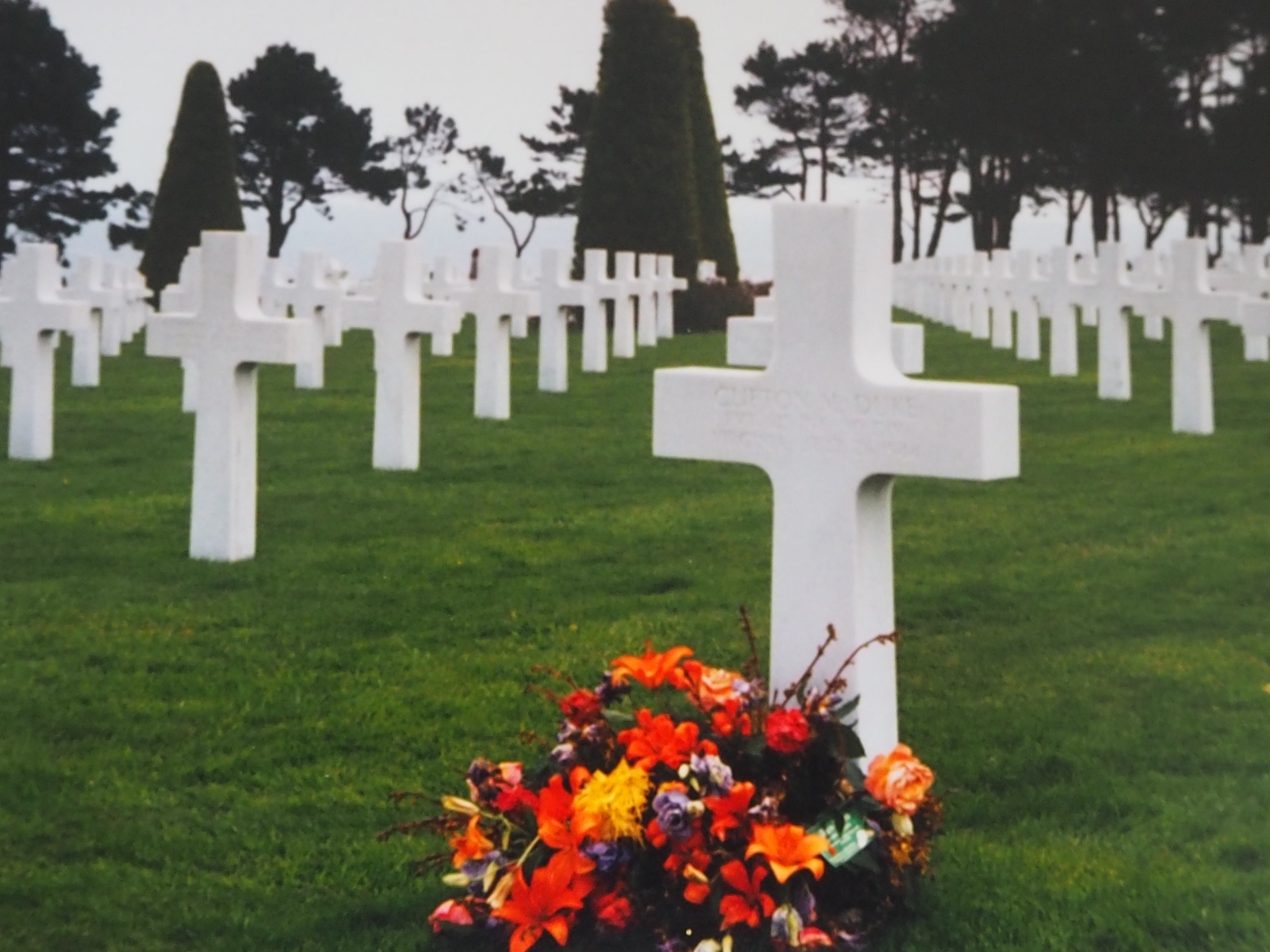
Rows of crosses give a moving and stark reminder of the events of D-Day at the American Cemetery Omaha Beach
D-Day 6th June 1944 and a poignant visit to Normandy
I confess that I have a love of history and especially in the period of time in France that covers the occupation and the D-Day landings. It is not my intention to go over all that the story encompasses. That has been well told many times by far better historians and been reviewed extensively quite recently with the fascination of the 75th anniversary of the landings. All my writings are done with a desire to inspire you to visit the places we have loved over the years. What I hope to achieve is to convey a sense of the atmosphere to you and the way these sites have an impact on us as visitors. Continue Reading..
Paris & France – Travel now
OUT NOW on Amazon for Kindle, Kindle Unlimited, paperback & hardback
Hoghton Cricket Club LancashireA favorite wine bar in Banon from our French travels
Wine Bar Les Vins au Vert Banon Provence France
Lower down from the market square of Banon village we had previously walked past a small wine bar, Les Vins Au Vert, opposite the tabac. We decided to check it out because it had seemed to hint that there was food to be had for lunch as well as a glass of wine. It turned out that we would be very happy that we had made this choice as the service was warm and friendly and prompt. Continue Reading…
Please Enjoy my Travel, Music & Ancestry Books on Amazon – FREE on Kindle Unlimited https://bit.ly/bookneal
Lavenham Guild Hall in Suffolk – Medieval Architecture and open by National Trust
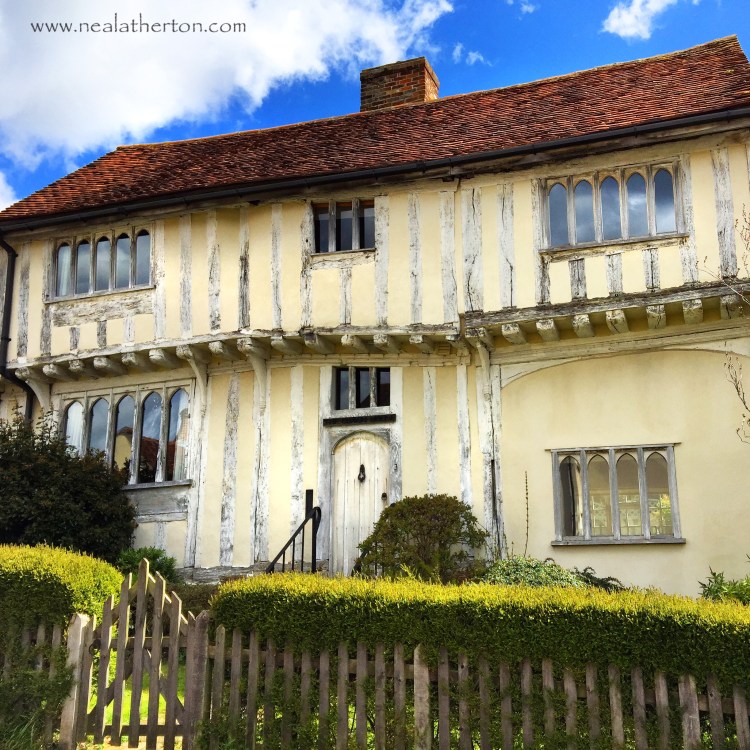
Lavenham is a place that is well worth a detour, a special journey. It is a fine place to stroll with your camera. It has some excellent choices for lunch. On some days there is a market in the square. It boasts many lovely independent shops. It is quintessentially, historical England. It is a must see.
Lavenham, despite its popularity, is one of the easier places, and one of the cheapest places, to park your car. Perhaps there is a local bylaw that prevents ugly ticket machines spoiling the view when people are photographing the town. There is always Photoshop I suppose, but long may this state of affairs continue. Today, we are able to park in the town square. There is no market taking place, just a travelling fish van that has gathered a substantial queue.
A bit of background. Lavenham is a marvellous survivor from Medieval times. One of the finest examples in the UK of such architecture. From the atmospheric town square to the surrounding winding streets the amount of preservation is staggering. Most towns in England have lost all their connection with their medieval history but here it is laid out like a theme park, all still in use. Lavenham was prosperous back then because of its buoyant wool and cloth trade. This eventually died away due to intense competition and the town went through a long period of decline, but its architecture remained. The building were divided into smaller units but because no one really was interested in developing the town, its poverty did in fact save it. A visitor from the 15th Century would certainly recognize where he was.
The starting point of any walk around Lavenham will no doubt be in front of the Guildhall in the village square. This spectacular building is now in the care of the National Trust, dominating the town just as it did back in Tudor times. The guildhall has served many purposes over the centuries from its early religious guild associations. Many of its uses, including its role as the town workhouse, could have ended this fine structure. In WW2 it had a variety of roles to play. The area was home to a large American Air Force base and the Guildhall was a focal point in their integration into town life.
Medieval Little Hall in Lavenham Suffolk
Walking anti-clockwise around the town square, with the town cross in the centre of your stroll, you will be attracted to the colourful 14th Century Little Hall. This is now a museum and has a delightful garden attached to it. The colour is extraordinary. Is it orange, sandy maybe? You will have to decide. You certainly won’t be able to miss it. Next to Little Hall, inevitably, is The Great Hall. This is now a boutique Hotel and restaurant. An enticing place for a fine lunch or today just for an envious glance inside.
Angel Hotel in Lavenham Suffolk
The square has a number of independent shops displaying their wares and inevitably attracting you inside. As you walk around, by all means enjoy the shops, but do not forget to look up and admire the architecture. The angles will play with your head and may make you dizzy but it is worth the discomfort. Enjoy too, the views down the streets leading away from the square. Some give great views over open, rolling countryside.
Quiet corner in Lavenham Suffolk
Lady Street leads the way out of the square and at the bottom of this architectural gem of a street is the restaurant Number 10. An exceptional lunch made us ready to continue our exploration. Opposite the restaurant is the rear of the Wool Hall, its former use self-explanatory. This is now part of the Swan Hotel. As you round the corner of the structure onto the High Street you get the full experience of the size of what is now the Swan – in your imagination exactly the type of Hostelry that may have survived the centuries. It sets the tone for the entire High Street. This street will take you some time to explore with one extraordinary building after another. Some seem to be defying gravity, but they are still standing after all these centuries. Gift shops, antique shops, cafes, wine bars, art galleries all vie for your attention. It may cost you a little expenditure along here but you will at least go home with or have enjoyed quality. Today it was a fine leather handbag that came home with my wife. Check out the tea room in the crooked house, again a self-explanatory name. It is impossibly shaped, but yes, still standing.
Lavenham Suffolk High Street
There is so much to see and do in Lavenham. The architecture is unforgettable. The sense of times past, and a way of life, being preserved is all around you. I am certain you will not find any cheap or chain shops here. The town is a haven from all that seems to bedevil English town centres. If it takes you a very long time to make your tour of the town and all the shops on offer then there is a compensation for that – you can always stay for dinner.
The town has an excellent website and includes this helpful map to enable you to walk the town and not miss anything :
Rows of crosses give a moving and stark reminder of the events of D-Day at the American Cemetery Omaha Beach
Please Enjoy my Travel, Music & Ancestry Books on Amazon – FREE on Kindle Unlimited https://bit.ly/bookneal
Despite my love of history and the interest I have in the time period in France that covers the occupation and the D-Day landings it is not my intention to go over all the story. That has been well told many times by far better historians and relatively recently with the fascination with the 75th anniversary of the landings. All my writings are done with a desire to inspire you to visit the places we have loved over the years. What I hope to achieve is give you a sense of the atmosphere and the way these sites have an impact on us as visitors. With the war sites in Normandy the feeling that these are places we have loved is perhaps not the correct expression. You can love Provence. You can love Paris. You cannot love a cemetery at a place where so many lost their lives. You can however be moved.
The Normandy American Cemetery and Memorial in France, Cemetiere Americain, is located in Colleville-sur-Mer, on the site of the temporary American Saint Laurent Cemetery. This was established by the U.S. First Army just three days after D-Day on the 8th of June, 1944. By definition of its location it was the first American cemetery on European soil laid out in World War II.
The approach to the cemetery and memorial is quite unusual and unexpected. As you get close to Colleville-sur-mer on the D514 you come upon a roundabout that is well tended and rather than being on a well-used coastal road you feel in another place altogether. You could be at the approach to a upmarket Golf and Country Club, reminiscent of where the Masters is played in Atlanta, USA. What this sudden change in the landscape impels you to do is to turn left and not to carry on. You cannot just drive past this place, a site that is the most visited memorial site for Americans in the world. Turn left you must do through the wooded area where you can park your car and take what is one of the most extraordinary walks you will ever make.
There is a new visitor centre here now, opened in 2007, but that was some three years after our visit. The new centre tells the story of D-Day and Omaha Beach and gives the visitor a place to reflect and hear the recollections of many participants bringing those dreadful days to life once again. On our visit we just had the cemetery and memorial to contemplate but be assured that was more than sufficient to bring those days back into vivid perspective.
As you walk across into the cemetery you are confronted by row upon row of stark, brilliant white crosses. Every one perfectly laid out in unison so that whichever way you look down the rows they are in line, stood to attention. Initially this is just too much to take in and you sort of want to turn away and try not to look. We found ourselves drawn over to the memorial at the head of the cemetery and facing down a long straight manicured lawn that leads the eye between the two sides of the grave site. In front of the memorial is a reflective pool. There is not a sound, even the birds seem to have caught the mood and are silent.
The memorial is made up of a semi-circular colonnade that has a large inscription running around the upper curved part. Attached at either side of the memorial there is a loggia, and these contain large maps and narratives of the D-Day military operations and the subsequent breakout into the Normandy countryside. At the centre of the semi-circular structure is a bronze statue, “Spirit of American Youth Rising from the Waves.” You cannot help but reflect that sadly the place is dedicated to and contains the generation of American youth whose rise ended so abruptly and tragically just yards from this statue.
On the Walls of the Missing, constructed in a semi-circular garden to the east side of this memorial you will find inscribed 1,557 names of those who never had a last resting place. Some have been found and identified in the years following the construction of this memorial and those are marked by a Rosette against their names.
The cemetery site in front of you covers over 170 acres and contains the graves of 9,385 of American military dead, most of whom lost their lives in the D-Day landings and the operations that followed as the Allies broke out from the beachhead. The whole cemetery spread out before you is so impeccably laid out that it is somewhat dreamlike. Can this be real? In many ways it should not work as a memorial, it is too pristine and so far from the bloody horrors of those landings. Yet, it is that starkness, that total contrast with the events themselves that cause you to be so moved by the experience. It stuns you into silence. I have never been a place with so many other people and not been aware of any sound. No one speaks; they just silently walk through the paths, occasionally looking at the graves but not too often.
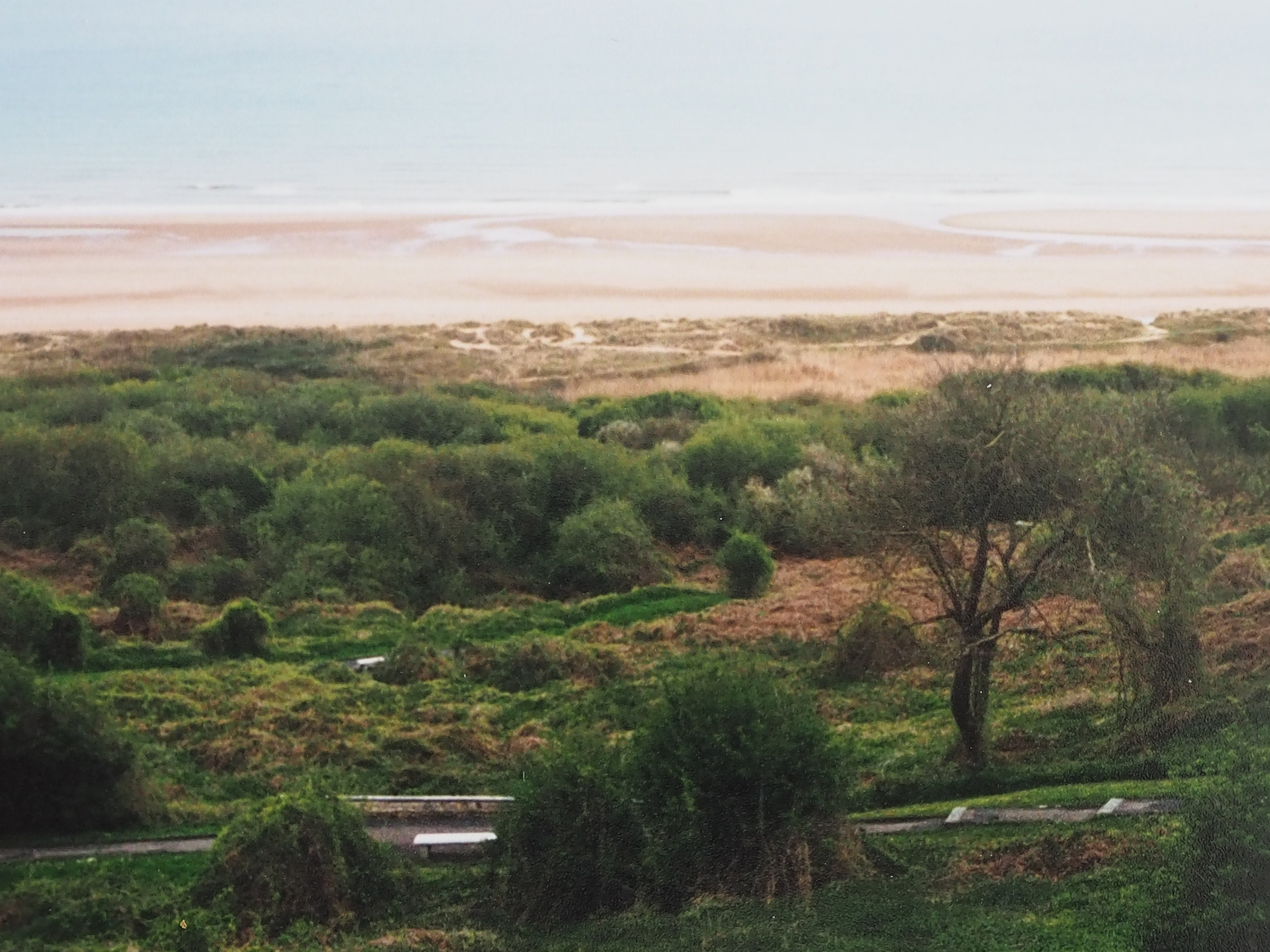
There is one more place that you have to visit and to do so you have to leave the flawless cemetery behind you and step through to an observation point overlooking Omaha beach. At its centre there is an orientation table that gives a battle view on a map of the scene as it was on the 6th of June 1944. The cemetery was very affecting, but it is here overlooking the beach that you feel the emotion of this poignant site. As you look out down to the beach over the grassy knolls you get a sense of the actually deadly dangers those young men faced. The beach is not wide but it is wide enough to know that it would seem a very long way to a soldier running towards a machine gun at the site of this observation point. It is then that it finally hits you that the men in those graves behind you are buried within yards of where they fell. This is as far as they got. It is that realisation which moves you to tears.
The American landing zone on Omaha Beach Normandy
This American Cemetery at Colleville-sur-Mer, is a place that I would say affected me almost as much as anywhere else I have visited. The only other memorial site that I find more intensely moving is The Mémorial des Martyrs de la Déportation at the eastern tip of the Île de la Cité in Paris behind Notre Dame. That one in Paris has a personal resonance for me so it should and does have a deep effect on me whenever I visit Paris. Unlike Paris the Normandy Cemetery does not have a personal connection to me but it is a place that stirs the emotions, and I will never forget it.
This chapter is taken from my new book – out on July 8th
Please Enjoy my Travel, Music & Ancestry Books on Amazon – FREE on Kindle Unlimited https://bit.ly/bookneal
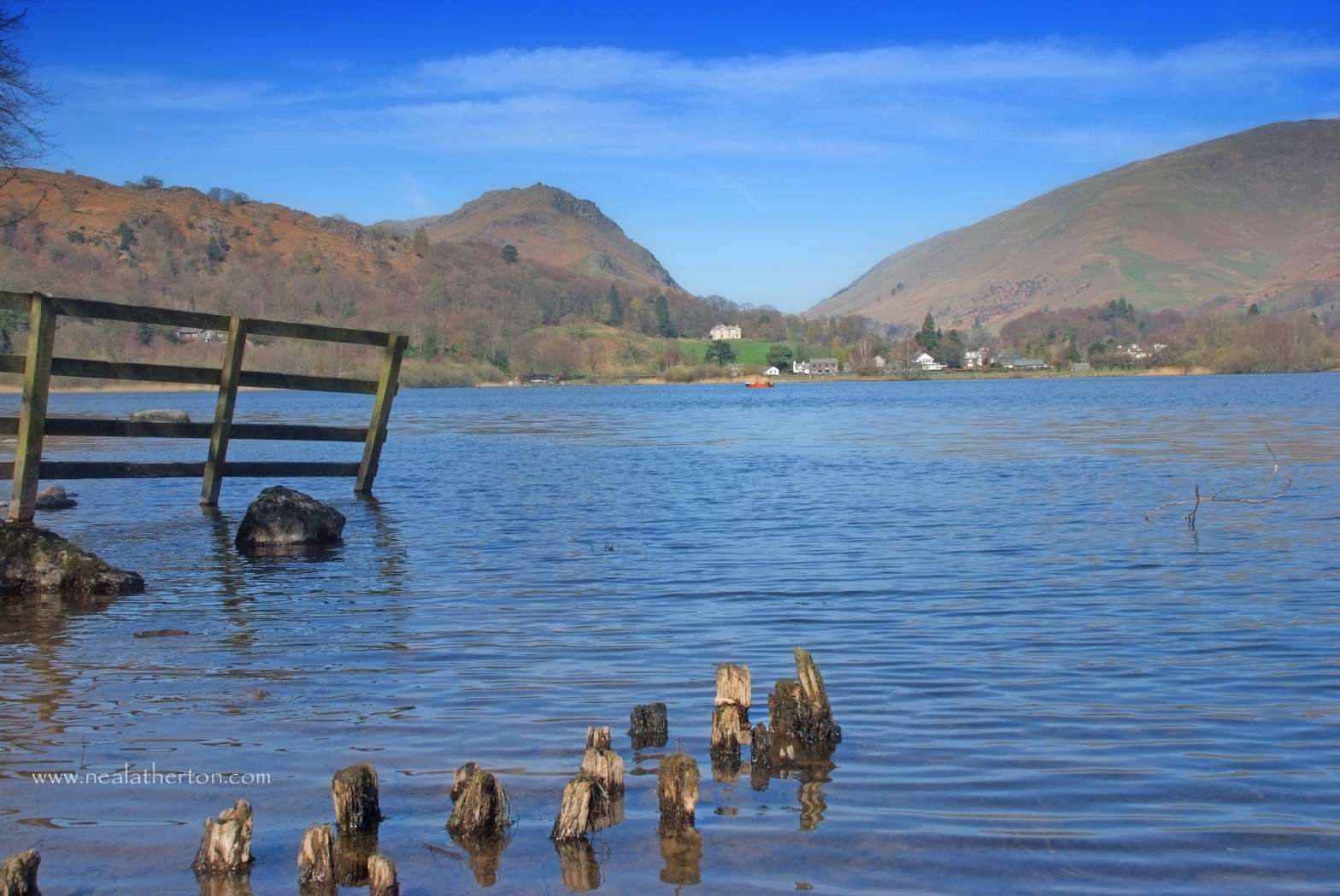
Grasmere Lake from the southern ‘beach’ end
Grasmere is a small popular village in the English Lake District. You can indeed have a day in Grasmere itself but if you are able then it repays putting the village at the heart of a walk in the area. Our day begins just off the A591 from Ambleside at White Moss National Trust Car Park. Behind the car park a track rises quite steeply to join a well defined path that heads in the direction of Rydal. After this brief climb the route rarely taxes your uphill stamina, especially as much of the walk later is taken at lake level
Rydal Water from the Corpse Road from Grasmere English Lake District
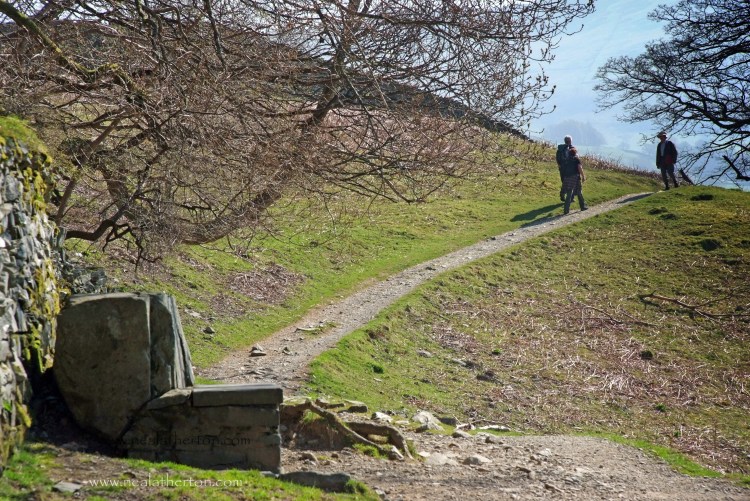
The path we have joined is part of the old Corpse Road, a type of road that is a feature of the Lake District. Back in the day when transport was not motorised, the deceased loved ones had to be transported to a consecrated church for burial. The church of St Oswalds in Grasmere was such a church. This particular Corpse Road was used to take the coffin to that church. I assure you that you will not encounter a single coffin on your walk today. Halfway or so along the route to Rydal you come across an old stone seat – long and flat. Yes, it is just the right size for a well earned rest in bygone times. It does afford a beautiful view across to Rydal Water, a romantic pause on the way to a last resting place. As a modern tourist we are not put off by past history to just rest for a while in this wonderful part of the Lake District.
Corpse Road from Grasmere towards Rydal – A convenient ‘Resting Place’
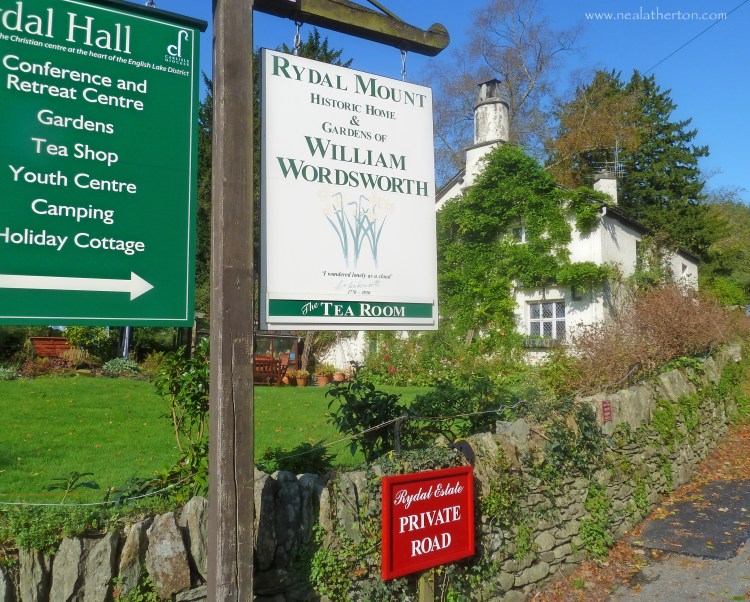
Continuing our walk on this delightful track it is not long before we come to the tiny village of Rydal. This area of the Lakes is synonymous with the poet William Wordsworth. He will feature regularly on our Day in Grasmere. Rydal Mount and Gardens, a favourite home of the poet and one that can be enjoyed by the visitor today. We continue down to the A591 and cross it, bypassing the tempting Glen Rothay Hotel Bar, and join the path to Rydal Water. This is joined by crossing a small wooden bridge over the River Rothay, the path opening up through a glade of trees to give a view over Rydal Water to the incline leading over to Grasmere Lake. The path hugs Rydal Water keeping the heights of Loughrigg Fell on your left. The path above this one contains a large cave, Rydal Cave – well worth a detour if you have the energy.
Rydal Mount Home of William Wordworth Lake District
By the side of the water some fisherman are enjoying the peace and quiet and we go past slowly and gently to keep the fish in a relaxed state. Rydal Water narrows and ends, the path rises to a small summit.
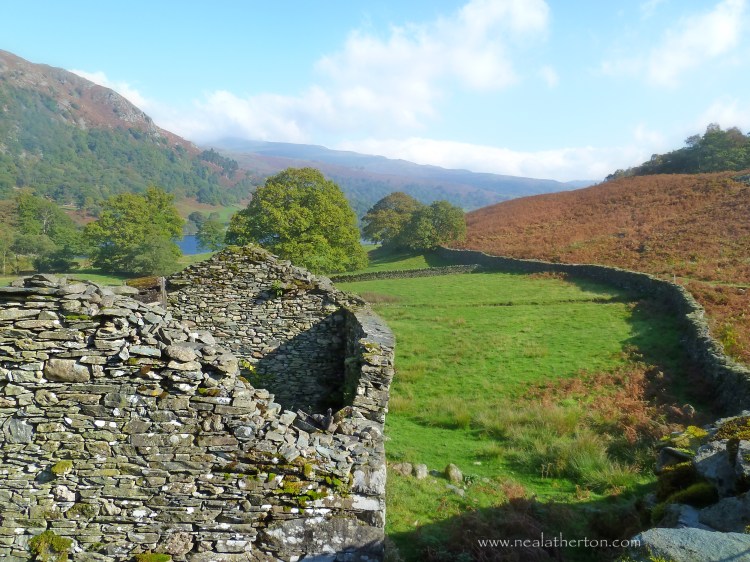
View towards Rydal Water from the path to Grasmere Lake
This brings the lake of Grasmere in all its glory in front of you. Below is a the river making its way to the lake and a few walkers are coming over from that direction. The path takes a gentle path down to the lake and one of the English Lakes finest viewpoints at the ‘beach’ at the head of Grasmere Lake. This is a stunning location across the lake to the island and to Grasmere Village. At the far end the fells part to leave a gap. If you are lucky, you may be delighted to have your peace briefly disturbed by lightning fast RAF jets practicing hugging the terrain through that gap.
View towards Grasmere Village from the Grasmere Lake path
Generally only peace reigns, the swans and geese on the lake occasionally coming to waters edge in search of some spare lunch. The path hugs the left side of the lake and we stay on the lower part, at water level before we are forced back to the main path. Despite being at ground level this path give some of the finest views in the Lakes. The fell rises gently to the left and sheep graze, giving a bucolic pastoral scene. The lake to the right is calm and flat with spectacular views to Grey Crag, close to Alcock Tarn. On such a calm day the reflections of the fells are a mirror image on the water, disturbed only by a solitary rower who has headed out from the boathouse at the village end of the lake. The path is forced back up to the road, curious Herdwick sheep watch your slow progress up the short incline.
Grasmere Lake English Lake District
The village is not far along the road. You can stop for a coffee or an ice cream at the café by the boathouse if energy levels are flagging. It is worth stopping anyway around this area and just taking a few moments to absorb the magnificent scenery around you. As they say, always look back as well on a walk.
Grasmere is a popular village so do not expect to have it to yourself. Young Japanese are great devotees of William Wordsworth. You will meet many of them. Is it the daffodils? One of those curiosities of culture. They love Peter Rabbit as well. They are no doubt vital to the Lake District economy.
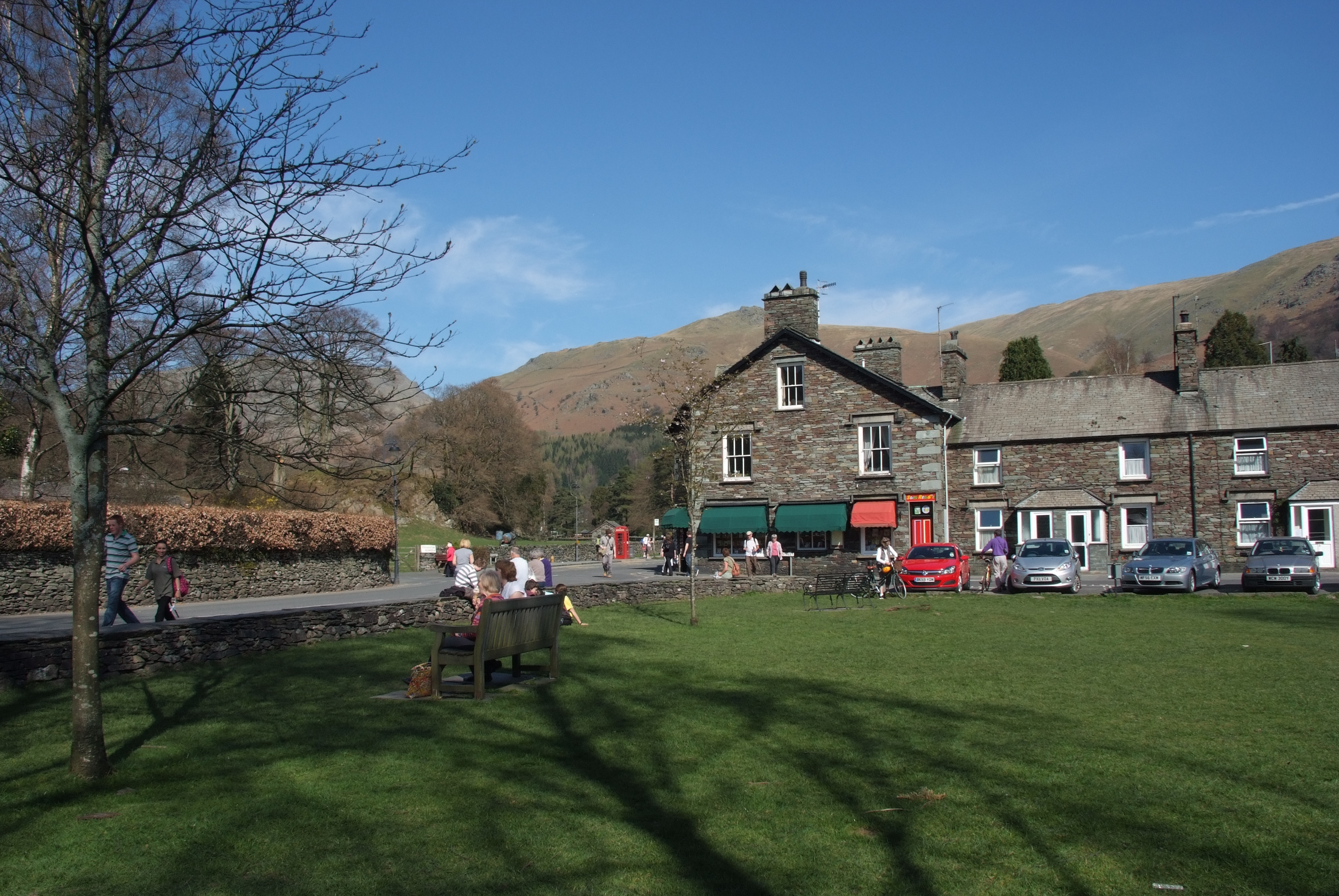
Village Green Grasmere
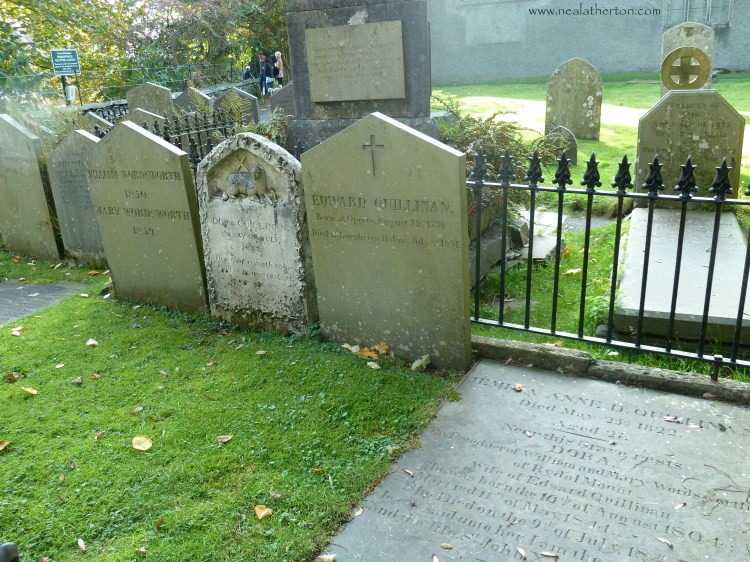
Most visitors tend to congregate around the area of the car and coach park, patronising the shops and cafes along that road to the church. That would be a mistake as the main part of the village lies behind this area. The church of St Oswalds it has to be said has a quite beautiful, reflective setting. The River Rothay runs by the side of the churchyard and gives a gentle backdrop to a stroll through the church ground to the inevitable visit to the Wordsworth family graves. It is a generous plot and well maintained. Wordsworth was genuinely a part of the Lake District community, and his poetry reflects his love of this gorgeous area of Britain. Yes, there is also a daffodil garden but in this context it comes across much more than a cliché – the local are proud of their association with such a famous ‘son’.
Wordsworth Family Graves Grasmere Church
The gate at the end of the graveyard leads to the village proper. You surely will not be able to pass the first building you encounter. This is Sarah Nelson’s Grasmere gingerbread shop. The aroma will draw you in. Started in 1854 this shop is famous the world over and no self-respecting TV personality on their ubiquitous tour of ‘Their England’ can avoid bringing the film crew here. The gingerbread here is not your average concrete consistency variety that build the houses but a cross between a cake and a biscuit with a touch of secret spice. It is quite unique and utterly irresistible.
The village itself has lots of small independent shops, cafes and restaurants. Overlooking a small grassy area at the centre of the village is the Heaton Cooper Art Studio, a family of respected artist going back to Victorian times. A café adjoins the gallery and well worth a visit. You may after your walk need a rest and quite often we would gravitate to Tweedies Bar with its large garden along Langdale Road from the gallery towards the lake. In the other direction there is more for art lovers and plenty of craft shops. Easedale Road intersects this area and leads, eventually, to Easedale Tarn. This is a wonderful walk with a rewards at the end of a beautiful tarn, so typical of the Lake District. It is quite a trek, and uphill at times, but well worth the effort. But that is for another day.
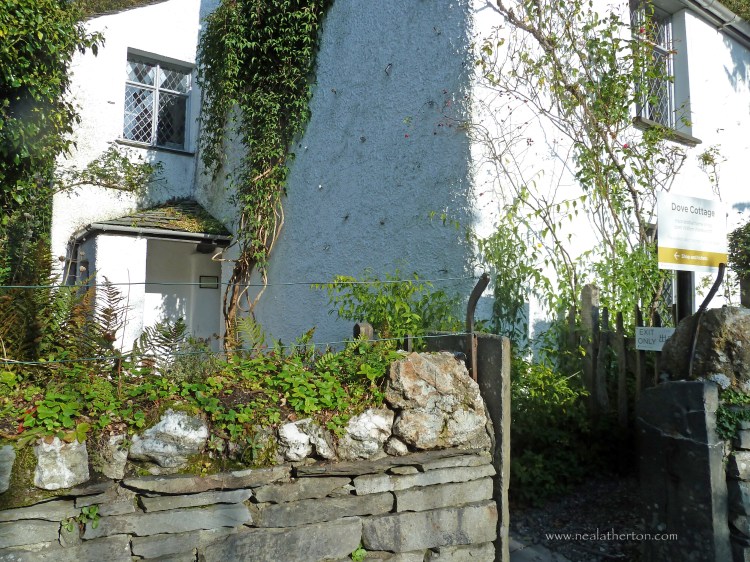
William Wordsworth’s Dove Cottage at Grasmere
Retracing our steps through the church and back towards the A591 we turn right and immediately take the left fork that leads to Dove Cottage. This building is exceptionally well preserved in a way that makes you feel that Wordsworth has just popped out to check on the daffodils. We pass by and follow the road that hugs the A591 at a higher level, giving great views over the route we have just followed. And so, too quickly, our day ends back at White Moss car park. I commend this as one of England’s great days out. We have enjoyed this often and I know you will enjoy it.
OUT NOW on Amazon for Kindle, Kindle Unlimited, paperback & hardback
Please Enjoy my Travel, Music & Ancestry Books on Amazon – FREE on Kindle Unlimited https://bit.ly/bookneal
Polruan ferry arrives at Fowey Harbour
It had been some 35 years since our last visit to Fowey, the small port town at the mouth of the Fowey River on the south Cornish coast. The day before we had been disappointed by a return visit to Looe just along the coast. Looe appeared shabby and uninviting; the cafes and shops did not tempt you inside. It did not appear to be making the best of its stunning location which was a shame. So has Fowey fared any better in the intervening years? We were a little apprehensive that we may be making another somewhat wasted journey. Fowey had indeed fared well, and this town was making the most of an even more stunning location.
Parking the car at the top of the town is easy and the charges reasonable. They have kindly put the disabled spaces close to the car park entrance. However, the walk down to the town is a fair distance and all steeply downhill with plenty of steps to add to the degree of difficulty. Anyone with mobility issues would need to be dropped off by the harbour before parking the car. The walk back to the car park will remove any calories gained from a Cornish cream tea.
It becomes clear as you reach the town centre and harbour area that Fowey hosts many fine, attractive independent shops. It may take some time to reach the river front. One of the first shops that catches your eye is ‘Any Old Lights’. The name is actually self-explanatory. It is a shop that has an eclectic display of vintage and retro old lights: Wall lights, ceiling lights, tripod lights, theatre lights, maritime pieces, clocks and more. An interesting start to the visit.
Just across the lane a little down the hill is a super antique shop featuring mainly jewellery. Anne Evans Jewellery is quite a treasure trove, and her prices are reasonable. We bought a beautiful silver heart shaped pendant for our granddaughter which she was delighted to receive. We could spent some time in here. But, we are really here for the views, especially if you enjoy your photography, so time to wind your way down to the harbour.
We resist the many other shops along the way and bypass the Fowey aquarium, turning the corner to enjoy the extensive view across the river to Polruan. The ferry to the ancient fishing village of Polruan leaves on an almost continual loop during the day and is very popular. It is fascinating to spend a few minutes watching the ferry thread its way across the river mouth, slipping between all the moored vessels and avoiding the craft of varying sizes moving up and down the river. From the harbour you can hire a boat for self-driving and also you notice that it is possible to paddle board in the river. Fowey river entrance is one of the most attractive riverscapes in the country.
From Fowey Harbour across to the Fowey River looking upstream
Going between the enticing watering holes on the harbour square to the riverside you are confronted with a most disconcerting sculpture of a huge, menacing rook. If you have seen the Alfred Hitchcock adaptation of the book ‘The Birds’ starring Tippi Hendren (always thought that a wonderful name) you will easily sense the fear that this statue evokes in you. I watched this as a teenager, and it certainly put me off getting a budgie. Fowey is proud of its association with the writer Daphne Du Maurier and this sculpture commemorates the writer and one of her most enduring creations.
The Birds sculpture at Fowey Cornwall – Commemorating Daphne du Maurier
To the right of the sculpture is an angled plaque that informs of the role that the harbour at Fowey played prior to the D-Day landings on June 6th 1944. If you are somewhat unfamiliar with the events of that ‘Longest Day’ then you will be surprised at the extent of the role that many smaller towns and villages on the South coast played in the invasion. Fowey was one such town and as you travel the coastline of the region you will find similar commemorations of that day. Fowey was an important port for the loading of ammunition and also billeted hundreds of American troops prior to their departure and uncertain future. A poignant pause before you carry on your stroll around this delightful town.
D Day commemorative plaque at Fowey Cornwall
Moving farther right and down on the water below the quay was a beautiful wooden steam boat called Hilda. This example is not a particular old one, around forty years old, but what a beauty it is. Cornwall is home to some fine steamboats and a county that displays on summer rallies the finest ones from around the country. An evocative sight especially in such a setting as Fowey harbour.
Steamboat Hilda at Fowey Cornwall
Going back to the square the landing stages for the boat trips and Polruan ferry are continually busy. There is a steady stream of craft coming and going from the harbour steps. Many of the participants do not appear to have much marine experience but that is no obstacle to enjoying a safe trip on the river. Alternatively, just take one of the many seats around the harbourside, get an ice cream, and settle down to drink in the atmosphere. It is quite soporific.
The route out from the harbour forces you past more lovely independent shops as you work your way down Fore Street, but not before enjoying a pasty at the Cornish Bakery. They are so, so good. Around the harbour and along Fore Street there are some tempting choices for a lunch or evening meal at varying price points. A pasty might be just for you but there is a fine choice of restaurants and cafes to explore.
A shop that stands out on Fore Street, well two shops, are the branches of Brocante giftware. We made several purchases from this interestingly stocked shop, a tasteful range of homewares and gifts. Just the place to refresh your home and remind you of you visit to Cornwall. Fowey has several such shops and they will tempt you in, believe me. Certainly, they will tempt your wife or daughter (or granddaughter).
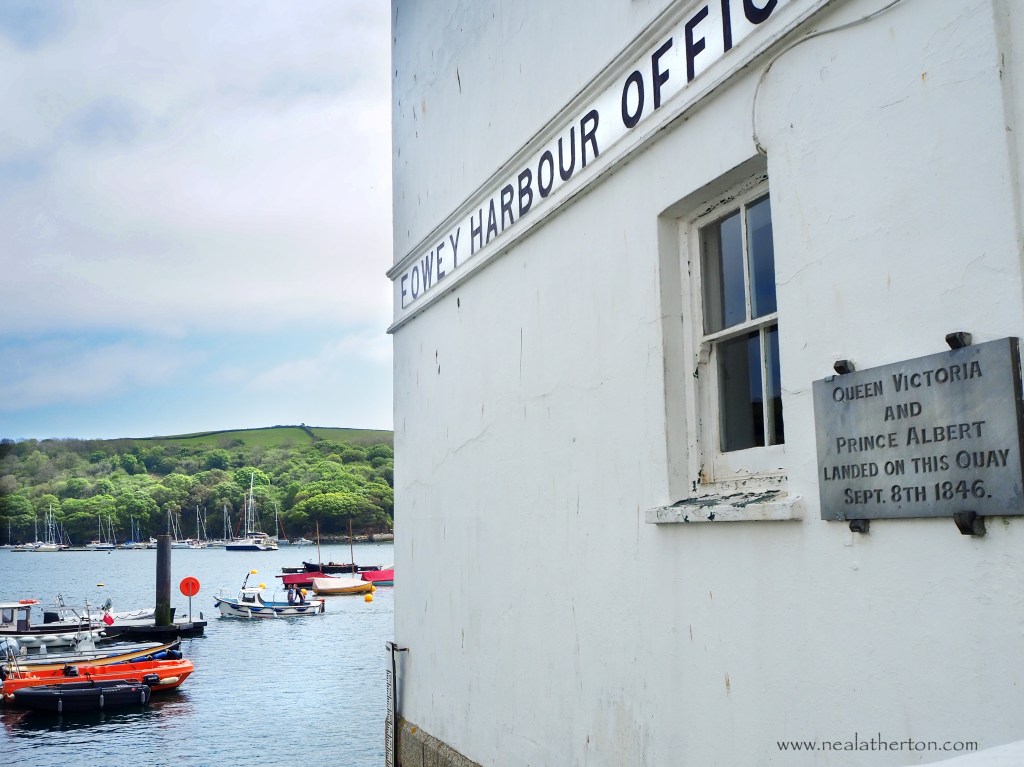
At the end of Fore Street you turn right to see the landing stage that has a distinguished history. Here is another plaque and this one commemorated the day in 1846 that Queen Victoria and Prince Albert disembarked and stepped onto the harbourside to begin a visit to Fowey. No doubt that day was a sight to behold as the mouth of the Fowey River would have been filled with craft of every shape and size, the town colourfully festooned with bunting and flags. A day still thought of as a highlight in the history of Fowey.
The visit of Queen Victoria and her consort
The town also is a fine advert for Cornish produce. You will not starve here nor go thirsty. The Deli is well stocked with quality foods and if you just need an evening drink later then Cornish gin is also there for your pleasure. Take a tasting first.
Fowey is a must see town in Cornwall, it is not too busy despite its beauty and attractions, and the photographer in you will be spoilt for choice of scenes.
Fore Street Fowey
Now for that hill.
All French Travel Books available on Amazon for Kindle Unlimited
OUT NOW on Amazon for Kindle, Kindle Unlimited, paperback & hardback
Please Enjoy my Travel, Music & Ancestry Books on Amazon – FREE on Kindle Unlimited https://bit.ly/bookneal
Johnny Parker – Chorley 1893-98 with Peter Dunn on his right and Eddie Hartley to his left
John Richard Parker or Johnny Parker to give him his footballing or soccer playing name was my great grandfather. I knew him as a rather dapper gentleman, never appearing without a tie or his walking cane. He had a presence, a man who filled the room even though he was in his late 80’s when I became aware that we were related. I only ever saw him at my grandparents’ house in Preston. He would always be there when we arrived to visit, and this was the pattern for the years up to his death in 1967. He would enjoy his lunch and then take his leave while the rest of us menfolk would head off to Deepdale to watch Preston North End. His son, my grandfather, seemed to me to be in awe of him. When we were there, he became his young son again, a visitor in his own home. Yes, he had a presence.
I do not in all honesty ever remember passing a word with him, but back then children were still seen and not heard. Looking back over the years after doing so much family research I so regret that I never could have asked him about his life. Writing this I do have many details that have come to light, but I can never have the full story. I shall do my best to paint his portrait, especially his footballing times with Chorley FC.
Chorley football club today is a particularly important part of the local community. In recent times and particularly this season in 2021 they have become visible on a National scale by their FA Cup exploits and in lately reaching a higher tier of English football. In the late Victorian times of the 1890’s Chorley would attract considerable crowds to their home games on Dole Lane, Chorley.
Chorley FC at Dole Lane Ground 1897
Back in those days there was no Sky Sports showing virtually every topflight football game. If you wanted to watch the highest level of English football you had to go in to Preston and watch North End, paying your admission. Consequently, the clamour for space on the terraces exceeded supply and clubs like Chorley filled a gap for the mill workers to still be able to go and see a live game and enjoy a distraction from what were still extremely hard-working lives. Local men in Chorley would also appreciate having a good standard of football available close to home and so avoid any travelling costs to Preston. The difference in standard between a top First Division club such as Preston North End and Lancashire League or non-league Chorley was not that great. Footballers such as my grandfather may have had decent jobs and to give that up to play full time at Preston for possibly less money did not make sense to them. My great grandfather became a mill manager and the attraction of that wage and a little on the side from Chorley FC was certainly the way to go for him. His partner in the Chorley defensive line was Charles Ostick.
Chorley team 1896/7 – Love this photo of a supremely confident, smug almost, group of players. Charlie Ostick back left, then goalkeeper Archie Pinnell with Johnny Parker next to him.
Charles worked for the local council as an inspector. Most likely that employment was arranged in conjunction with the football club. Quite often a way of paying a higher wage to quality footballers in Victorian times was to ensure that they had a regular, secure employment and Chorley would have taken that approach.
A great photo of Chorley with Johnny Parker looking confident and sure of the result to come – atmospheric shot of the members in the reserved seats
Johnny Parker gave great service to Chorley and even sixty years later he was remembered as one of their stalwart players from the early days of the club. He appears on the team photo for the season 1893/4 when he would have been 19 years old. His final game sadly would only be some five years later in 1898.
The photo of him at the start of this article shows him aged about 86 alongside two of the current players of the team in 1960 shows him being held in high regard by the club.
The local newspaper published
the photo with a report of the game.
He also featured in this cartoon in the newspaper.
Despite so many years and two world wars passing he had left his mark in local football circles. There is a sense of pride in his face in this photo, it is the same feeling in him that I detected when I knew him. It is that sense of owning the space, this is my moment, my home. The two Chorley players, Peter Dunn on the left and Eddie Hartley on the right also stay slightly aloof, knowing the photo is of the star of the show – Johnny Parker, back in the limelight. And it would have been the limelight back in his playing days. Players like my great grandfather would have been well known, local celebrities really. The crowds as we said were large and they had come to see their local heroes. I imagine Johnny Parker’s wages were supplemented by fans with the odd pint or two at the local pub after the game, especially if the result had gone the right way.
Johnny Parker left a great impression in local football circles which is surprising because his career ended cruelly early at the age of 24. Let us go back to that fateful date on December 14th 1898.
That day Chorley were at home at their Dole Lane ground to a strong Burnley side in the Lancashire Senior Cup. It is a testament to the quality of the Chorley side that they more than held their own against a side that would go on to finish 3rd in the English First Division and contained full internationals in their line-up.
Chorley were the better side. The match report mentions that Johnny Parker was having one of his best ever games for the club. Unfortunately, a deflected goal left Chorley one down at half time despite their dominance. It was early in the second half that tragedy struck. Burnley’s Irish international forward Tommy Morrison went into a tackle with Johnny Parker and the result of the horrific collision was a broken leg, just below the knee, for Johnny. The report describes the shocked crowd watching Dr Harris rush to attend to him and arrange for him to get to the local hospital. Sadly, in those days this was a profoundly serious injury and despite the best efforts of the hospital they could not fully repair the damage. Johnny Parker never played again, although his contact with the club endured and he became sufficiently mobile to serve as a linesman at games. He always walked with a limp for the rest of his life and a walking cane became essential. Parker and Ostick were a formidable back line of defence for Chorley. Ostick went on to play for Bolton Wanderers in 1900 and it is conceivable that Johnny Parker may also have eventually decided to take that step up into the Football League.
If we go back to the game, we can add some colour to the events that day. From all accounts it was an ill-tempered affair and Burnley were condemned as the instigators of that bad feeling. Other Chorley players also had injuries from Burnley challenges albeit not as serious as Parker. Even following his removal to hospital foul play continued from Burnley, despite knowing the consequences of Johnny Parker’s injury. The Scotsman Jimmy Ross was perhaps the most famous member of the Burnley side, although shortly he was to join Manchester City. He played in the legendary Preston North End team that won consecutive League championships at the start of the Football League and gained the distinction of being one of the ‘Invincibles’. In the game against Chorley he was involved in a deliberate piece of serious foul play and had to be warned by the referee as the situation between the players and spectators was becoming inflamed.
Match report of that fateful game for Johnny Parker – play became a little rough is probably a bit of an understatement
Jimmy Ross was nearing the end of his career which was in any case concluded by illness at the end of the 1900/1 season. He sadly died early in 1902. His funeral was an impressive well attended affair with wreaths and tributes to ‘An Old Invincible’.
What of Tommy Morrison. He was commonly known by his nickname ‘Ching’. He came from Belfast and was the first native Irish raised player, also as a Protestant in a predominantly Catholic Club, to play for Celtic in Glasgow. Tommy was brought up in the Sandy Row area of Belfast, a staunchly Loyalist area with its own code of conduct, not a place for the faint hearted. It is a part of Belfast made famous in song by Van Morrison (no relation as I know). Of Tommy it is said that he was told at Glasgow Celtic to curb his tongue and to subdue the habits that he had learned in his tough upbringing of East Belfast. The picture is of a man who is not to be messed with. Did that affect his challenge on Johnny Parker. There is no suggestion in the report that it was a foul challenge. Yet, the atmosphere of the game would have seeped into the play of a man of the disposition of Tommy Morrison. Maybe, he challenged just a bit to hard, was fired up with the way the game was being played. We will never know. Morrison went on to have a fine career with Manchester United before drifting into non-league football at Colne in 1904 before a short spell with Glentoran in the Irish League. He died in 1940 back in his native Belfast.
So, back to our original photograph, taken for the Chorley Guardian in 1960. The two players were, as was my great grandfather, well respected Chorley stalwarts. Both Peter Dunn and Ted Hartley were awarded benefits during that season, hence their appearance on the photo. Both joined the club in the mid 1950’s and were regular members of an impressive Chorley side until the early 1960’s. Peter Dunn was the first to leave at the end of the 1960/61 season. The benefit raised £150 each for them, nothing by today’s standards, but back then some 60 years ago they would have been happy with the esteem in which they were held at the club. Life moves on and teams change, this photo represents a full circle in the life of the club and now it is almost frightening to reflect that both these players in the photo would be older than Johnny Parker was when it was taken.
Peter Dunn and Eddie Hartley receive the recognition of their loyal service to Chorley
It is amazing how much interest just one photo can raise and where it can lead. It has been fascinating to add this detail to my family history, something I have researched for many years. Chorley Football Club has always played a part in my sporting life. Firstly of course because of my great grandfather but mainly as an opponent that needed to be beaten, but rarely was. In my youth I became a fanatical supporter of Darwen Football Club, not a million miles from Victory Park. Darwen had an illustrious history but latterly never had quite the infrastructure or access to the best players that Chorley enjoyed. We played at the same level for many years, Chorley moved on for a while and then we re-joined them in the Cheshire League. I can only personally recall Darwen ever beating Chorley on two occasions. Once in 1967 at the Anchor Ground, Darwen and once at Victory Park in 1980. I did enjoy those fleeting moments of triumph. Having said that Chorley was one of the results I always looked for and still do even today, a legacy of the attachment to the club of Johnny Parker.
The player on the left of the photo intrigued me for a time as I was always told that it was Peter Watson, Chorley’s record goal scorer. I always doubted that as I knew Peter Watson back in the 60’s as he lived close to us in Darwen and apparently still does today. Peter, like my great grandfather was most certainly a local celebrity in the day. Darwen valued its achievers in sport, even if like Peter Watson they plied their trade elsewhere. The town had a strong tradition of producing fine weightlifters and these strongmen were feted in the town. I imagine going into town for them must have been a long process as they were stopped everywhere for a chat – I imagine Peter had the same problem. I distinctly remember as a child that it was a case of ‘that yon mon’s Peter Watson, ees a gret gowel scourer tha noes’. Happy days.
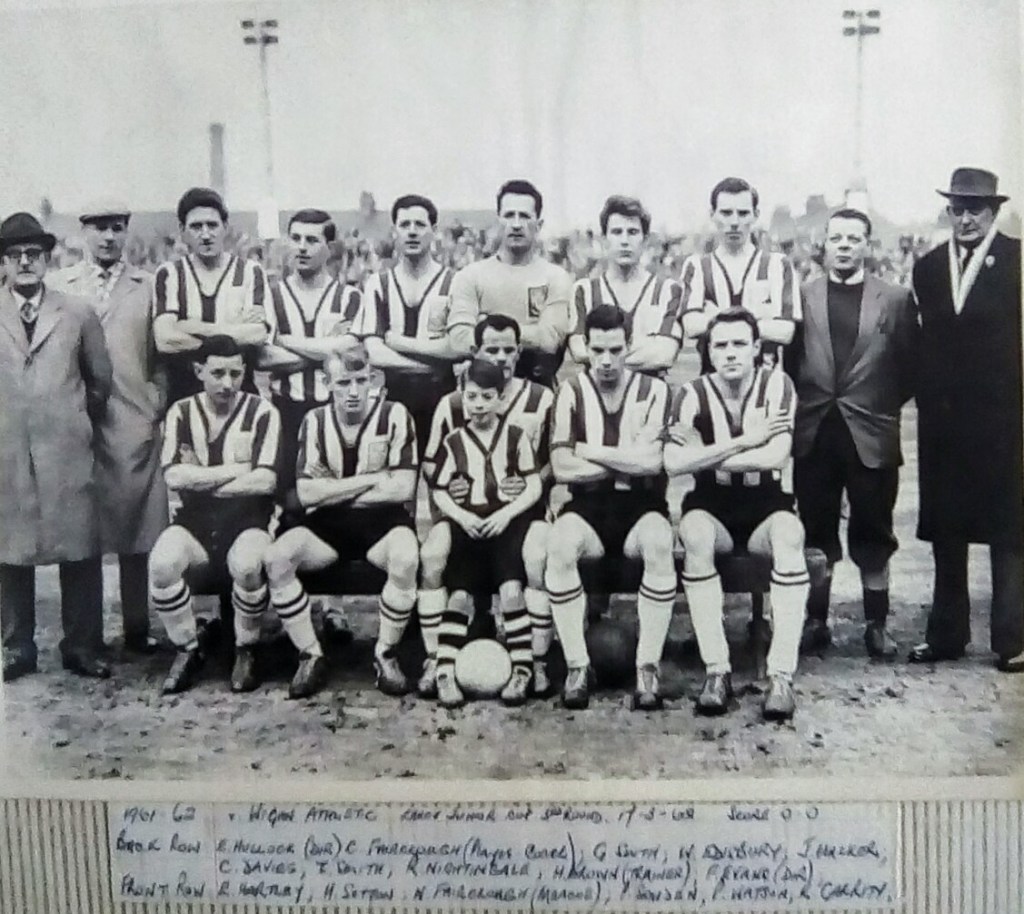
Peter Watson from a team photo in 1962 – The players either side of him Paddy Sowden and Ken Garrity went on to play for Darwen in my first season of watching football. Eddie Hartley is front left.
My thanks to Keith McIntosh at Chorley Football Club for getting the research underway and to Ian Bagshaw for patiently providing an incredible wealth of information and photography from the Chorley archives
Chorley Football Team
in a montage set of studio portraits taken at Luke Berry photographic studio Chorley included in the album I inherited from my G/grandfather
There is a final postscript to Johnny Parker’s story at Chorley Football Club, a mystery still unresolved. The montage photos of the Chorley team back in the 1890’s were taken at the photographic studio of Luke Berry in Chorley in 1897 and 1898. Berry’s operated only for a short period after this time. These photos I inherited after the death of my great grandfather and he had placed them all in an album alongside many other family studio portraits. Loose in the album was a tiny (75mm x 35mm), studio portrait of a fashionably attired young lady.
Loose in Johnny Parker’s album was this
tiny (75mm x 35mm),
studio portrait of a
fashionably attired
young lady.
It was also taken at Luke Berry Studio in Chorley
This photo had clearly
been well thumbed over
the years, perhaps
having been in a wallet.
I have tidied it up on the
above cropped photo
to some degree.
It is most certainly not his wife, my great grandmother – she is shown next to Johnny Parker in a studio portrait taken in Preston. This memento must have meant a lot to him to have kept it until his death, obviously admiring it many times. Who is she? Is she the first Chorley FC ‘wag’? No doubt the players had many admirers and Johnny Parker was a good-looking young lad. Johnny had no other connection to Chorley other than he travelled there to play football from his hometown of Preston. The photo of the young lady must have been taken at the same time as the football portraits and no other photos in his possession were taken at Berry’s – all others were in Preston studios. If anyone has this mystery woman in their archives, please get in touch – I would love to solve this one.
Elizabeth Nightingale Johnny’s wife & my G/grandmother
John (Johnny) Richard Parker
Please Enjoy my Travel, Music & Ancestry Books on Amazon – FREE on Kindle Unlimited https://bit.ly/bookneal
Please enjoy these books on Amazon – Kindle and Kindle Unlimited
Please Enjoy my Travel, Music & Ancestry Books on Amazon – FREE on Kindle Unlimited https://bit.ly/bookneal
Please Enjoy my Travel, Music & Ancestry Books on Amazon – FREE on Kindle Unlimited https://bit.ly/bookneal
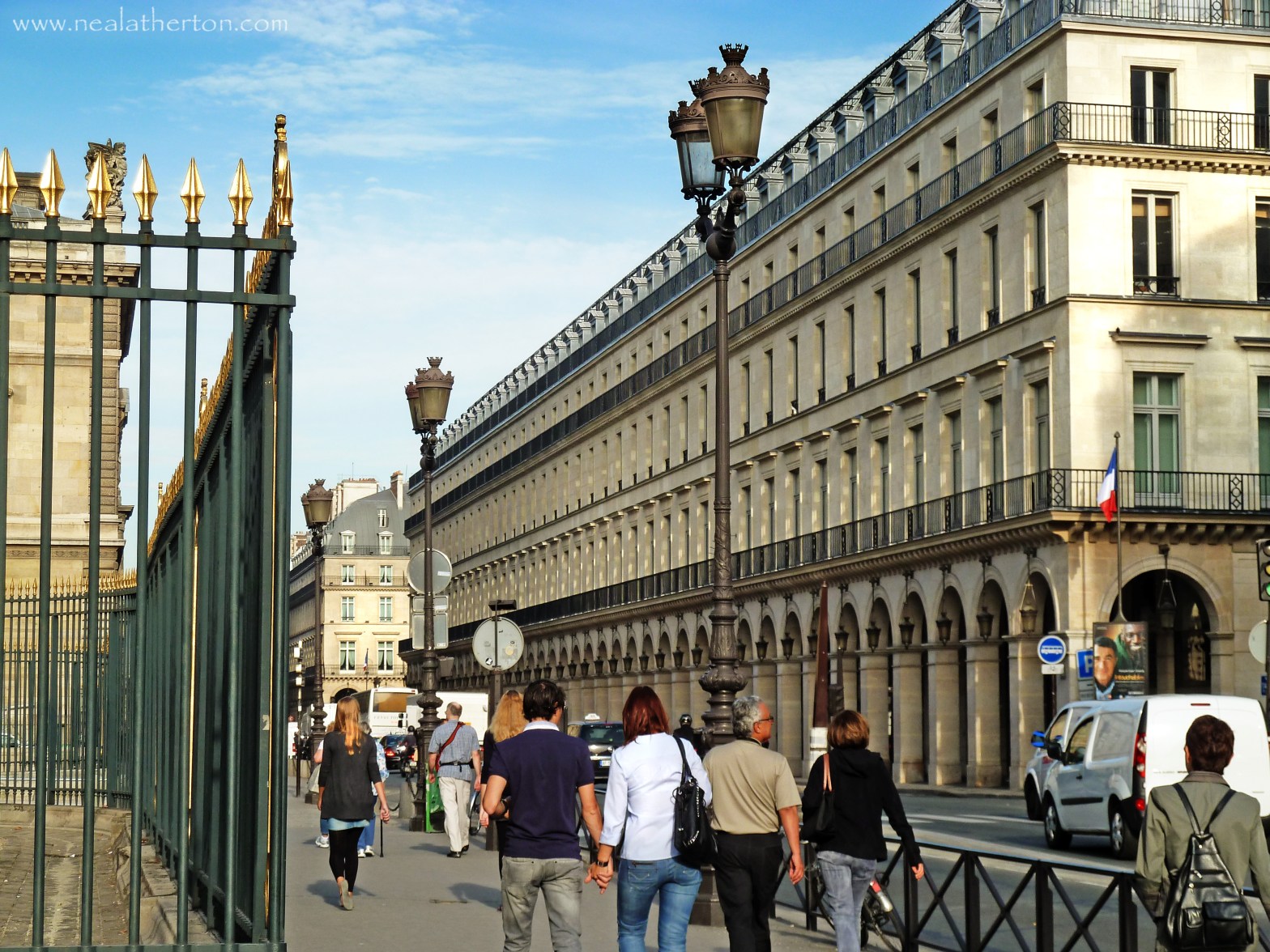
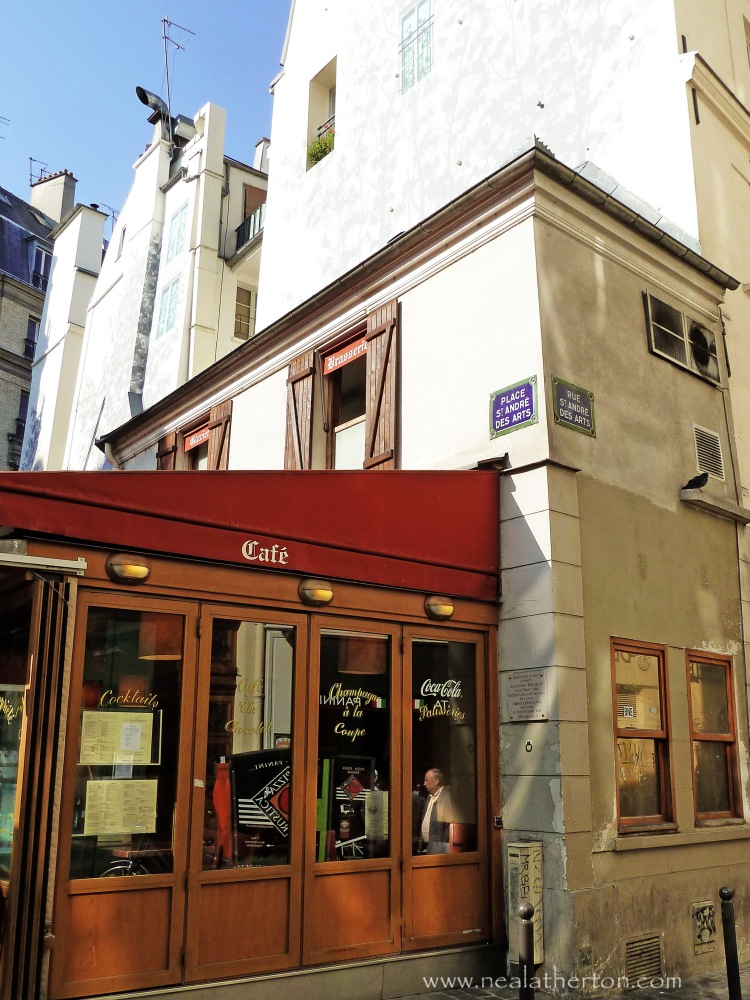
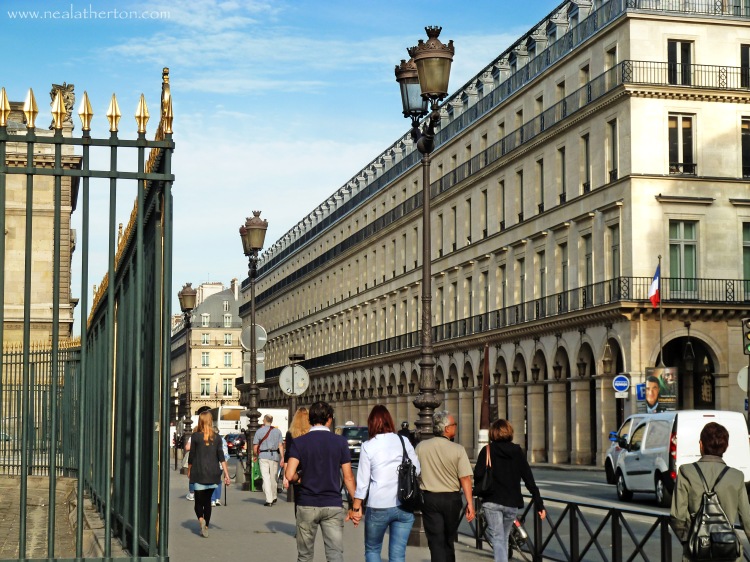
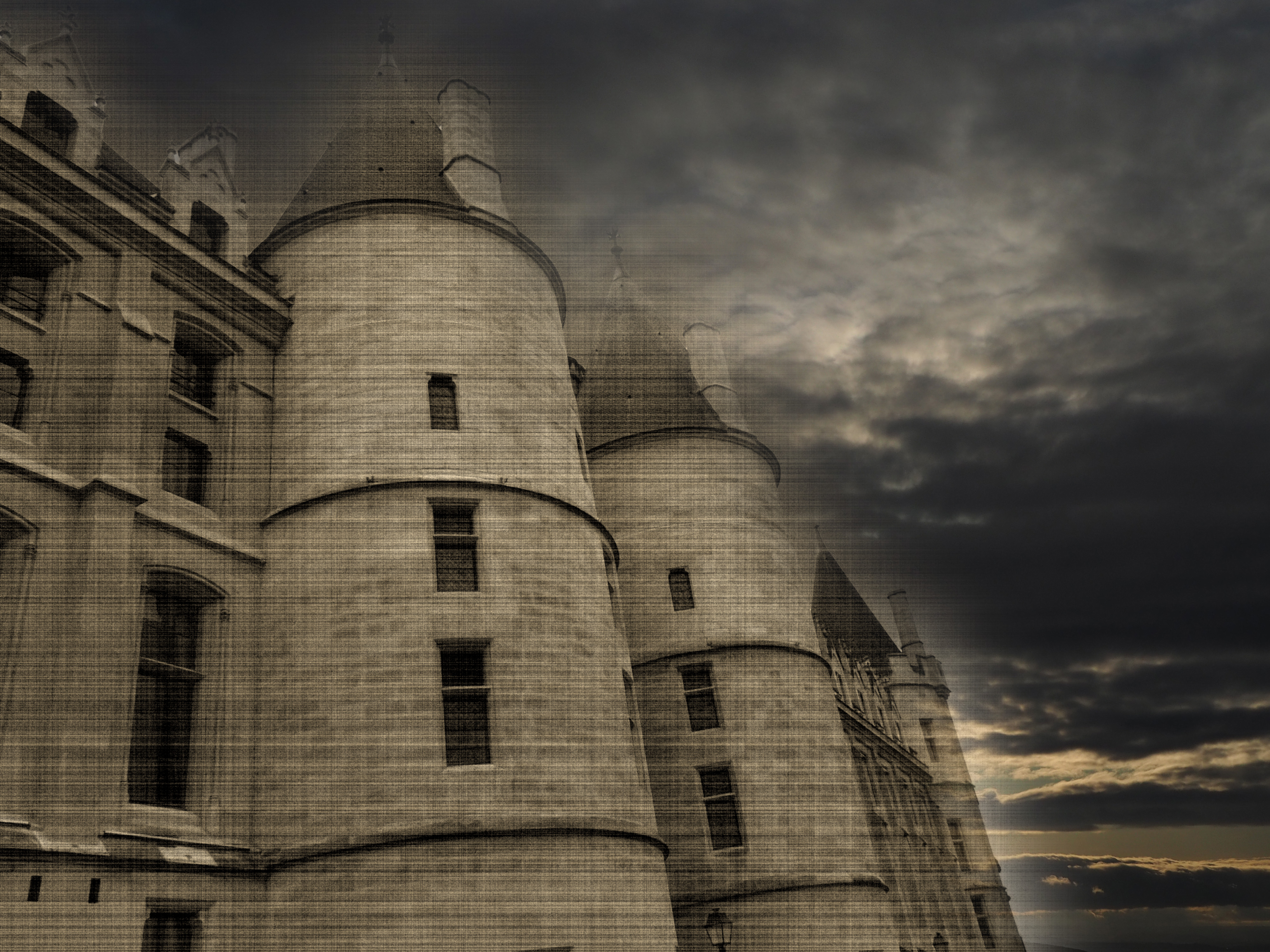
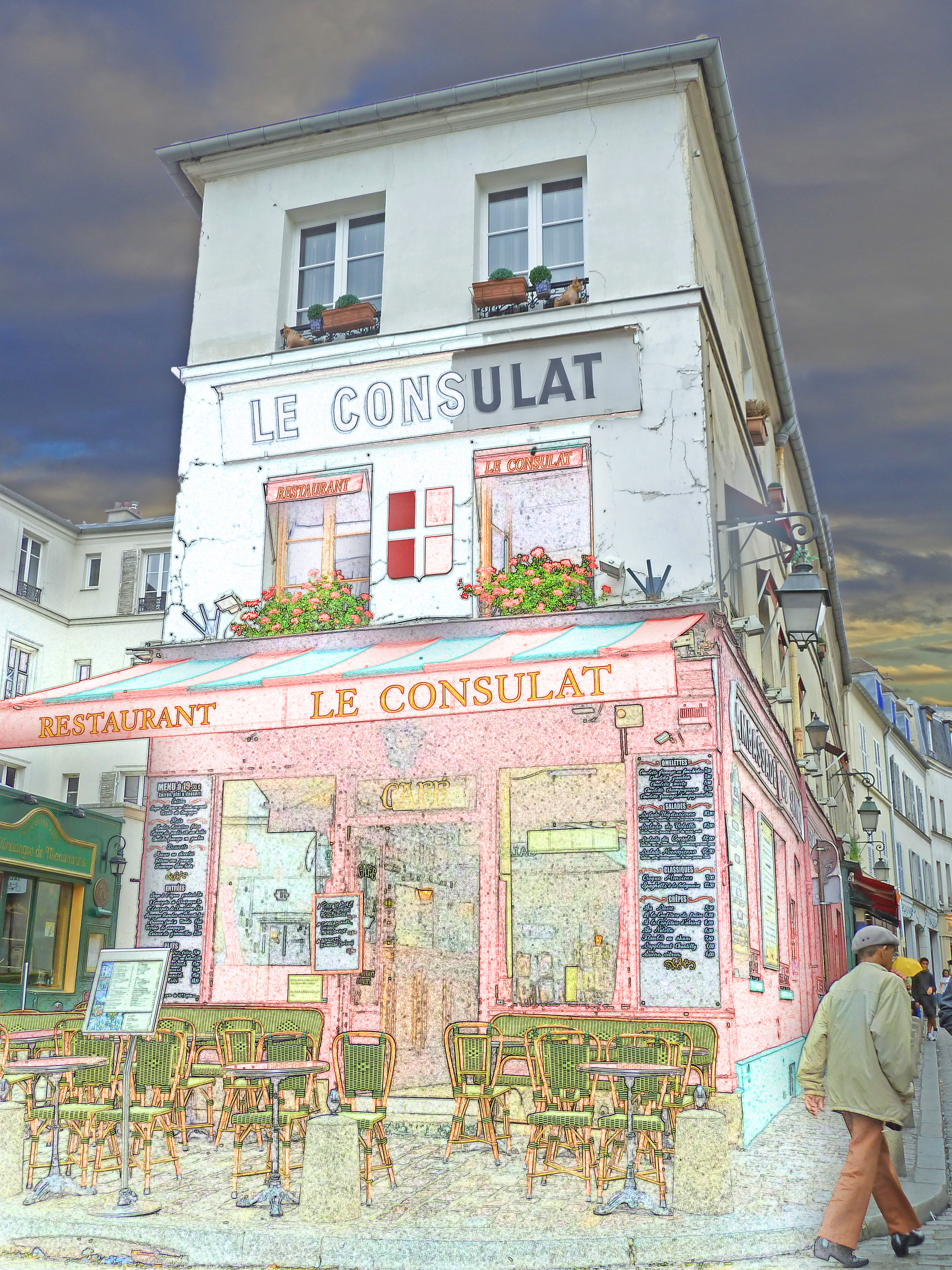
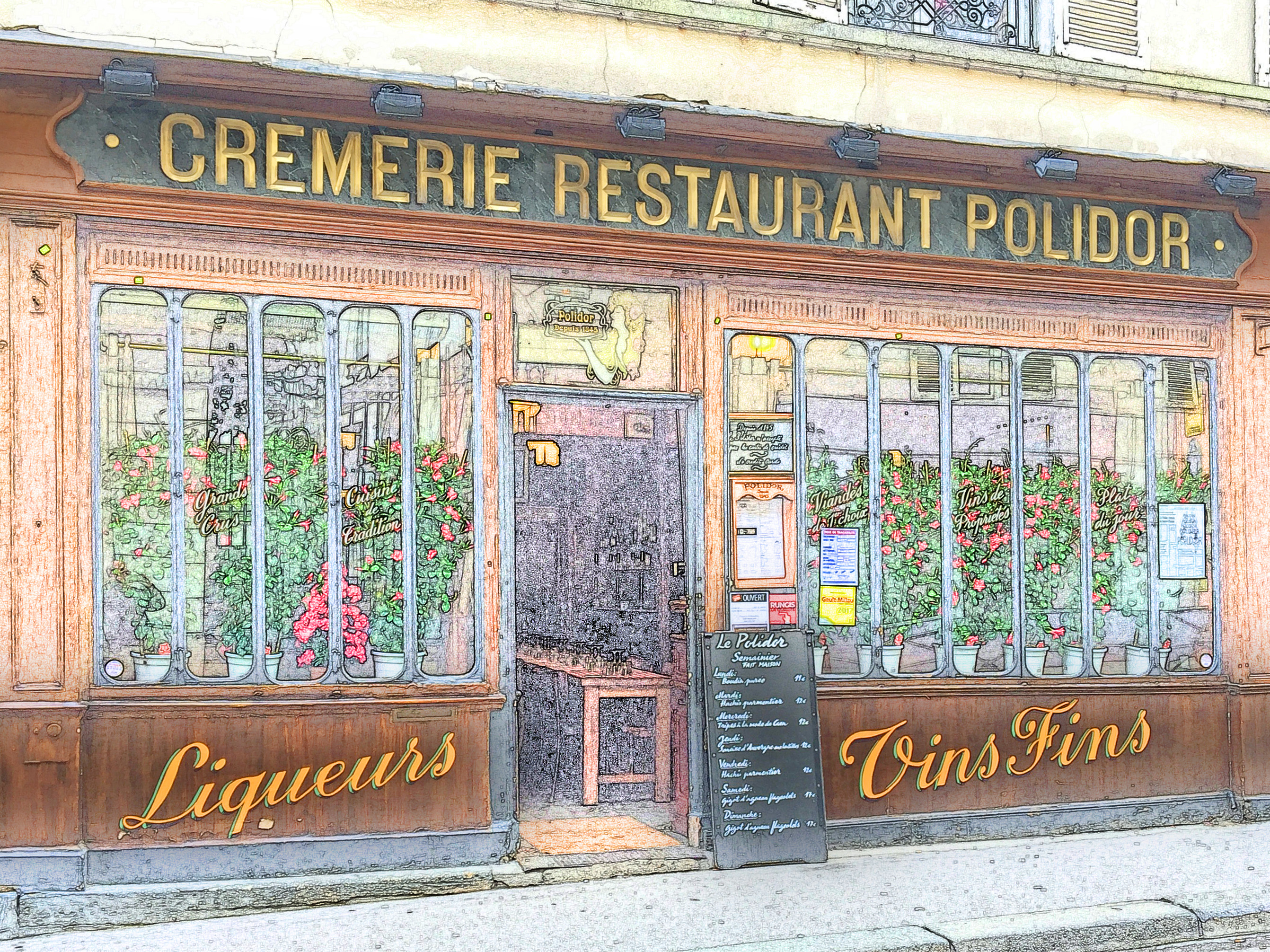
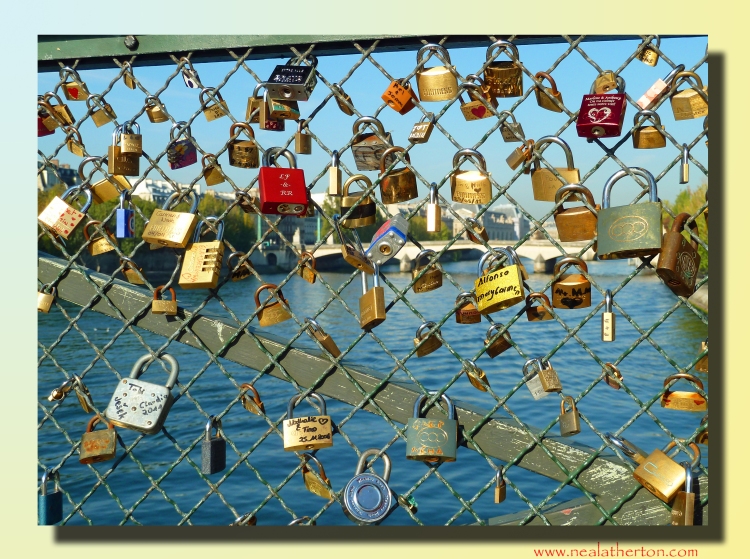
Restaurant on Rue St Andre des Arts Paris Rue de Rivoli Paris La Conciergerie · This former prison, now a museum is on the Ile de la Cité, a short walk from Notre-Dame CathedralLe Consulat Restaurant Montmartre ParisPolidor Restaurant Paris – a favourite haunt of Hemingway and used as a location in Midnight in ParisTokens of love left on the Pont des Arts Paris
A few shots taken over the last few years. Paris always draws you back and hopefully we can travel again soon – CLICK ON PHOTO FOR FULL VIEW
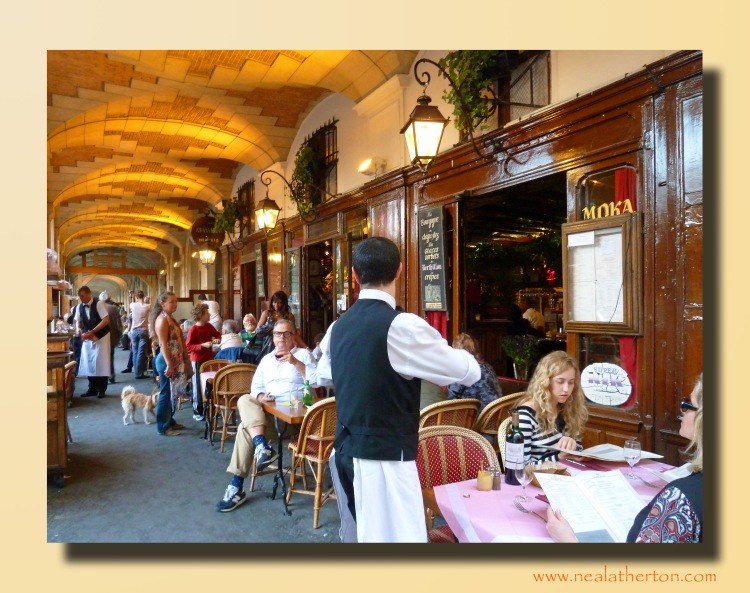
You have to stop for a coffee here in the Place des Voges Paris
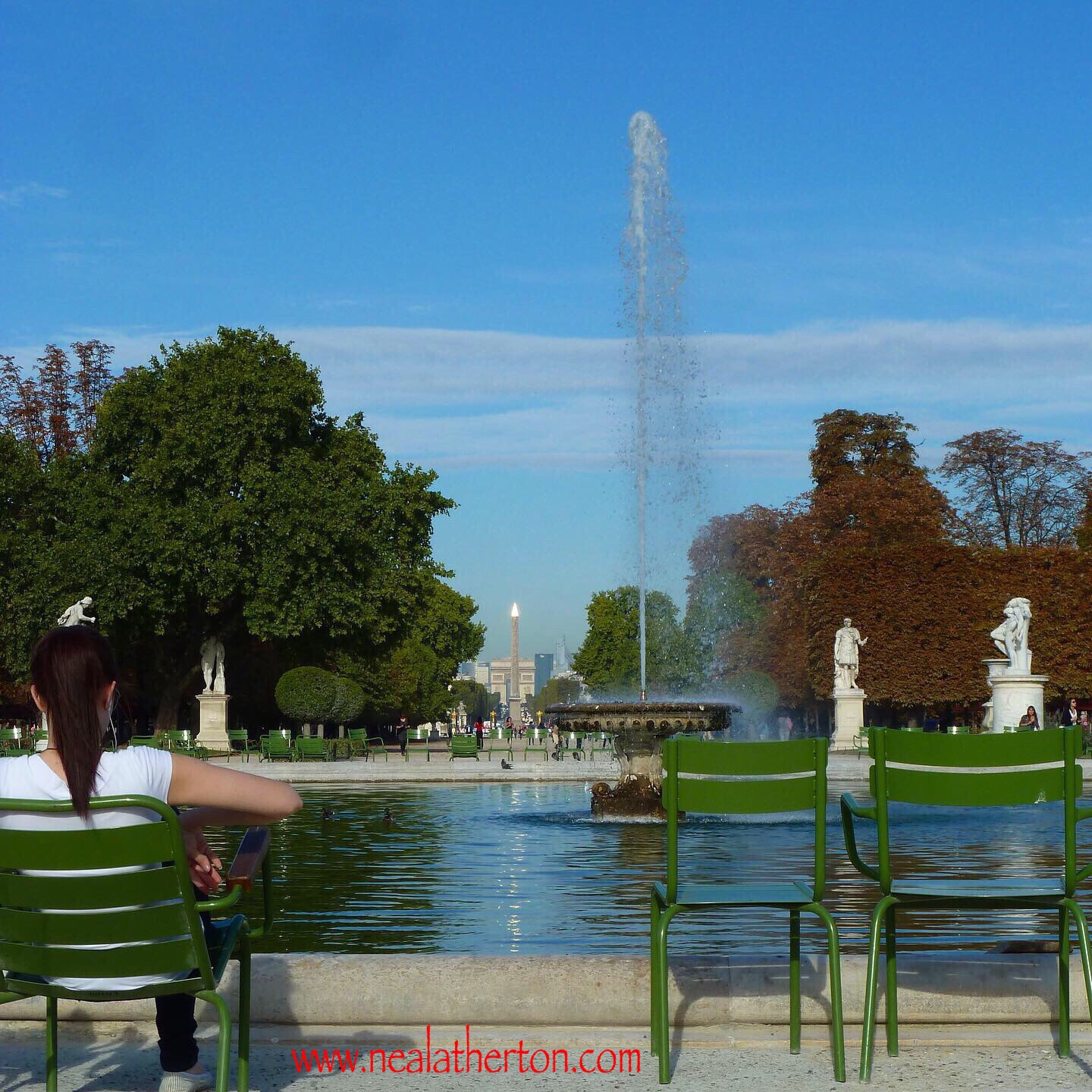
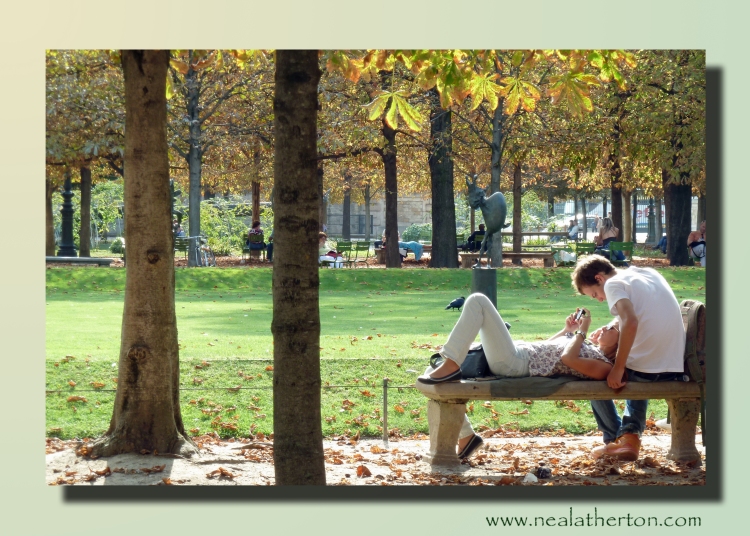
Stealing a quiet moment in the Tuileries Gardens Paris
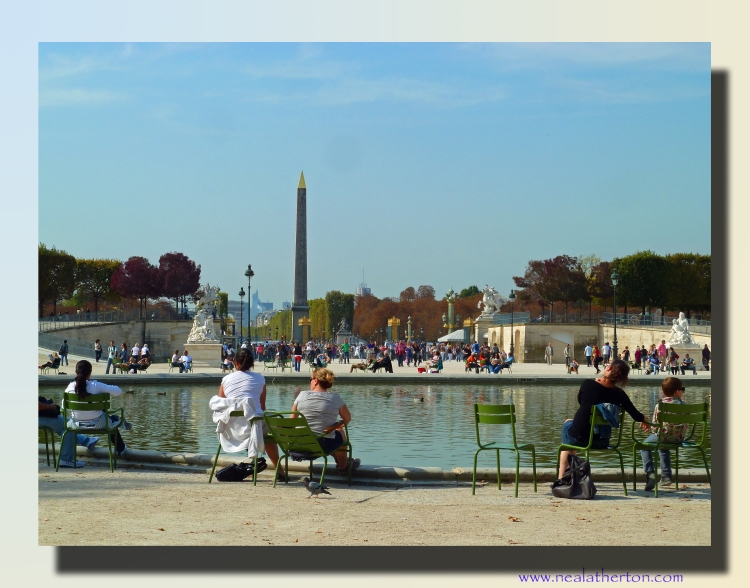
Sitting round the lake in the Tuileries Garden Paris
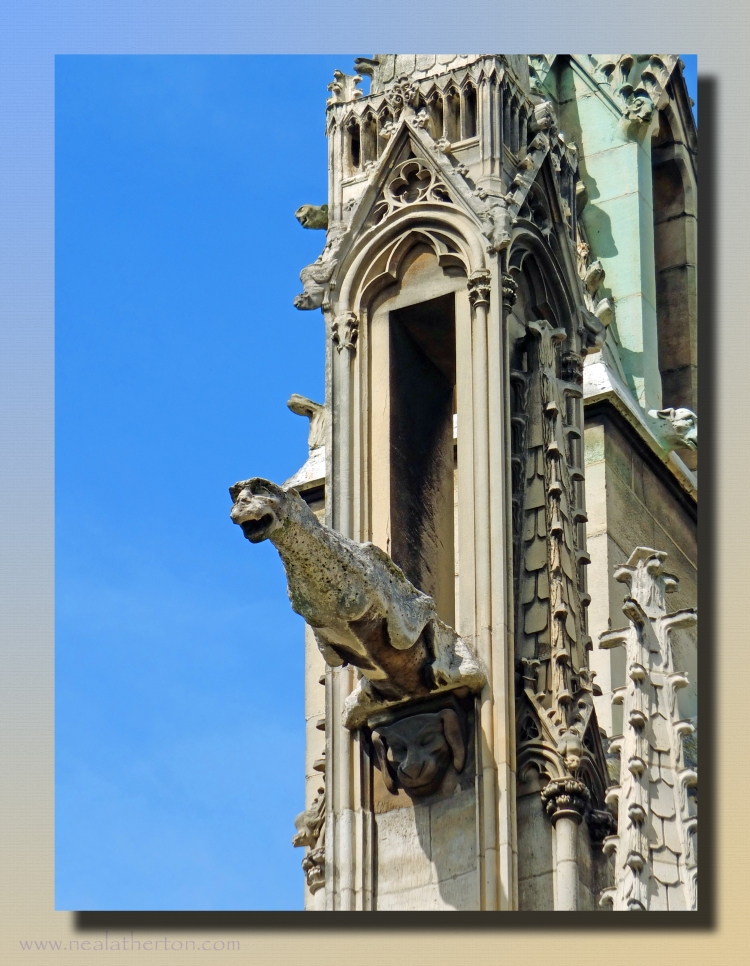
Before the fire at Notre Dame a gargoyle looks out over the river Seine Paris
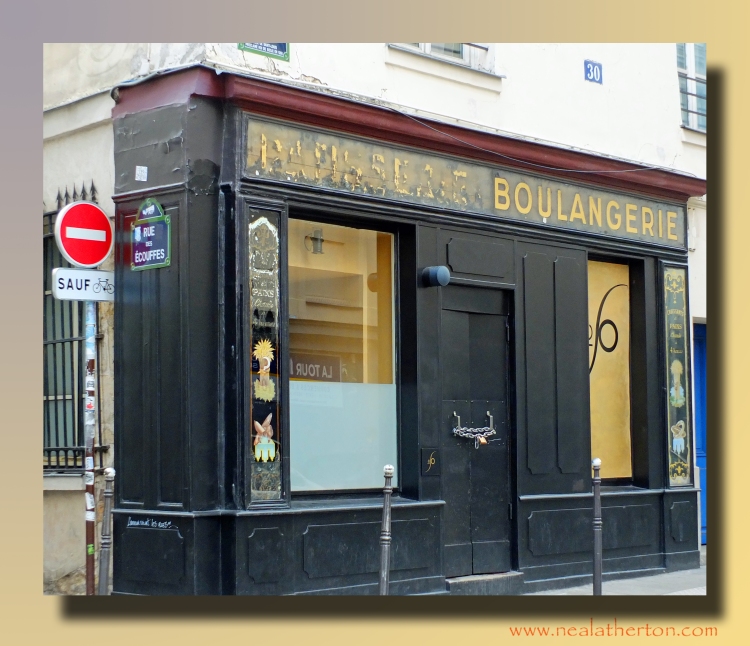
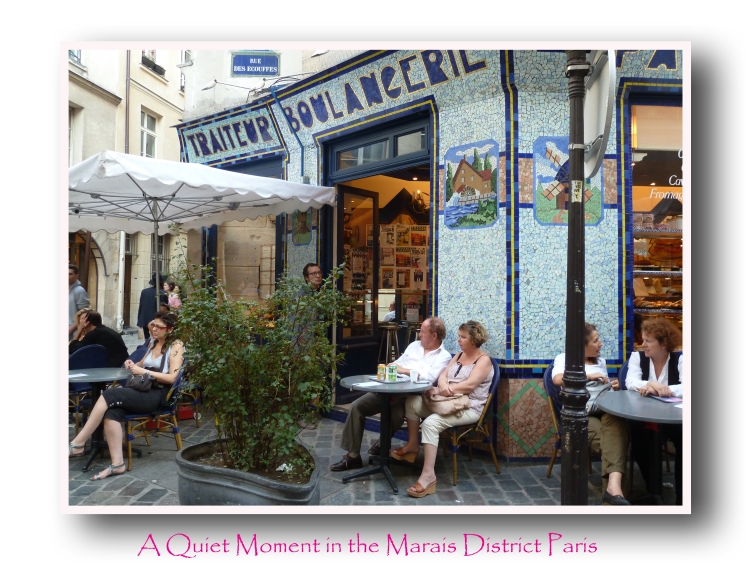
Sadly closed but hopefully ready to be revived – old boulangerie in the Marais district of Paris
Classic Parisian shop front in the Marais Paris
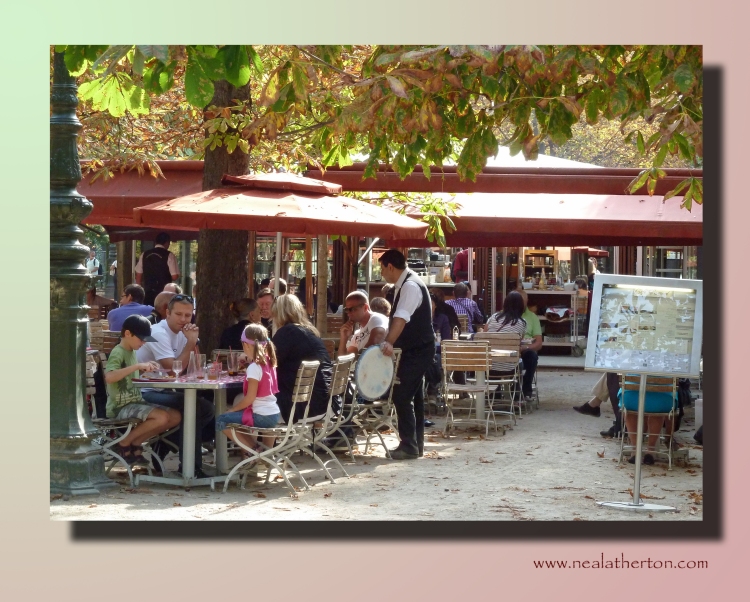
Tuileries Garden cafe Paris – an expensive place to watch the world go by
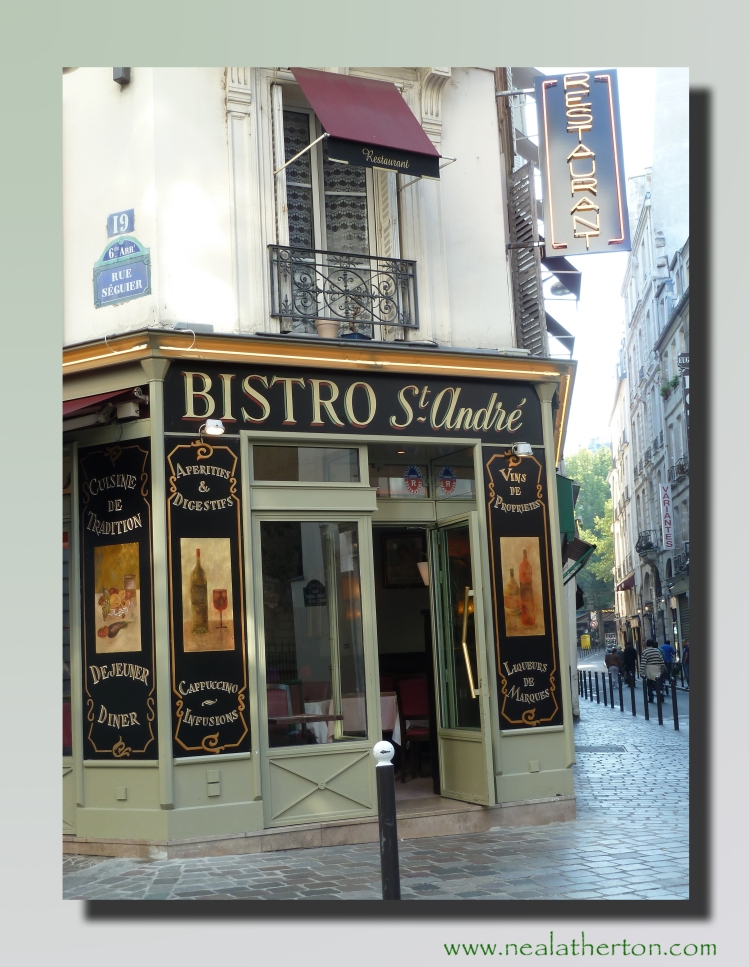
St Andre bistro Paris
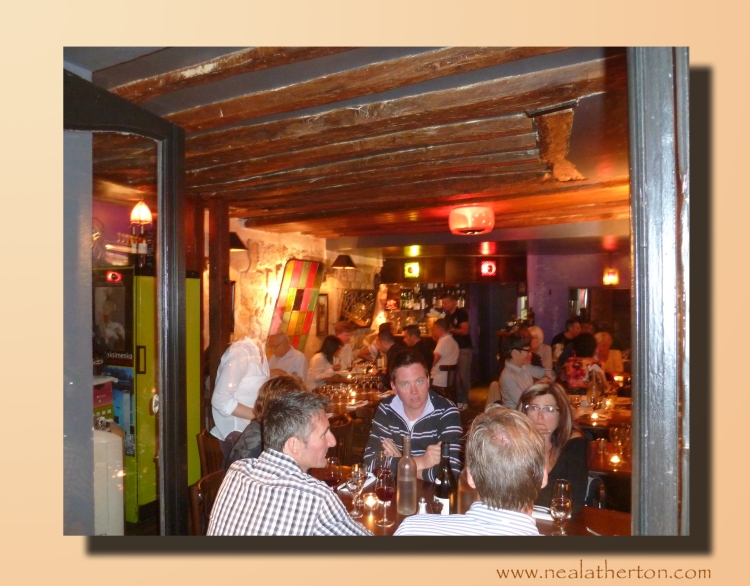
Evening service in the Marais
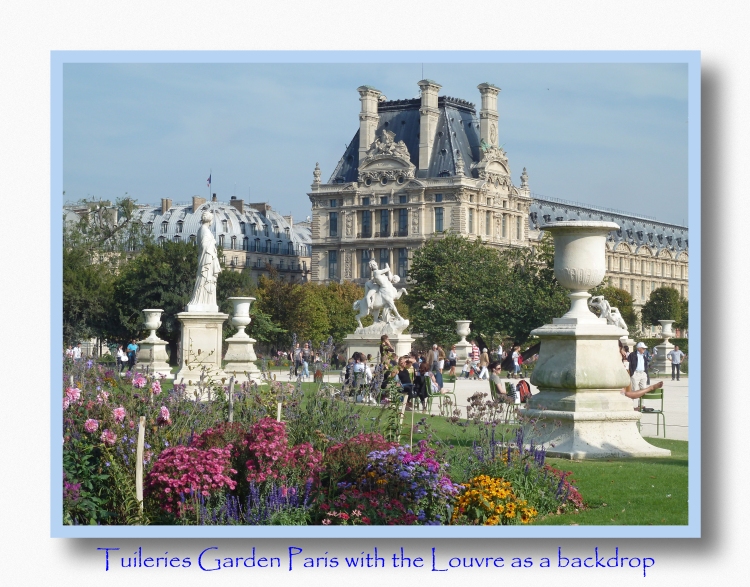
A great view of the Louvre from the Tuileries Gardens Paris
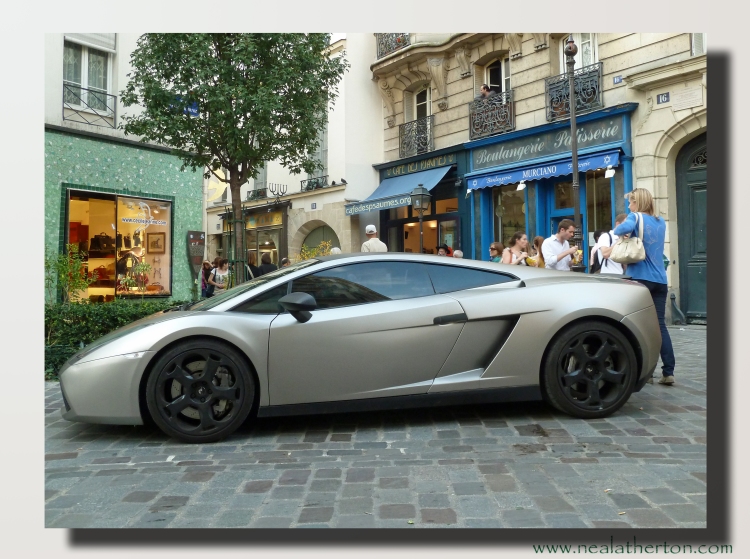
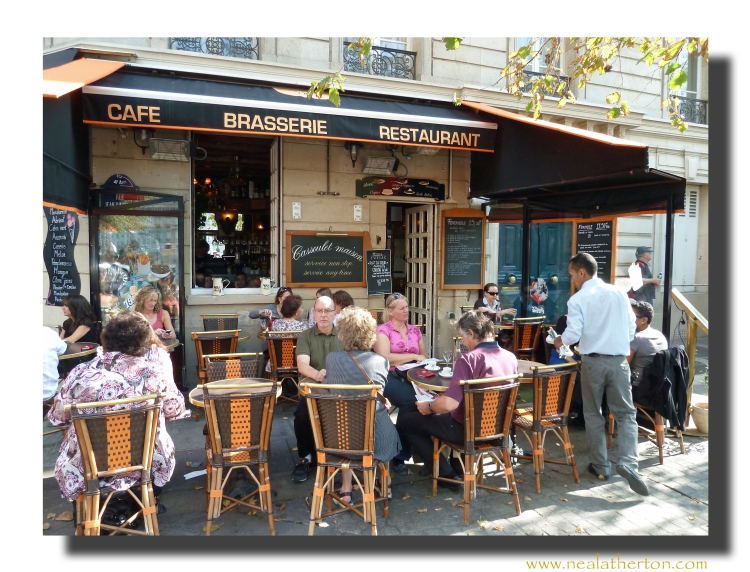
Quite an arrival at a cafe in the Marais district of Paris
A popular stop for coffee or lunch on Île Saint-Louis Paris
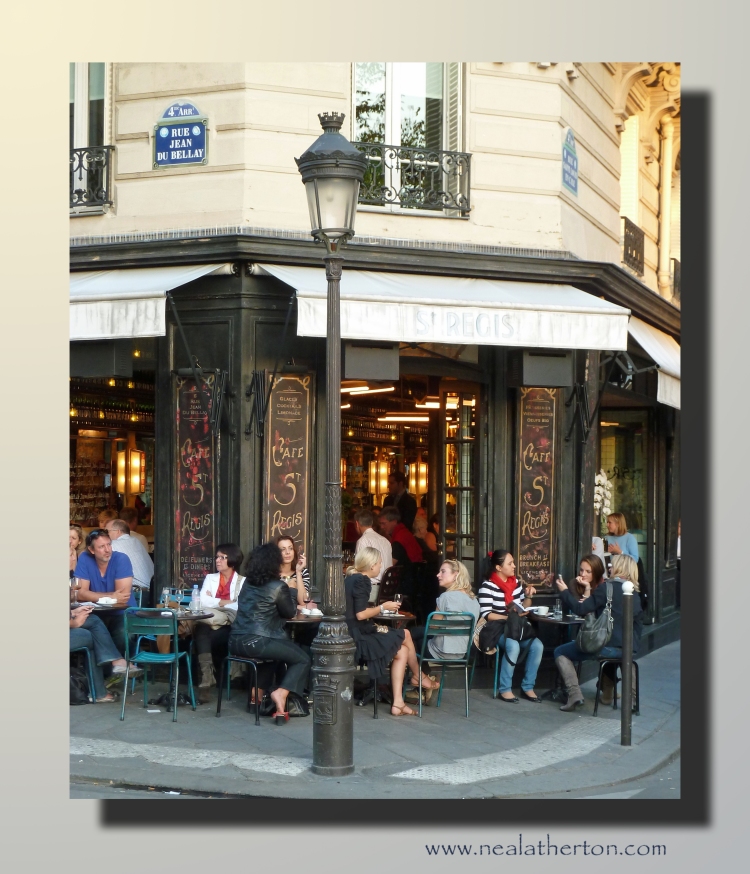
Cafe Regis on Île Saint-Louis Paris
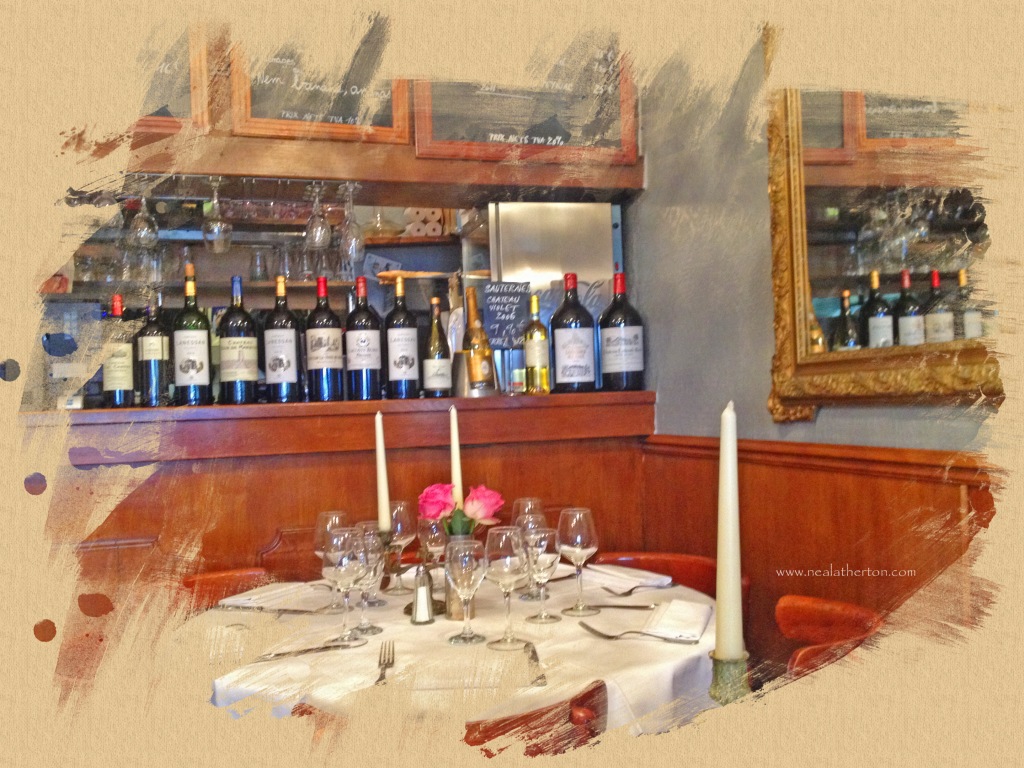
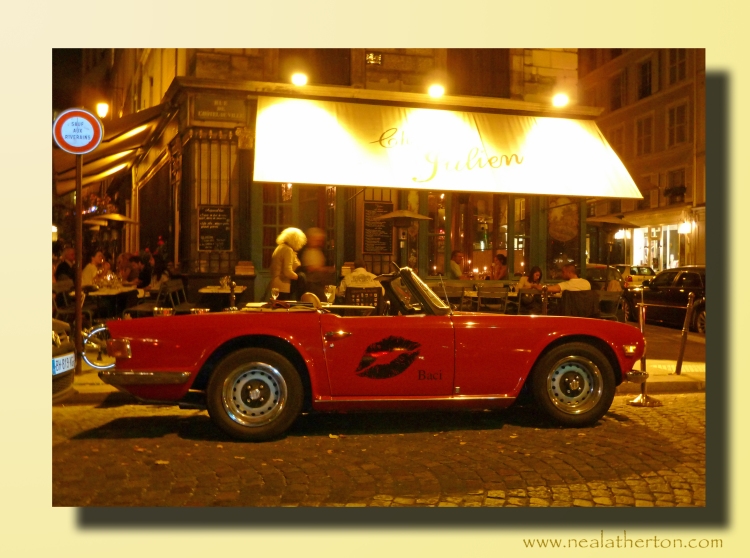
Dining in style at Cafe Julien Paris
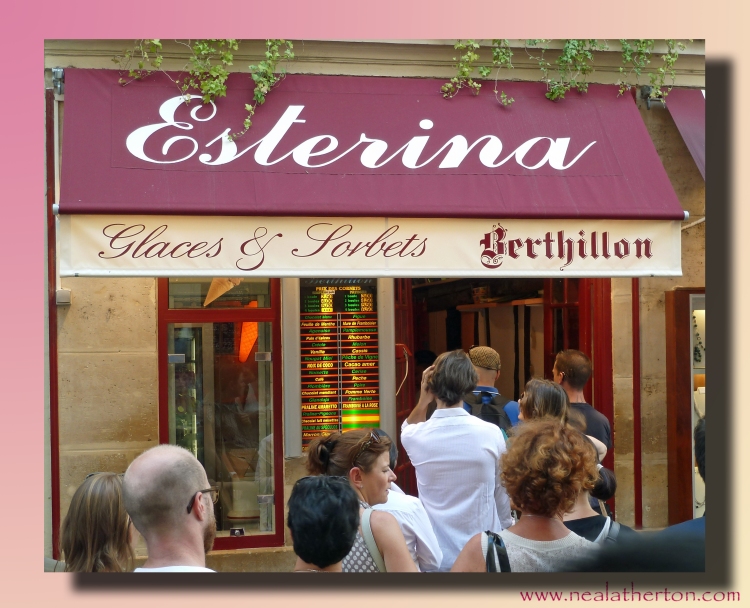
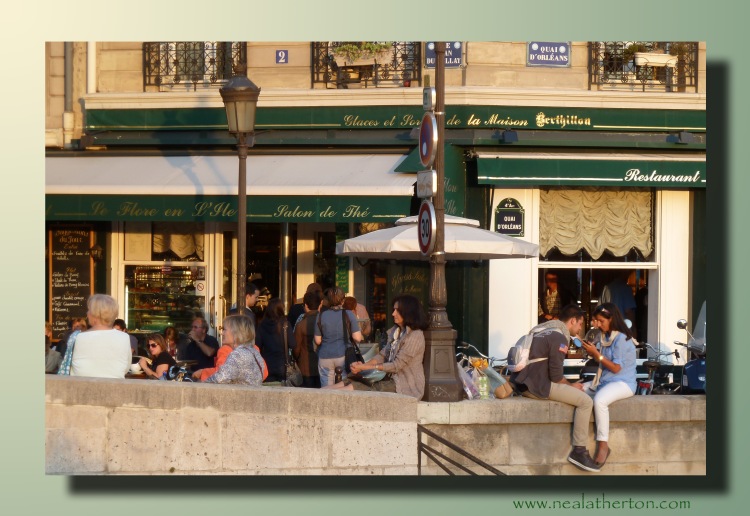
Who can resist an ice cream at Berthillon on Île Saint-Louis Paris ?
Marias Cafe Paris – relax with a coffe
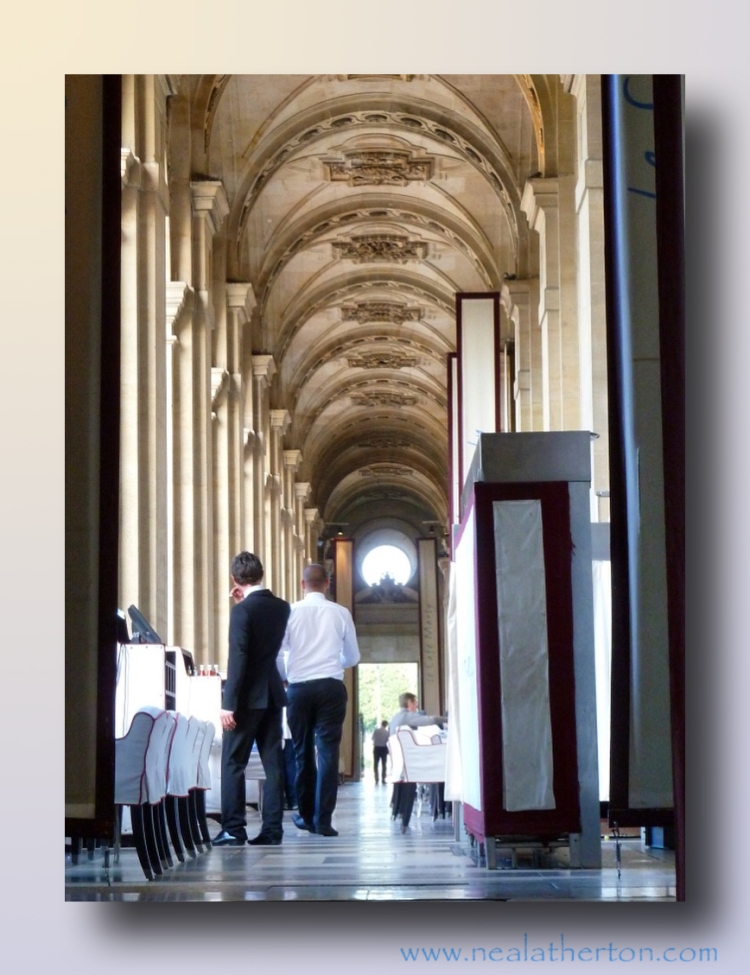
Start your day at the cafe terrace here in the Louvre Paris
Tokens of love left on the Pont des Arts Paris
Could on be Paris – a view to the Quai D’Orleans on the islands
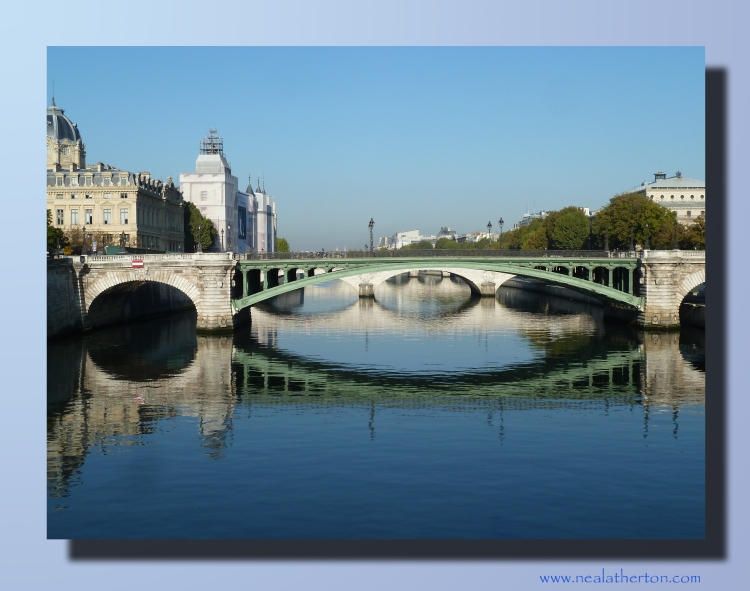
Reflection on the Seine Paris France
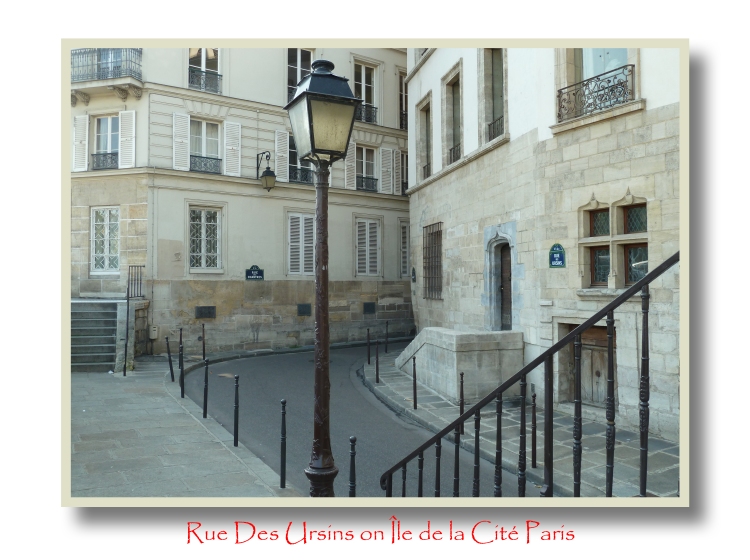
A quiet street close to Notre Dame – Rue des Ursins Paris
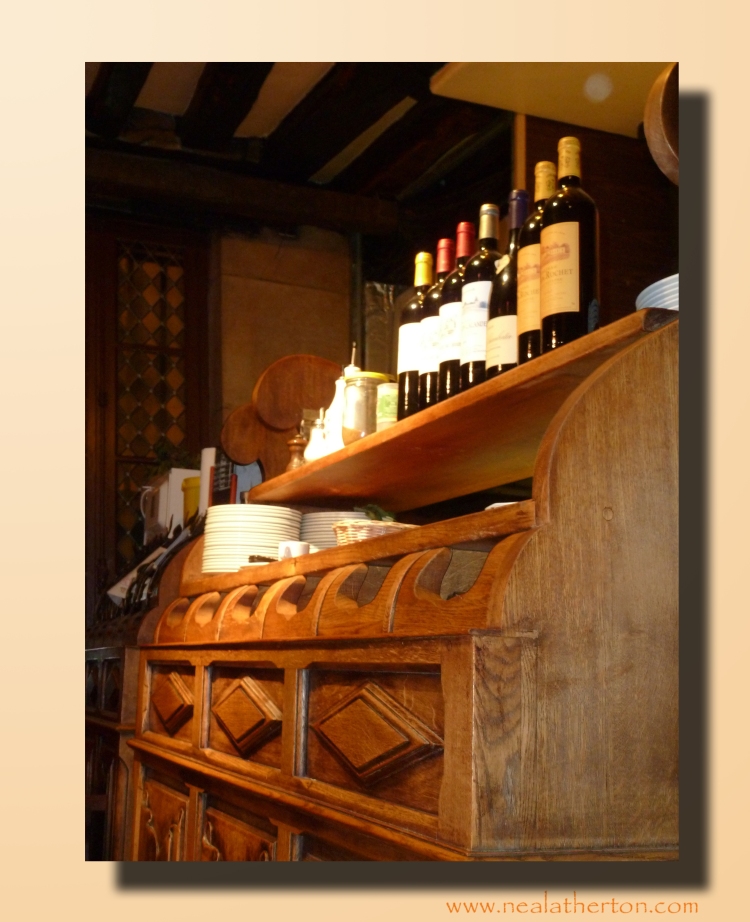
Inside the restaurant of Aux Anysetiers Du Roy on Rue Saint-Louis en L’Ile Paris, France
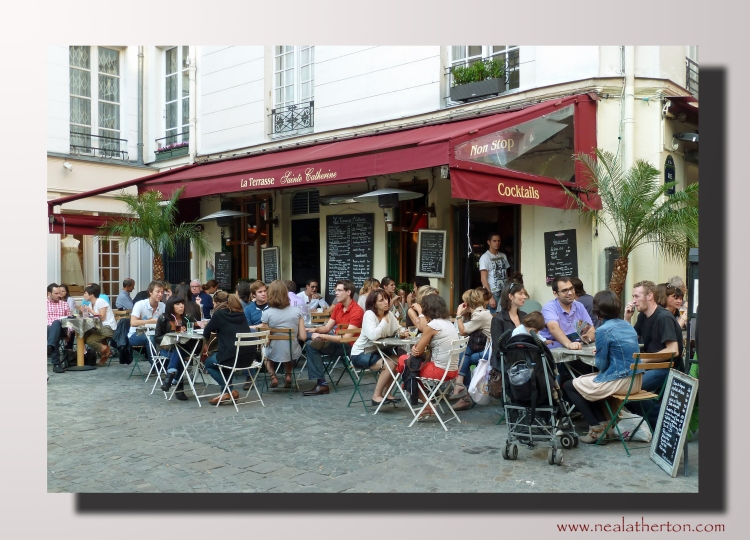
Sainte Catherine restaurant in a quiet square in the Marais Paris
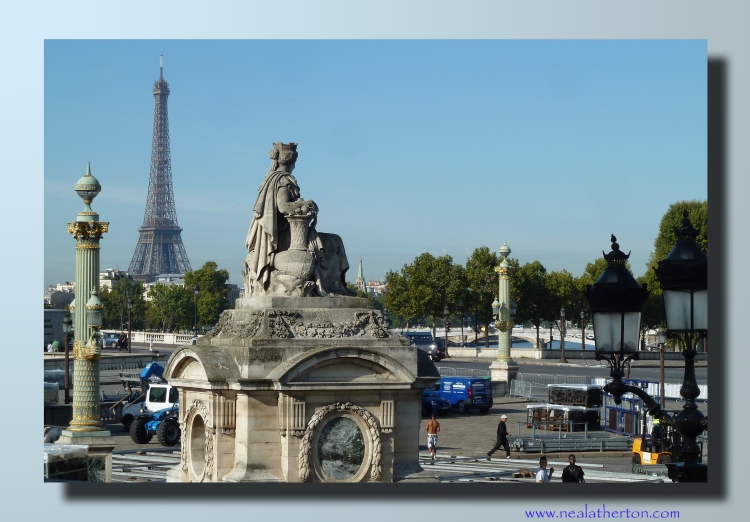
A classic view from the Tuileries gardens Paris
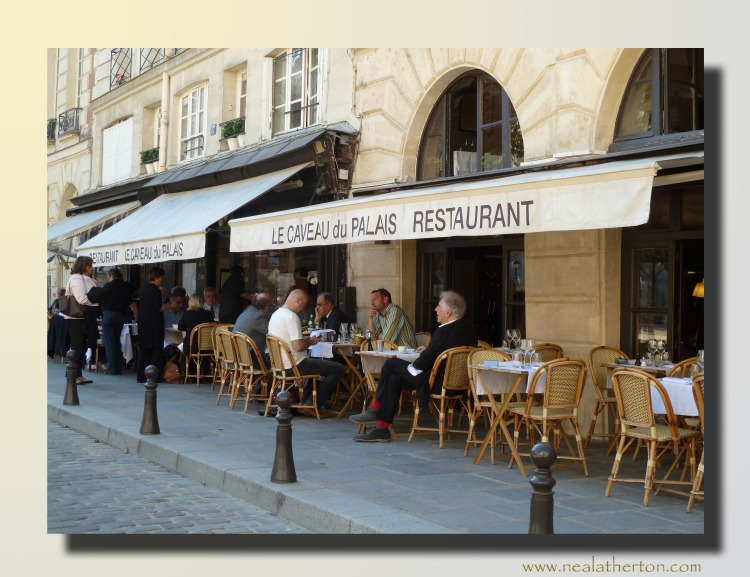
Le Caveau du Palais restaurant in the Place Dauphin Paris
Please Enjoy my Travel, Music & Ancestry Books on Amazon – FREE on Kindle Unlimited https://bit.ly/bookneal






























 French Travel Books - France, Paris, Provence & French Food & Wine