A trip to the French restored treasure of Carcassonne

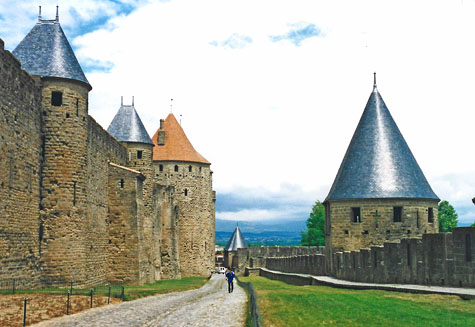
vineyards in front of medieval city with pointed turreetts and stone walls
The medieval city of Carcassonne South West France

Please Enjoy my Travel, Music & Ancestry Books on Amazon – FREE on Kindle Unlimited https://bit.ly/bookneal

We also had the opportunity one day in our first week in France to visit the cité of Carcassonne. My only recollection prior to visiting this medieval, heavily restored fortress cité is of having watched the English TV chef Keith Floyd exercising his culinary skills in a vineyard outside of the walls, a glorious view of the cité as a backdrop.

I cannot remember at all what he cooked.

I always recall that behind him you had the dazzling reflection of the bright sun reflecting on the roofs of the cité, roofs that always seemed to appear as having been just re-roofed with a European Union repair grant. One unavoidable feature about Carcassonne though is that it does always divide opinion regarding the results of this restoration. Certainly, there are many aficionados that do like their ruins to be just that – ruins.

Others may lean more to wanting to see an authentic restoration taking it back to how it originally looked. These are the ones that are of the strong opinion that Walt Disney had a serious hand in Carcassonne’s restoration. That can be discounted as definitely not the case as this cité was restored by the architect Eugene Viollet-Le-Duc in 1853. He also worked on the restoration of Notre Dame on the Ile de la Cité in Paris and on Mont Saint-Michel. With his plans for Carcassonne I cannot help but feel he was ahead of his time, somehow having had the foresight to appreciate that one day there would be throngs of people that would have access to fast transport and this would be the time that they would flock here in droves.

He also seems to have realized that one day Carcassonne would look fabulous on film.

His restoration design seems to have been produced with that in mind and yes, you certainly can argue it is a bit like a theme park in places, but it is surely better than being a ruin and despite all the touristy cafés and shops you are able to quietly escape the crowds and drink in the atmosphere of this incredible citadel.

Pointed turret towers and ancient stone walls around a city
Outside the walls of Carcassonne

Anyway, all the delights of Carcassonne are for later in the day, for our journey along the way was an interesting experience in itself.

We had not travelled on our tour bus far beyond Perpignan and into the countryside. Hungry passengers soon indicated they wanted a breakfast stop quite soon after leaving the coastal area. The bus was winding its way down a very picturesque valley soon narrowing towards rocky cliffs. At the meeting point of which there was a small village that looked down into the river from its square with an ancient stone bridge spanning the ravine.

At the top corner of the square, a square that was probably larger than the village itself, was a café. Slightly unnervingly, parked just in front of the café there were several army vehicles. The French Foreign Legion has headquarters in these parts, but these were regular troops. There were around twenty-five of us on this trip, most probably more numerous than the village population.

As we all filed into the café for a coffee and croissant, I got the distinct impression that the owner would usually only be used to serving 3 or 4 people at a time. For a small village café this could have been viewed as a cause for celebration, a whole week of takings to be gleaned in one hour and an ideal chance to rip off the British who were still coming to terms with how much the currency is worth.

The lady owner stood silently behind the old bar. Her face though looked far from happy, in fact it was a face that reflected the sheer terror of thinking how she could possibly deal with this merry crowd of tourists. The simple fact was that she could not and rather than immediately taking our orders it was clear that she really wanted to show us a freshly displayed closed sign hoping we would leave.

A huddle of uniformed men and women were quietly observing and comprehending the situation. It was then that the French army, as represented by this small group quietly sipping their coffee, their AK-47s on the back of their chairs currently not required for use on the English, swung into action.

We watched in amazement as the soldiers all moved into the cramped space behind the bar, grabbing cups and plates and laying them out on top of the bar. I think the owner was not aware she had that much crockery. The coffee machine went into meltdown and one of the soldiers soon returned from the village boulangerie laden with warm croissants and other pastries. I am not entirely sure if one of them stayed behind to look after the weapons while all this was going on. Within a truly short period of time we were all contentedly served. The beaming owner, who had in fact done absolutely nothing to assist these volunteer sous chefs, mopped her rosé brow and counted the takings. The variety of training soldiers get these days is obviously quite remarkable and once they have finished their careers shooting people then a restaurant in Paris would surely be their pathway to riches. Fantastic job boys and girls.

We most satisfied customers all left in a real spirit of entente cordial with much hand shaking and back slapping and really we could just have gone straight back home then as that was probably enough excitement for the day but on the bus went towards Carcassonne.

Whatever may be your take on the restoration of the cité of Carcassonne you cannot be other than impressed on seeing the outline of the cité come into view for the first time. It is magnificent and the roofs really do look extremely modern. I expected them to be thatched. It is a very impressive sight.

That first initial impact about the architecture is diffused to some extent when you approach the main gate and pass through into the small courtyard. Then your senses are assaulted by all the Cathar themed shops in the extremely narrow street in front of you. It is almost compulsory to be carrying a plastic sword or a crusaders helmet while wearing a Knights Templars tee shirt emblazoned with a red cross. All the children love it but at this point I must agree with the detractors that the ambiance all seems a bit contrived and like a Cathar Disneyland.

On the left of the impossibly narrow street is a café that does crepes in an ‘ancient style’ – you tell me. Beyond that we have a Musee du chapeau and as much as I love history I not sure that a hat museum is a big attraction, but it does also sell hats, presumably the ones no one wants to look at anymore. Beyond the hat museum is La Taverne Medievale, in fact there seems to be one of those on both sides of the street. I assume by now that you have got the impression that this place really does try to trade on its past and that is a very violent past, one that resulted in the virtual wiping out of the culture and the resident people of this region. So, it seems a rather incongruous subject to now turn into mass tourism with a theme park twist.

vineyards in front of medieval city with pointed turreetts and stone walls
The medieval city of Carcassonne South West France

You must smile at the beginning of the street where there is set of traffic lights that change all day long as usual, waiting to control the rush of traffic. It is quite a funny sight to see as the actual chances of even getting the tiniest Smart car up a street so densely packed with tourists are non-existent.

If you happen to be a history or architecture buff it is perhaps advisable to avert your eyes from street level and look up and then you can begin to get a feel for how this cité used to look. It is here that the restoration is more sympathetic to history. Once you arrive at the top of this street after you have had your Crusader burger and Cathar ice cream the cité starts to open up, exploring it becomes a pleasure. It is true that once again there are souvenir shops, but they become fewer and farther between and you start to come across higher quality little shops and cafés. Flower arrangements in the streets and terraces become more abundant and there is finally space to breath.

Here there are restaurants with attractive terraces and the whole place becomes extremely pleasant with interest around every corner. You get an awareness of the size and strength of the ramparts and the solidity of the buildings inside the cité that once served as a protection back in the Middle Ages and earlier. Most of these walls were still mostly intact at the time of the restoration so all seems more in tune with history as you explore further into the cité.

You become so far removed from the tourist traps that you even come across a five-star hotel, Hotel de la Cité. It is evident that here is indeed an oasis of calm and luxury within the fortifications, although with us feeling slightly underdressed, we simply stare inside for a moment and move swiftly on. Though please do not let me stop you hammering your credit cards if you are passing one day.

We as mere poor peasants from Lancashire find a crepe café and have a simple lunch of savoury and sweet crepes. The medieval theme is to be seen everywhere in this small café. You do feel you could be in real danger if one of the eBay purchased ancient artefacts were to fall from the walls or ceiling. It is pleasant petit lunch served with a smile and you cannot ask for more than that.

One bizarre thing about the meal was that the rosé wine was served in what I can only describe as glass candle holders; you know the type that only have a stem and are housed in a type of metal candelabra structure. That is how it was presented to us on the table, but it did mean that you had to hold your glass at all times as you could not put it down on the table. All you could do was slip it back into the candle holder but then you couldn’t drink, could you? You would soon empty your wine glass if you forgot that it had no base to it.

It was an extremely sweltering day with cloudless skies, and we were glad of these more open spaces in the interior of the cité and the taller buildings do offer some degree of shade. It was very pleasant to stroll around the labyrinth of streets and then find once again more space and air.

In one of the lovely small shop windows was something that I really desired but I ultimately decided that because of the size of it and the distance we were from home not to buy it. For all these years since I have regretted doing so. The object was the most beautiful chess set and board with the pieces designed in what I can only describe as a very French Middle Ages style, but the craftsman had done it in a way that did not appear tacky or cheap. The set was quite colourfully finished with all the pieces appearing to be painted or done in enamelled pewter. It really was calling me but on this occasion my head ruled my heart, but it was wrong to do so – I should have bought it. I am now playing chess with my granddaughter and regret it even more.

To the other extreme then, one purchase that my son did make turned out to be completely useless, however. On this occasion I am not sure which part of his body told him to buy it. This was a watch, and I can safely say that despite paying a considerable sum for this timepiece the watch was never worn. I think it went down the eBay route about 15 years later having resided all those years in a drawer well out of sight.

How can I describe this truly dreadful piece of design that somehow my son for at least a moment in time found attractive?

It was large, it was brutally metallic and angular but square at the same time. It had a little glass phial on a very tiny chain that clicked into place in a holder at the bottom of the watch face. The phial would not contain much whisky or brandy. I can only assume that it was for a powdery substance. What was he thinking? In a short space of time, I think he was hoping for a refund from the Bank of Dad though he was not getting one on this occasion, he would have to live this one down for quite a while.

With all this retail therapy turning out to be quite stressful, we went back through the gates to be outside the internal walls. You can walk between these and the external walls as if walking on an old dry moat. If your thing is really history and architecture, then this is the part of Carcassonne that will really appeal to you. This space between the imposing walls is quite wide and you do feel small as you walk around the walls taking in the detail and grandeur of this citadel fortress. The restoration seen from here seems very much in tune with the original purpose of the fortress except perhaps the roof which once again I still cannot feel is authentic to the original. But despite that I have to admit it is an exceptionally fine example of the roofers art.

The finest view of Carcassonne I still feel is ultimately from a distance away from the walls. It is here that you can get a sense of the scale of the cité and appreciate with a little more empathy the planning and efforts of Viollet-le-Duc. Perhaps we can forgive him the liberties he may have taken in restoring it in a way that maybe is not faithful, but it does without a doubt appeal to the hordes of modern visitors.

On the journey back to Canet Plage the driver pulled into Limoux, a town famous for the local wine but especially its sparking Blanquette de Limoux. This fizz is made in a similar method to Champagne. Although, of course, they are unable to call it that, Blanquette de Limoux is just as famous in these parts as its exclusive Northern counterpart.

We had some time to spare to browse the main street in Limoux and find a wine producer with a shop outlet that was willing to give us a tasting – a degustation. Being always happy to partake of a free wine tasting we settled down to try a few examples of this regions wine, including the Blanquette. It is a sparkling wine that really is remarkably like Champagne and on our future travels we would find many of these sparkling wines made outside the Champagne region such as in the Loire Valley and in Northern Burgundy. For being unable to be associated directly with the Champagne name they are superb value as are genuine champagnes from smaller lesser-known champagne producers located outside of the main centres such as Reims and Epernay. I discover and discuss more about that in my French wine book – French Wine Uncorked.

We purchased a couple of bottles of sparkling Blanquette and made our way back on to the bus. If I had known beforehand the route the driver intended to take on the way back to Canet Plage then I would have had something much stronger to drink. It would prove to be a memorable and spectacular experience though, one not to have been missed.

For reasons best known to himself he travelled back to the coast by the way of the Gorge de Galamus, and let me tell you that precarious route is not one for the fainthearted. Spectacular though it most certainly is. When we were daring enough to look down from the window we saw breath-taking landscape. Somehow the driver negotiated the many rocky overhangs on the way home. With only a small wall guarding the edge of the deep ravine he managed to stay on the road, and we lived to tell the tale.

France is blessed with many such gorges and this region is full of spectacular and hair-raising roads. Many of them are not as well-known on the tourist route as ones such as the incredible Gorges du Verdon in Provence, but if you look out for hills and gorges off the beaten track you can find some amazing natural wonders that will delight and terrify you in equal measure.

Chocolat – a village in Burgundy Rue Cler – Paris

Please Enjoy my Travel, Music & Ancestry Books on Amazon – FREE on Kindle Unlimited https://bit.ly/bookneal

French Travels, Cricket, Springsteen & Brief Encounters

Please Enjoy my Travel, Music & Ancestry Books on Amazon – FREE on Kindle Unlimited https://bit.ly/bookneal

young girl fills water jug from a stone fountain unter shady trees in village in Provence

I was watching the English version of the Antiques Roadshow recently when it produced a blast from my past as well as reminding me of people we have encountered in France under the most unexpected circumstances. On this programme an old cricket stump was produced (if you are not familiar with the English game of Cricket you may have to bear with me for a while). This came from the most (in)famous series of matches ever played – the ‘Bodyline’ series of 1932/3 played in Australia between the host country and England. Leaving aside the controversy of those games, (the ill feeling still reverberates even today), one man produced an exceptional performance.

This heroic man, nursing a raging fever, rose from a hospital bed, defying doctors, to return to the stadium to produce the bravest match winning effort imaginable – the cricketer was the Lancastrian (my home county) Eddie Paynter. This cricket stump had the autographs of all the players and Paynter’s was second on the list just below the controversial captain Douglas Jardine. In 1969 I was a youngster with an enthusiastic interest in cricket, this was many years after this heroic feat. That September I attended the end of season games at the lovely Scarborough cricket ground on the Yorkshire coast. These games always traditionally ended the tour of a visiting country in the days before teams were constantly rushing off around the world to more lucrative fixtures. In this case the touring team was New Zealand. I had seen them earlier in the season at the Lords Test Match in London.

Being a cricket geek (still am), I, along with some other newfound young friends, spent several carefree days collecting autographs of the players, being invited into the dressing rooms, and having a really exciting time.

At one lunch break a couple of elderly men were standing in front of the pavilion. Having observed our activities, they called us over and gathered us together. With a twinkle in his eye one of them offered our group the other man’s autograph. Everyone looked bemused, but I knew who he was. This elderly gentleman was Eddie Paynter, the most famous of Lancastrians to me. I gladly accepted his offer, truly honoured to have met the man. But around me my young Yorkshire friends were still puzzled. They missed out, for he would not sign any more unless they acknowledged who he was. Even after seeing the autograph in my book, they were still none the wiser. I still have the autograph – a treasured, now framed, possession for a cricket lover. I will return to this at the end of the chapter – in France.

I am one of those people who seem to have a knack of coming across celebrities on my travels and this always amazes my wife. Unless it is that they are really looking for me! ‘From Hank (Marvin) to Springsteen’ to paraphrase Neil Young they always seem to cross my path. The number of times I will say ‘Oh, look its ………….’ I have lost count.

Chateauneuf du Pape Provence France – it is not him!

Two encounters stand out in France, and they are both involving incredibly famous soccer players. One was in Chateauneuf du Pape when this great French player, who is now an equally famous manager, was coming out of a hotel with his wife (possibly – well he is French) as I passed. I took a photo of him from a distance and my son later agreed it was indeed the said man but berated me for being a bit of an intrusive paparazzi.

The second time was in Paris inside the Gard du Nord station, when on a sweltering day this giant of a man gave up his seat for my wife. I did not tell my wife that this gentleman was an icon of French soccer but some years later he was a TV pundit on the coverage of a World Cup game. As she was watching I told her she had met him once. After a bit of thought with just the prompt of Paris she actually remembered exactly where she had come across him and the chivalrous moment – a bit of fun and a lovely memory.

So then, let us turn back to the cricket and Trelly. On that magical day in Scarborough back in 1969 it was the last day of the game, coming to a close with a sort of end of term vibe in the air after a long hot cricket season. Players who were no longer taking part in the game were relaxing – some more than others. A famous England player of the time was very chilled, happy, and boisterous, before passing out in a pavilion seat having partaken of plenty of excellent Yorkshire beer. For a young boy this was quite a revelation to see one of your idols in such a state of inebriation and it certainly would not happen today – well not in public.

Alt="Photo of cows in Normandy France"
Peaceful Trelly in the Manche region of Normandy

Many years later, over 30 years in fact, I was in Normandy in the small village of Trelly, having had a superb meal in the delightful hotel/restaurant, La Verte Campagne. We were enjoying our after-dinner drink (Banyuls) when a party of four late arrivals announced their arrival behind us in the entrance to the restaurant. I did not see them properly, but they were clearly English, and my ears pricked up on the word ‘cricket.’ Anyway, next morning as I opened the bedroom door, I heard the opposite door also opening and there I was face to face with the emerging occupant. Yes, it was my famous beer loving English cricketing hero of yesteryear and such was my surprise that I could only stutter a faint ‘Bonjour.’ That night this group which included another eminent cricketer were seated at the next table to ours and I only had ears for their conversation which was all cricket related, especially tales of touring Australia and their recollections of great players. The food and talking to my wife were virtually ignored I am embarrassed to say, but such a great memory – France provides so many.

I am left wondering if really all these celebrities are in fact thrilled to have met ME. Does Springsteen recall excitedly the time he met Neal Atherton. I mentioned this thought to my wife but did not get a reply – well I did but it was not a positive one. By the way, the cricket stump was worth £10,000 – WOW!

A Day in…………Port Isaac Cornwall

Please Enjoy my Travel, Music & Ancestry Books on Amazon – FREE on Kindle Unlimited https://bit.ly/bookneal

Alt="Port Isaac Cornwall photography for UK Travel Memoir"
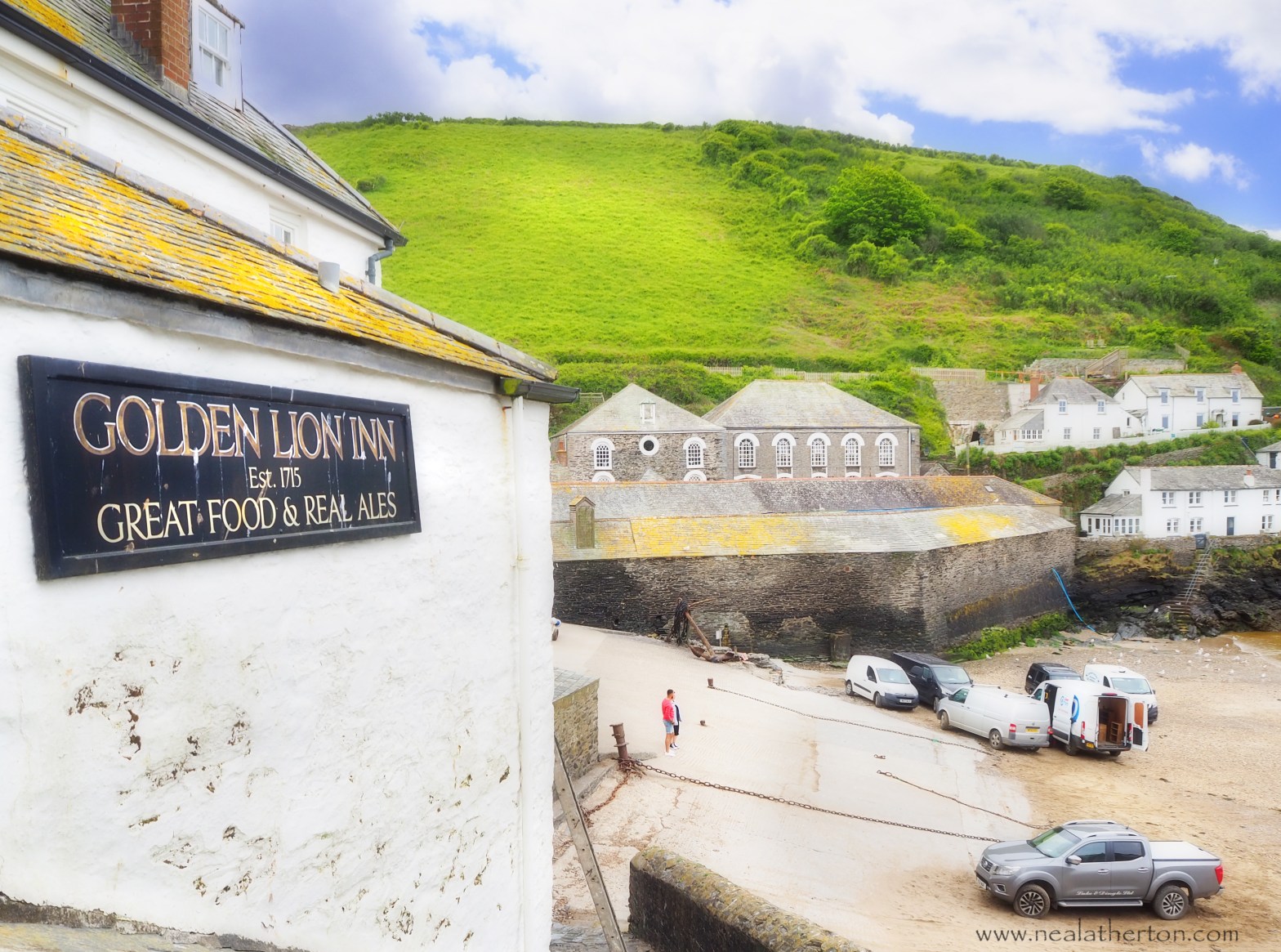
Port Isaac harbour from a view on Fore Street

Port Isaac is a small fishing village that tumbles down to the sea at a narrow cove on the North Cornish coast. Although certainly not short of tourists we found this area delightfully by passed by most visitors as they speed along the coastal roads to Newquay, St Ives and other hotspots of Cornish tourism. No doubt this area suffers also from the second home syndrome that so rightly annoys the locals, but this part of Cornwall retains a more authentic feel of community. Port Isaac certainly felt vibrant and alive.

It is a fairly long but gentle stroll from the main car park to the start of the older part of Port Isaac. Then the incline changes from gentle to steep. There is another car park on the way to the neighbouring Port Gaverne that is closer to the harbour, but it is smaller and often full.

On our stroll down to the harbour we are confronted with Port Isaac’s more recent past. Outside a relevant property there is a tour guide and his flock of Doc Martin devotees enjoying tales from the filming of that popular TV series. A good percentage of today’s visitors are in Port Isaac because of the Doc Martin show. It is an enduring reason for people to arrive in the village, seeking out the filming locations. I must confess that I have never watched a single episode. Whether that deserves an apology I am not sure but I sense I am in a minority of at least one just now. Cornwall is a mecca for film producers and this particular production is extremely popular.

We pass a couple of the ubiquitous, but welcome, pasty establishments. As always in Cornwall the claim of a particular outlet will try to surpass that of its neighbour. The finest pasty in all of Cornwall is for you to decide but you will not be wanting for advice along the way. Port Isaac, like many small harbour villages, boasts some attractive artist studios and independent gift shops. On the way down Fore Street (do all Cornish villages have a Fore Street?) two catch the eye – Secrets which has a variety of artwork and artisan creations and Martin Dempsey Gallery just a little farther down the incline. Distractions abound as we slowly make our way to the harbour. Along the way as a keen photographer I am drawn to the occasional opening offering a panorama of the harbour and out to sea. It is an attractive and quite dramatic setting for a fishing community.

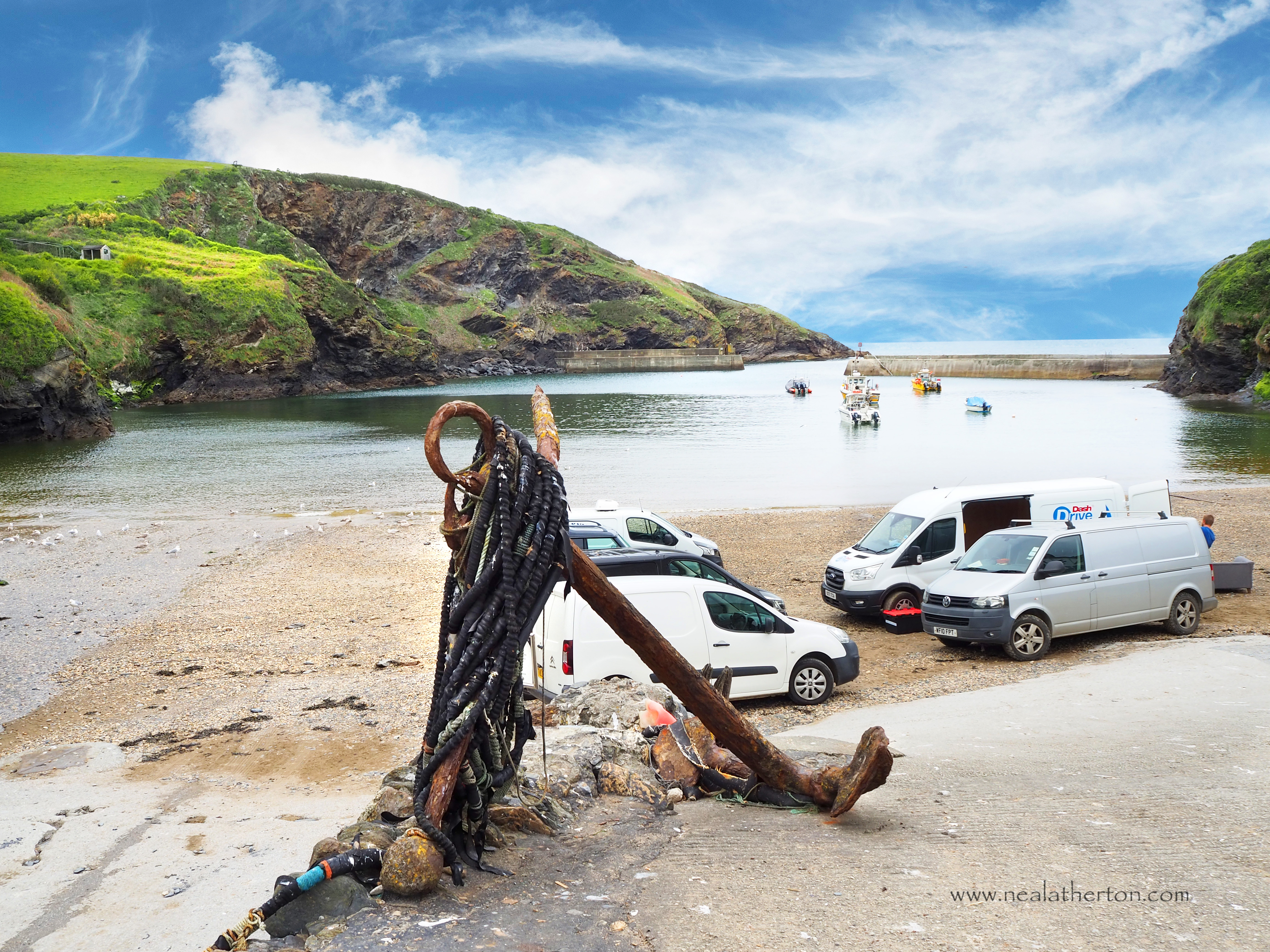
The harbour landing area is called ‘The Platt’. It is quite unusual in that it is very much a beach landing for the vessels and the catch would be hauled up the incline of the Platt. Lobster pots give a clue as to the popular catch for the village. Fresh fish is sold just yards from the sea at ‘Just Shellfish’ by the Platt opposite the RNLI station. A young lifeboatman was touting for contributions but as I had my RNLI cap on at the time, he allowed me to be exempt. It is a charity I am happy to support. Living in Weston Super Mare I am aware on a nearly daily basis just what incredible work they do. As for some of the people they have to ‘rescue’ at WSM – well, words fail me!

Alt="Photo of Port Isaac Harbour Cornwall for UK Travel book"
Port Isaac Harbour from ‘The Platt’

Port Isaac is not pedestrianised, it cannot be as it is a working harbour and village. One consequence of that is the beach landing area is used as a van park for the businesses in the village. Now, as a photographer I have to say that this does impact on the view. But, this is not a Cornish Disneyland, people live and work here. Fore Street is the main road in Port Isaac, but it is like most streets in the village, extremely narrow. As we got to the harbour a white van was starting back up the hill, coming to the first sharp turn up the hill. I have to say that I thought this to be the definition of optimism. I was proved correct as he met another van coming downhill around the same corner and they ended up face to face. That took some sorting out but I assume an everyday consequence of trying to make a living in this cramped space. The aptly named Squeezy Belly Alley is just off the harbour and you can see if that description would apply to you. I was fine.

I always feel self-conscious about exploring the narrow streets of a village like this. People live here and perhaps do not want people gawping at them, especially with a camera. However, tourism is vitally important to the village and on balance tourists will want to explore if they are to spend money in the village and hopefully the locals are not overly disturbed. I take a couple of photos along the lanes and then run away quickly.

Painting of Middle street cottages in Port Isaac cornwall with lanscape and sky beyond
Port Isaac Cornwall street scene in Oils by Lorna McConnell

Directly facing the Platt and with views out over the harbour is one of Nathan Outlaw’s Michelin starred fish restaurants. This one is quite small, serving a few tables only. At the beginning of his career he worked with well known fish chef Rick Stein in Padstow, Cornwall. He has gained a fine reputation. One of those chefs that people seem to not have a bad word about, and he is popular locally – he doesn’t appear to be a knife throwing chef shall we say. He is firmly based in Port Isaac after having his flagship restaurant in Rock for several years. I love fish and cook it often at home. We have enjoyed Rick Stein’s restaurant several times and his style is to keep it simple and fresh and that is just perfect for us. I am undecided about whether I want my fish restaurant experience to be in the style demanded to gain a Michelin star. I need to try it to see whether Nathan Outlaw’s extra attention to precision detail is for me. Maybe next visit.

Alt="Port Isaac Platt Cornwall for UK Travel book memoirs"
The landing area called ‘The Platt’ at Port Isaac Cornwall

Fore Street leads back up to re-join the SW coastal path, just close by the Cornish Cove tearoom. This path is well worth the detour, leading to the even smaller Port Gaverne. The path gives excellent views over Port Isaac sea entrance. The cliffs opposite show signs of caves having been formed at the base. Not that I shall be exploring. Visiting in early spring means you get the delight of seeing the abundance of spring flowers on the cliff sides and that is true throughout Cornwall at this time of year. The path leads to the other car park for Port Isaac and the start of the road down to Port Gaverne.

Halfway down to the beach is a welcome seat offering a spectacular view over the cove. The cove is narrow and on first view a treacherous place to bring a boat into. Fingers of rock jut out into the cove and the entrance is narrow and in fierce weather would have needed exceptional skill to navigate. Port Gaverne was once a thriving port and during its time of importance for fishing the catch would have been mainly pilchards. You sense that would have been a tough life, even tougher than the life the fisherman of Port Isaac just around the headland would have endured. Today, it is a perfect spring day. On the rocks leading to the cove entrance brave swimmers are taking advantage of the calm sea and leaping off the rocks for a spot of wild swimming. I watch admiringly but with no wish to join them.

Alt="Port Gaverne Cove Cornwall photography"
Port Gaverne Cove Cornwall

Time now to make our way back. Above the car park on the left is another art gallery – Cliffside Gallery. A beautiful gallery to enjoy, featuring artwork, textiles and more. Opposite just higher up the road is Nathan Outlaws new restaurant ‘New Road’. It reminds me that we have still not bought any fresh fish and the thought of walking all the way back down to buy at the harbourside is not a tempting one now. Just farther along is a fish oasis. A small inviting café called ‘Fresh From The Sea’ does indeed live up to the claim in the name. It sells fish in addition to serving a few tables inside and outside. We could have stayed for the ‘Sole in a Bun’ but instead buy some fresh sole to cook later. It turns out to be the most wonderful fresh pieces of fish I have tasted in a long, long time. What a brilliant place and well positioned at the top of the hill rather than below.

So ends our day but the fish in the evening with a chilled glass of wine will round of a excellent Day in ………Port Isaac.

Spend a Day in more UK Locations

alt="New French Travel Guide Book Off the Autoroute"
OUT NOW on Amazon for Kindle, Kindle Unlimited, paperback & hardback

Claude Monet and his House at Giverny

Please Enjoy my Travel, Music & Ancestry Books on Amazon – FREE on Kindle Unlimited https://bit.ly/bookneal
Monets house and garden at Giverny France. A view of the main path to Monets House.

The story goes that Monet in his search for a house to accommodate his growing family set out one day by train from Paris and spotted what was then the tiny hamlet of Giverny. Standing out amongst the cluster of properties along Giverny’s long main street he saw from his carriage a long but low house set in surrounding scrubland. The railway line is no longer there, although there was no halt in any case at Giverny, so Monet walked back through the fields from Vernon to find this property. What made this building stand out was that unusually it faced away from the road towards the river. For a modern-day visitor there is no inkling of the beauty behind the stark long wall on the main street.  He found to his delight that this property was available for rent and the rest is history. Monet eventually purchased the house and garden. You could say it is bequeathed now to all the visitors that can experience this most magical of places.

One of the haunts of Claude Monet in Giverny – Hotel Baudy

Monet was at this time a widow after the death of his first wife and mother to his children – Camille Doncieux. Before her death however he had begun a relationship with a woman of a higher social standing than himself. Alice Hoschedé became his lady-friend as they would have been discretely known and with Camille and their children they lived as a menage for some time up until Camille’s death. At Giverny Monet and Alice set up home with his two sons and her six children although they could not marry until 1892 after the death of Alice’s husband Ernest. The house would be Monet’s delightful home for the rest of his life, and he was completely devoted to the property and gardens, all becoming synonymous with his name. In front of the house lies the Clos Normand, full of flowers. The other side of the road he developed into what we see today by having the waterlily pond constructed. To achieve his aim, he was decisive and didn’t hesitate to change the landscape by diverting a branch of the Epte River. We shall visit the house and gardens more than once on our stay but first we must find our accommodation for the final leg of this trip.

La Pluie de Roses is located some way past Monet’s house as you come towards the end of the village. We are welcomed after our rather fraught day collecting and driving our hire car by Philippe and Elisabeth. This couple have recently sold this gorgeous property, but the current owner appears from the excellent reviews to have more than maintained their high standards. Giverny is blessed with some fine Bed and Breakfast accommodation with this property exceeding our expectations. The rooms are beautifully decorated in a style that could only be encountered in France. There are some quirky touches especially in the downstairs bathroom that is adorned with theatre posters and related photos. It could be a place to linger and read the walls. Our bedroom is sumptuous and in sympathy with the period of the house. It also has a quirky feature in that the fabulous shower has to one side a full-length plain window. You get a great view out over the village and presumably someone in the right place at the right time will get more of a view than they bargained for. The odds are in your favour due to the position of the bathroom – but you just never know.

The house has a wraparound garden that is lovingly tended. The grand stone steps that lead to the French doors at the rear of the house are a very typical feature in a house of this style. It has an intimate grandeur.

The hosts do not provide an evening meal but there are some good options for dining in Giverny. We contented ourselves on this first evening with a light snack before sleeping very well, only waking with the birdsong, ready for the main event of our visit – Monet’s house and garden.

Our hosts at La Pluie de Roses have an especially useful scheme whereby they can sell you tickets to enter Monet’s house and gardens. It is only when you gain a sight off the house that you realize just how much of a life saver this is. Strolling to the front of a queue that stretches way back down the main street and gaining instant admission to the accompanying despair and groans of the waiting throngs was a great relief. Actually, we did not go straight into the gardens. Just by the entrance a young newly married couple were emerging after having had some wedding photographs taken in Monet’s Garden. It would be difficult to beat that for a location for your photographs. They kindly obliged while I took a couple of photographs of my own and they added a touch of glamour to the scene on this hot sunny morning.

Monet House and Garden – a quiet spot with the Japanese Bridge. A French travel tour

As you pass through the entrance the gardens are on first impression slightly underwhelming. I think it is because you feel that an iconic Japanese bridge should be right there in front of you. There is no question that expectations are extremely high. Initially however, you must make your way around a grassy section complete with discarded garden tools and a wheelbarrow before you come round to your first view of the long low house that Monet so loved. Now you are completely engrossed and drawn into this magical place that Monet created and has been lovingly maintained as an incredibly special place in France. The house is gently shaded from view by the lush growth of the trees and plants as Monet skilfully teases you to explore and find the perfect view of his house. That perhaps is to be found when you reach the main pathway leading up to the house, a view that Monet captured so well. Today that pathway is flanked by a gorgeous array of flowers in the lush borders either side of the path. One of the tricks he used, one which shows his skill not just as a painter but as a gardener, is how he leads you around the pathways to continue giving you different glimpses of the house. It is stunningly beautiful. If you have done your homework and have a love of his Giverny paintings, you will also be able to imagine and indeed expect one of his children to stroll out from behind a tree or shrub or emerge from the house into the garden. The setting for painting his young ones would have been magical and inspiring for him and you can clearly understand why he painted so many canvases of a personal nature here at Giverny. Monet also liked to take himself away and be alone in the garden. He would not have lacked for any number of beautiful subjects in the garden in front of the house. Then he could go across the railway into the Japanese garden and be quite peacefully secluded to paint the images that he is most famous for. Today the Japanese garden is reached by a short subway that takes you under the road where you are transported back in time to an atmospheric setting that is beautifully tended and familiar to anyone with the slightest knowledge of Monet’s work.

The Japanese section of Monet’s Garden is a delight and very sympathetically maintained. Although the lily ponds and the ubiquitous bridges are of course the highlights you have come to see it is the secluded, tucked away parts of the garden that really delight. The area shaded by the trees with a small river of water, a rowing boat tied up by the bank waiting for Monet to step in with his easel and paints. These atmospheric tableaux really transport your imagination back in time, giving a genuine sense of how Monet must have delighted in the construction of this gorgeous garden and then to enjoy using it to paint some of his most enduring landscapes. They are also a welcome quiet section to enjoy before embarking on the path around the Japanese garden, a path that will need a little patience to negotiate. Being one of the world’s most famous gardens you will find it busy at most times. Waiting for a loving couple to finally finish their photography on one of the famous bridges does need some tolerance on your part but it is worth the wait. The views from the bridges over the lily ponds are spectacular and do not be put off or intimidated – take your time and get the shots you want. You will be glad you endured when you get home.

Claude Monet Haystacks in the French village of Giverny France

The lives of Claude Monet and Alice Hoschedé were complicated. They were a couple and their families were living together but Alice always had some dependence and contact with her husband Ernest. Alice tried to resolve the situation with her husband over the next ten years after moving in with Monet at Giverny but without success. The ambiguity of their relationship remained until Ernest Hoschedé died from a prolonged affliction with gout in 1891. Monet had bought the house and land in Giverny the year before, having rented the property until then. Alice and Monet finally regularised their relationship on 16th July 1892 when they married in Giverny. Four days later Alice’s daughter Suzanne married the American painter Theodore Butler.

Monets great canvases in Musée de l’Orangerie Paris France

With his marriage to Alice and the purchase of the house and land Monet could now settle into developing the house and gardens. He extended the gardens and embarked on creating the water gardens and the gorgeous expanse of lily ponds that people associate with Monet and Giverny. His collection of Japanese art was built up and the overall effect of his enthusiasm is the extravagant colour of the planting and the breath-taking beauty of the house and gardens that we see today. Much of the credit for the survival of the house and gardens to endure to the condition they are in today is down to the care that was given to them by Alice’s daughter Blanche. She married Monet’s son Jean Monet. Jean died in 1914 aged just 47 after a long illness. This was just three years after the death of Monet’s wife Alice and the two events consumed Monet with grief. Blanche returned to Giverny as a widow to care for Monet and help him through the remaining years of his life. Monet died in 1926 at Giverny. Blanche also was a painter and her haystack paintings clearly owe a debt to the tutelage of her Monet. Blanche took on the responsibility of the house and gardens and as she was so in tune with her father she enabled its survival to be as we see it today. It is quite a legacy. I can confidently state that if you have never been to Giverny then if you possibly can you must go – you will never forget it.

There is one final place to visit relating to Monet and his family – The village Church.

Monet family resting place in Giverny churchyard

The Monet family have a plot in this church of Saint-Redegonde located about a kilometre along the one main road in Giverny from Monet’s house. The plot, although not extravagant, certainly conveys the status of the great painter and his family in the local community. You will no doubt want to stop by the graves and pay your respects and there is an exercise to be done in working out all the family relationships of the complex Monets. The church repays a visit inside, but you have to remember that Monet was no great supporter of the church during his lifetime. It is entertaining however to try to picture the scenes played out here by the family. This little church played its part in many important family events of the Monet – Hoschedé family.

The Monet connection is not the only fascination that comes from a visit to this church. It was only by accident on our visit here that we discovered the graves of a crew of airmen that crashed nearby shortly after D-Day. I have because of my interest in family history developed a passion for touring churchyards and could not resist a wander through this one after paying my respects at the Monet family tomb. You cannot miss the unusual sight of a propeller turned into a monument. The inscription indicates that the propeller is from the Lancaster that crashed but from most accounts it appears to be from another aircraft. Here in the churchyard are buried the crew of the Lancaster, a plane that crashed on an operation near to Giverny on the night of June 7/8, 1944, less than 48 hours after the D-Day landings.

Resting place of Lancaster crew in Giverny Churchyard

The Lancaster plane was from 115 Squadron I LL864 piloted by Ronald Maude who was only 21 years of age. You cannot help but reflect what you personally may have been doing at that age. It most certainly would not have been flying such an iconic plane over dangerous enemy territory. Pilot Maude and his crew were based at RAF Witchford in Ely, Cambridgeshire. Early morning at around 2:20 am the plane was shot down by an enemy aircraft flying close to the Giverny – Vernon road. Incredibly they seem to know who the German pilot was that shot the plane down. He was a Major Walter Borchers who had a very successful strike rate as regards destroying RAF aircraft. He however also did not survive the war but continued in the air well into 1945 before being shot down.

The grave dramatically indicated by British flags stands out prominently in the churchyard.

The inscription on the memorial reads: “These seven air men fell and were buried together”.

Seven plaques with a personal dedication remembers each individual airman. There is also a poignant photo on the grave that was taken shortly before they died showing them as a happy close-knit crew. Soon tragedy would befall them. They are still remembered here by visitors who leave flowers and other tributes on this site.

I feel it is right that I list the names of these young men and please visit this grave when you have paused by the Monet grave.

They are:

P/O  Ronald Maude

Sgt Alan Anderson

F/O Ronald Tovey

P/O Harold Forster

Sgt Jack Fyfe

Sgt Robert Sutherland

Sgt Kenneth Penton

Normandy has no shortage of sites such as this one in Giverny Churchyard. You cannot help but be transported back in time to those days of conflict but it is still extremely difficult to visualize such horrors in this beautiful and peaceful landscape that we travel in today. Even though we are over 70 years on from those dark days of World War II the landscape is still bearing the scars and reminders of that time. In many ways we tend to think purely of the allied landings as being the defining moment of the fighting in Normandy. However, when you travel through the countryside and towns it becomes apparent that the beach landings where only the beginning. The towns, villages and people of Normandy and of course the soldiers and airmen that headed inland towards Germany paid a terrible price for the liberation. Even in such a sleepy and peaceful place as Giverny the impact was felt and in many of the smallest remote villages you will find that is the case.

THIS EXCERPT IS FROM MY NEW BOOK – ‘Off the Autoroute’

Please Enjoy my Travel, Music & Ancestry Books on Amazon – FREE on Kindle Unlimited https://bit.ly/bookneal

Amazing Skies over Somerset

Please Enjoy my Travel, Music & Ancestry Books on Amazon – FREE on Kindle Unlimited https://bit.ly/bookneal
looking over the Bristol Channel to North Devon England we see fiery light after sunset breaking through some stormy clouds
After a day of heavy rain the sky broke just after sunset to give this incredible light

We were enjoying some time with our granddaughter last Thursday when she suddenly pointed out that the sky was changing colour. She was right.

It had been an awful day of weather – heavy persistent rain and windy.

THe first thing we noticed was the sky turning blue and then going into purple as in this photo taken at an early stage of this remarkable phenomenon.

Brean Down Somerset is shown through heavy rain as the sky turns a vivid array of colours here in Somerset England
During heavy rain and after sunset the sky started to change colour to a blue/purple before going a vivid pink

Then a few minutes later it really put on a show as it turned a vivid pink over the Grand Pier here in Weston Super Mare in Somerset, England.

Weston Super Mare Somerset England Grand Pier in heavy rain with a pink sky looking over the beach
After sunset with heavy rain still falling the sky turned this remarkable mauve pink

I can safely say that I have never seen anything like this before – an extraordinary sight.

So, if any budding Meteorologists out there would like to explain then there are a lot of people here who would love to know the reason for this event.

After this show the sky broke over the Bay and produced this stunning, fiery show over the Bristol Channel.

looking over the Bristol Channel to North Devon England we see fiery light after sunset breaking through some stormy clouds
After a day of heavy rain the sky broke just after sunset to give this incredible light

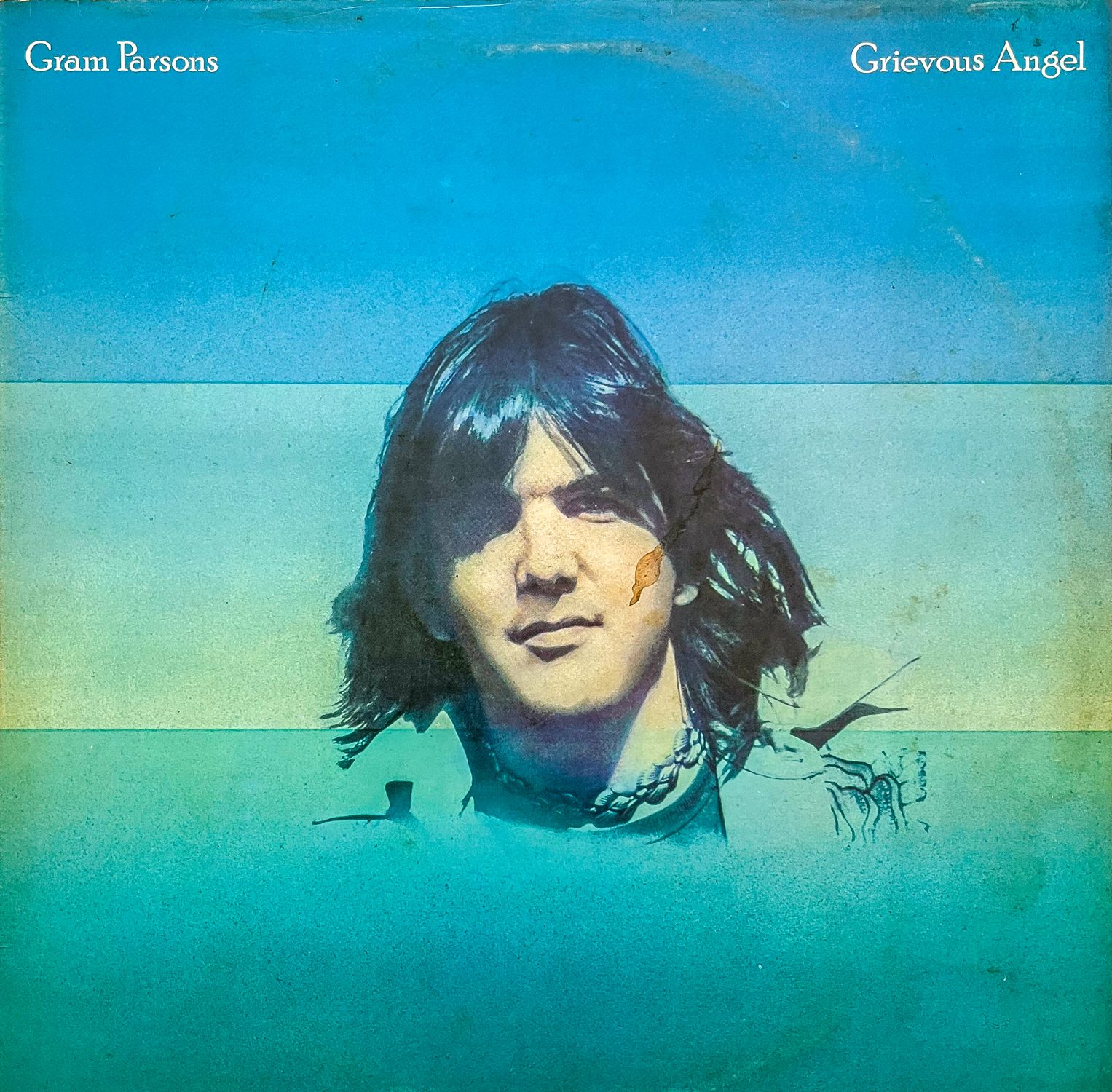
Gram Parsons – Grievous Angel

MY well worn copy of gram parsons album grievous angel showing his portrait but not the original photo with Emmylou Harris
Looking well used – the cover of my vinyl copy of Gram Parsons Grievous Angel album

Gram Parsons – Grievous Angel

Of all the albums I have ‘reviewed’ in my Vinyl collection up to now I would say this is the most difficult. Views on it will always be subjective, so I am writing this as an objective view looking back fifty years rather than how I may have felt back then as I excitedly put my new purchase on the turntable. When an artist is in the process of reinventing the wheel then we are looking at a work in progress. With Gram’s untimely death we are never going to be able to see what he would have achieved, where he would have taken his country rock baby. This is his posthumously released final album. Much as I love this vinyl, I feel it is not quite the album he would have finally settled on had he lived. Also, this album contains only a couple of new songs. A couple of stronger songs should have found their way onto here. Yet, he has some remarkable material on ‘Grievous Angel’, performed with some band members that will go on with his legacy with Emmylou Harris. You sense he is still in rehearsal to a degree, still discovering where he wanted to go with his invention of a new genre.

It would be others that reaped the rewards of his labours and talent – The Eagles obviously, perhaps I am not sure that he would have personally settled with their take on country rock, although I am sure he would have cheered them on.  Would his ideas have taken him onwards with Emmylou Harris or would he have gone back to a full-blown rock band playing his country themed style? We will never know. Emmylou goes on to have a remarkable career, protecting his legacy but not necessarily overly refining what he was trying to achieve. She became her own woman, using much that he had taught her, for that we are deeply grateful, certainly for never letting Parson’s name and talent be forgotten.

Parsons never had a say in the final make up of this album and no doubt Emmylou’s closeness to the production of this album affected just how it finally made the record stores – she gets only a cursory credit, yet Parson’s clearly must have seen this a collaboration album. It is rather sad that this final album package could not have been more celebratory of just what he and Emmylou had produced. Anyway, putting the cover to one side let us have another listen to an important album, influential to so many artists.

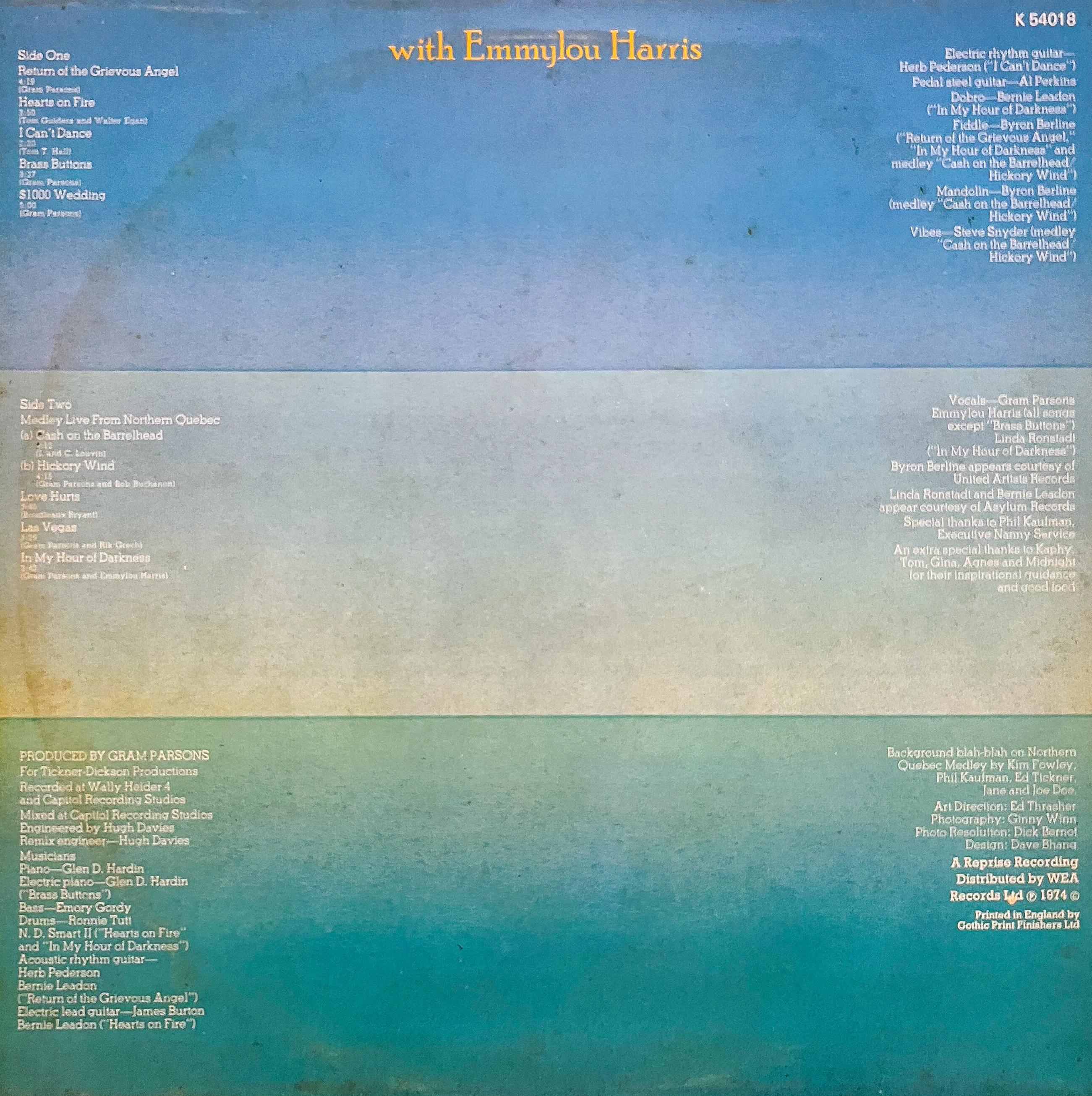
Let’s get the negative out of the way. The ‘Live’ from Quebec medley would have benefited by just having a studio version of him singing ‘Hickory Wind’ with Emmylou. ‘I Can’t Dance’ sounds like a filler put in because of a lack of new material. ‘Ooh Las Vegas’ should have been left for Emmylou’s later version. The song ‘Sleepless Nights’ appeared a couple of years later and should have been on this album although I can on hearing the emotion on this song understand why Gretchen Parsons may have vetoed it. Similarly, the two other songs from the session – ‘Brand New Heartache’ and ‘The Angels Rejoiced Last Night’ would have strengthened the overall album.

Such thoughts about one or two songs are dwarfed however by the gorgeous overall musicality of this album. This band is tight, crisp, note perfect, and professional – all world class musicians that were in tune with Gram’s vision.  The production and mixing are done with care and love.

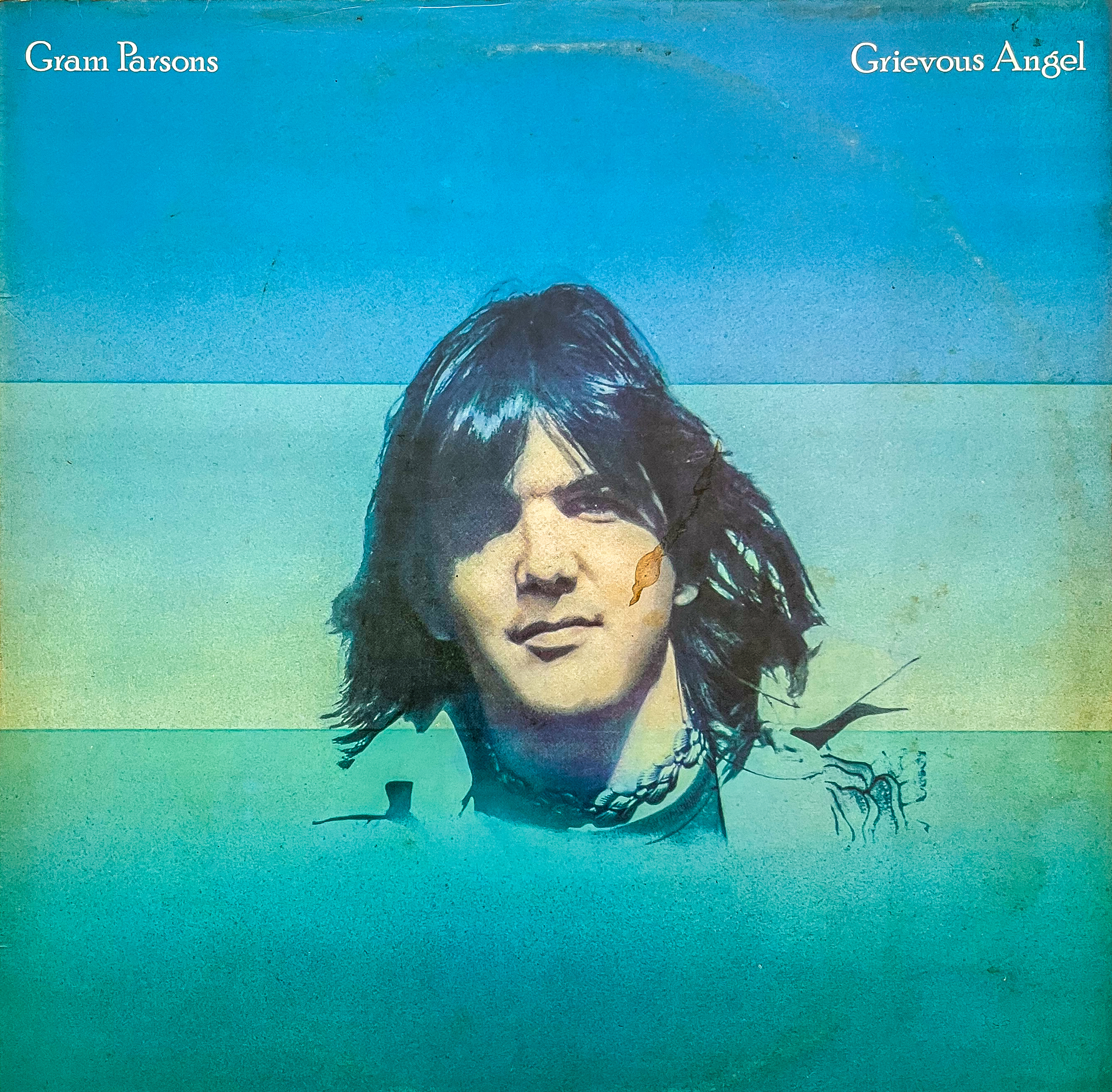
My copy of Gram Parsons album Grievous Angel from 1974
Rear cover of my vinyl copy of Grievous Angel

‘Grievous Angel’ highlights what was lost with his death. There are moving songs on here with the harmony interaction between Emmylou and Parsons just as exquisite as anything before or since. We must of course start with THAT duet – ‘Love Hurts’. Is that the finest duet of all time? I am sure there are a vast number of listeners that think so – I am one of them. It is not often that you have to say something is pure perfection, but this is. Emmylou and Gram don’t just get inside the lyrics, they are playing them out, private feelings clearly being burned onto the public tracks – there is pain, such pain. I have seen Emmylou Harris many, many times but only once have I seen her singing ‘Love Hurts’. It was at Manchester Bridgewater Hall in November 2000. I genuinely felt she had tears by the end – I know we did. The emotion of this performance on ‘Grievous Angel’ has not diminished over the years. They surely weren’t faking it – no one is that good an actor.

‘Return of the Grievous Angel’ I heard Emmylou reprising around 1975 on a BBC radio broadcast with the Hot Band. The audience was mostly made up of Elvis fans for whom seeing Glen D Hardin and James Burton was the closest they could get to their ‘King’. That is an extraordinary performance, totally captivating as she poured her respect and admiration for Gram’s remarkable song into her take on it. This is Gram’s life distilled into one song. If you only could play just the one song to say what Gram Parsons was all about then this must be the one. It has a deep sadness about it as you feel he dearly loves his work and the people around him, but he sees his ‘Devil’ and he cannot shake it off to fulfil his rich talent. The line about heading out for a desert town has added poignancy. You could imagine this being the basis for a screenplay, truly cinematic in its scope. My favourite Gram Parsons track.

The first slow, emotional duet with Emmylou is ‘Hearts on Fire’. The way their voices and emotions intertwine is a pure delight. Emmylou soars around Gram’s more upfront vocal, at times stretching the words. Much as I wish his wife had authorised this album in more complete form you have to feel it must have been difficult to leave this track on, never mind ‘Love Hurts’. The chemistry between them on here as they play around with words they must have responded to in real life is beautifully apparent. Hearts on fire indeed.

‘$1000 Wedding’ is an older song that benefits from the arrangement and musicians on here, superior to the Flying Burrito Brothers version. This is a strange song, only making some sense by understanding it is autobiographical. It surely doesn’t tell the whole story. Parsons was a complex individual that inspired deep affection from many, but clearly, he could arouse other feelings by his actions. Is this an expression of regret? I can still not work out who was at fault here, who has the regrets if any. The song works because of that ambiguity, an intriguing lyric that again has a film score in it.

‘In my Hour of Darkness’ is a fitting final track, maybe the only one that could have ended this posthumous release. Emmylou Harris is credited as jointly responsible which is appropriate. Clearly a sense this is autobiographical but maybe coincidentally so as Parsons was reflecting deeply about lost friends at the time. Sadly, Parsons was not safely strumming his silver stringed guitar, time was running out. The hour of darkness never ended at this point. Parsons sings this with poignancy as Emmylou adds a sense of resignation that all is not going to turn out well. It ends on her sustaining a high note and Gram’s voice fades away.

Just as life turned out.

On Reprise records with its distinctive orange label is Gram Parsons Grievous Angel album from 1974
My vinyl copy of Grievous Angel

Processing…
Success! You're on the list.

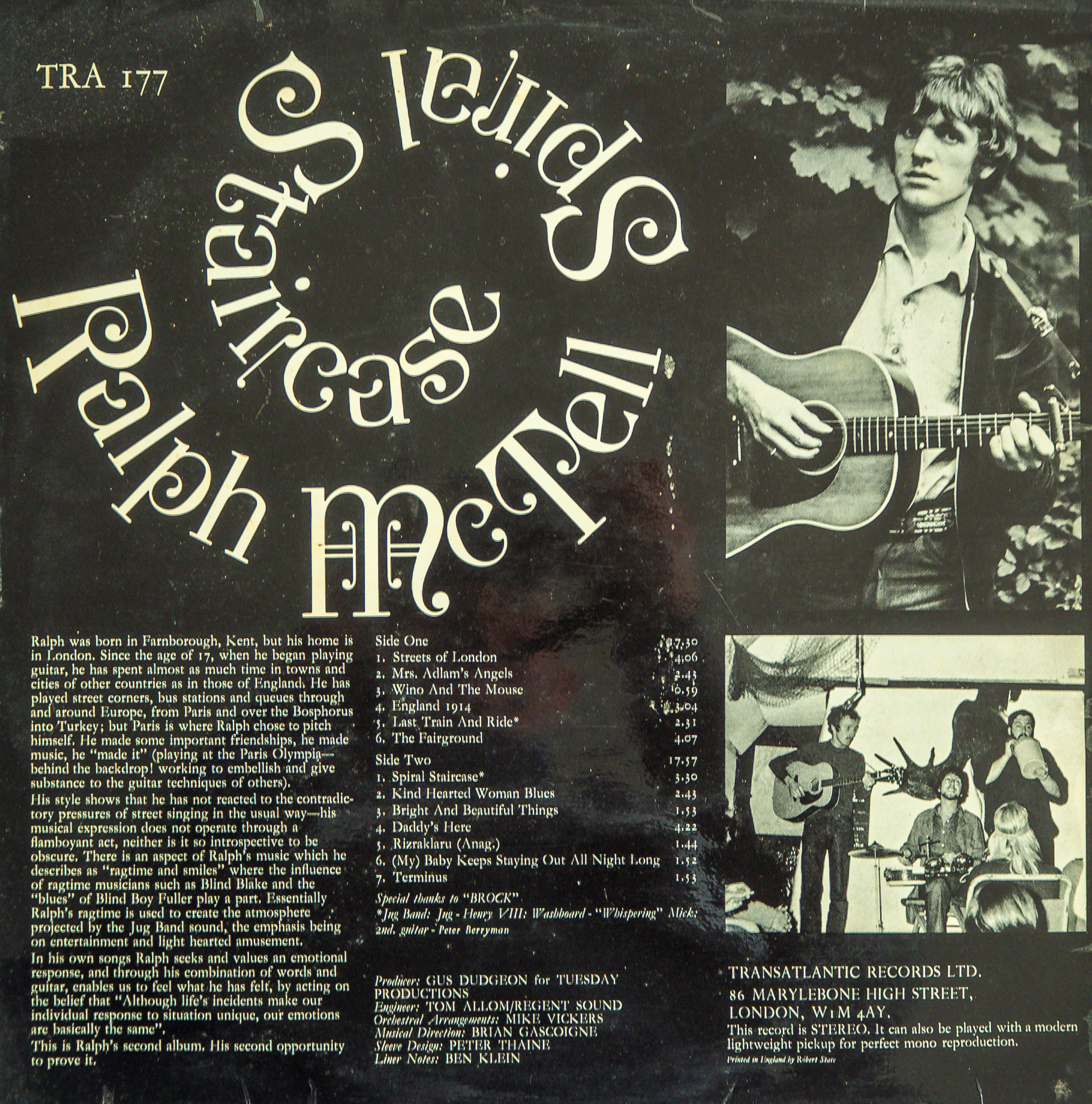
Showing a few album covers dating back to the 1970s including Carole King Emmylou Harris Ralph McTell Neil Young Joni Mitchell and others
Please click on link to read more

Please Enjoy my Travel, Music & Ancestry Books on Amazon – FREE on Kindle Unlimited https://bit.ly/bookneal

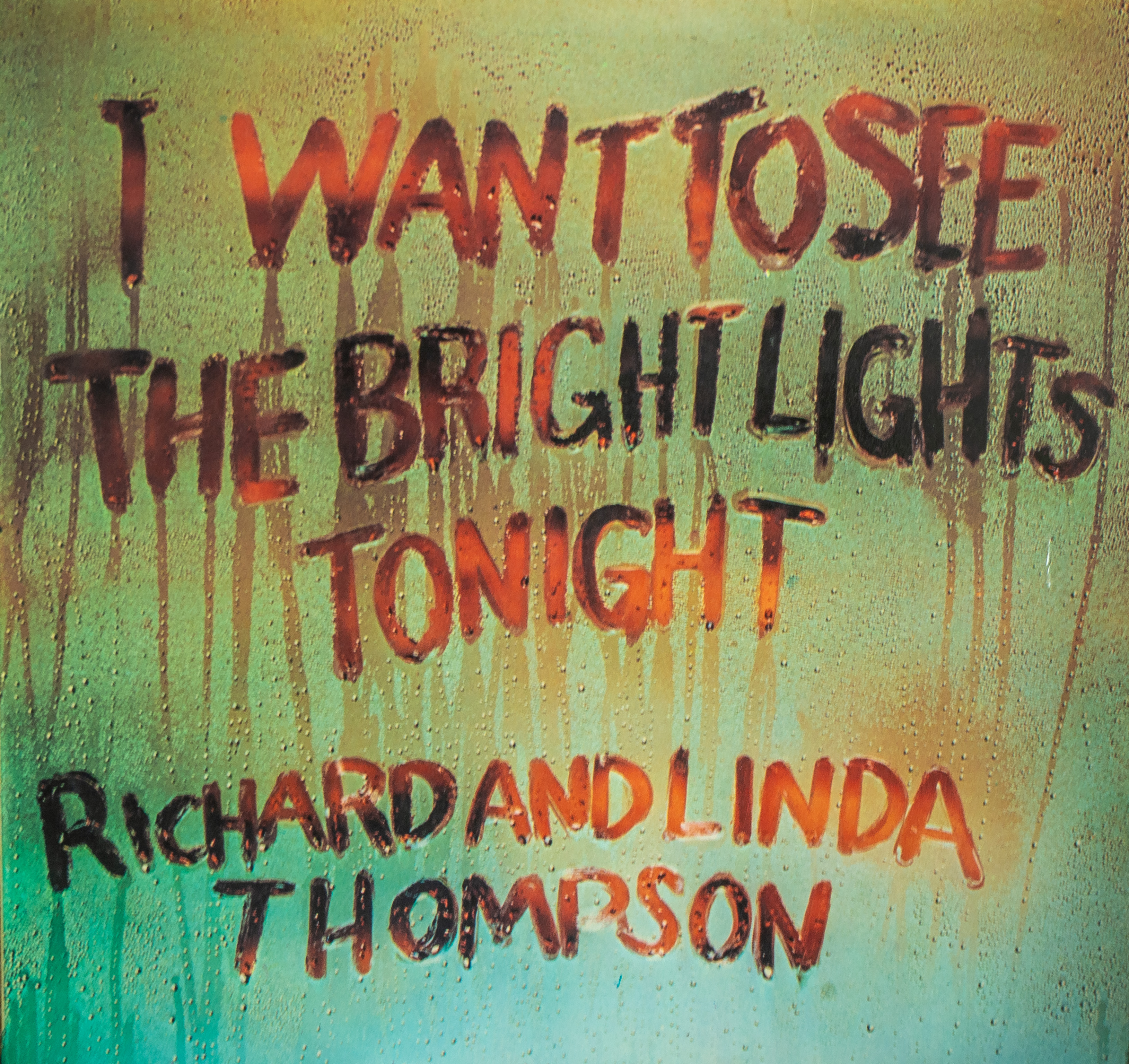
Richard & Linda Thompson – I Want to see the Bright Lights Tonight

The title of I want to see the bright lights tonight is drawn on a moisture stained glass shown the artists Richard and Linda Thompson
The front cover of my vinyl copy of I ‘Bright LIghts’

Richard & Linda Thompson – I Want to see the Bright Lights Tonight

I have to say this album scared the life out of me. To say Richard is at his bleakest is a genuine understatement. Love it – it is darkly beautiful.

I was heavily into Fairport Convention around this time. In fact, they were the first concert I ever went to – at Bolton Town Hall in 1973. Richard Thompson was not in that line-up and would never officially rejoin them. He was though always the focal point of the band for me. His guitar playing genius was in its infancy with Fairport – but it was obvious and undeniable. There was a certain logic in teaming up professionally with his wife. She was an accomplished singer of the musical styles favoured by the Fairport family stable. Also, he was spectacularly unsuccessful with his first solo album, ‘Henry the Human Fly’. A boy/girl band was far easier on the eye, and you would think the ear. Now as sweet voiced as Linda is, on this album even she cannot make it easy listening, nor would Richard want her to. Linda works hard on here as she must work her magic on some despairing lyrics and a variety of styles. If Richard was intent on joining the mainstream, then apart from the title track he would be way of the mark. He never would write or play to please the radio schedulers though and despite relatively poor responses at the time we can now look back on this as a masterpiece.

Despite a relentlessly bleak and disturbing narrative to the poor souls who inhabit these songs we are still as always with Richard Thompson’s writing left with a degree of hope. He is sensitive, non-condemnatory with the characters who are drawn from the realities of life in the mid 1970’s and earlier. We who lived at the time can identify with the struggles of these characters he portrays. He never destroys or reproves these subjects of his songs, but rather leaves a sense that they may just find a way out. But as I said, the picture he paints is a scary one.

The title track offers a lively, joyful release from the overall concept of this album. However, even on that if you actually peer through the almost commercial feel of the music the picture of the character portrayed here is not an encouraging one. Taking comfort from the weekend night outs and the drink involved is not the answer and surely this is a reflection of the difficult times he has seen others descend into. At the time Sandy Denny was on a road to destruction that tragically did end her life. He had seen others and ‘Bright Lights’ may allude to these. There are bright lights tonight, but you are left with the feeling that tomorrow may bring regret. It is however musically as close as the duo will ever come to having a hit. I always felt that they were so close on this one. It just needed a more ruthless producer to make it the perfect radio play single. They could even have gone to the Eurovision Song Contest and beaten Abba – how would musical history have changed? Can’t imagine Thompson would have coped with that – ‘Richard Thompson – The Musical.’ Can’t see that.

The musicality on this album is quite extraordinary, even by the experimental standards of the day. His uses a tight band on here as you would expect with his gorgeous guitar playing centre stage. What you don’t really expect is the introduction of instruments from another age such as the reed instrument crumhorn, something that harks back to the Renaissance era. Add on an accordion and hammered dulcimer and you are rounding out a rock revolution on here.  This makes the album even more of an acquired taste.

‘When I get to the Border’ is Richard coming of age as one of the world’s great guitarists, no longer restrained by the collective responsibility of Fairport. He soars on this track and even manages to compete with a searing crumhorn although he adds light and shade with some lovely delicacy. I still look on this track as one of his finest pieces of work on six strings. The lyrics though set out the stall for this album. ‘If you see a box of pine with a name that looks like mine’ sort of says it all. Especially as the subject appears to have gone the way of the demon drink, another theme on this collection. Richard takes the lead vocals on this with a wry look at the future. He throws in the reality of our daily drudgery and how this resonated back then. ‘Monday morning closing in on me’ is such a superb observation. I know back then it was hard to think Friday would ever come, five days of work before pleasure came back. Brilliant succinct observation. What a start.

As soon as that finishes, he kicks in with that gorgeous short solo starting ‘Calvary Cross’. A virtuoso cameo before heading into another scary take on life. I can only assume he got some of this in a nightmare dream. The train you catch that never leaves the station is a chilling image and one I don’t want in my dreams. The rest of the album uses this song as its lead to continue the theme. The album hangs around ‘Calvary Cross’ suggesting that life will always do to you what it will but always Thompson just hangs out enough hope to keep you interested in staying alive to see what happens.

On ‘Withered and Died’ we have dreams being crushed, a cruel country does it, the fickle partner is just like all the others – gone. Half political comment, half a comment that others will cause you pain. Linda sings that being a butterfly flying high for a solitary day of life is preferable. There is no redemption on this song. What she thought singing these lyrics we can only guess – maybe a feeling this could be me if (when) their relationship deteriorated.

The rear cover of I want to see the bright lights tonight shows the song listing and the musicians feature with Richard and Linda Thompson
Back cover of my vinyl copy of ‘Bright Lights’

‘Bright Lights’ could have been their hit single. Maybe it was just a little too bleak even for the mid-seventies but should have been worth a go with a bit of polish on the production. Again, a take on the futility and chore of working long hours in that era of three-day weeks, power cuts and social instability. I never was looking for the scene described by Linda of exploring the place where the ‘Drunken knights rolled on the floor’, but I did long for the weekend. It was sport all the way, enjoyably so for me, but I take the point of these lyrics and they fit the time period perfectly. I vividly recall that come Monday morning it was obvious that fellow colleagues had not returned home from close of play Friday to the time of returning to work. How bright the lights of East Lancashire actually were is open to question, but they clearly fulfilled their purpose. ‘Meet me at the station’ is such an accurate portrayal of something we all did back then. Our evening when we met the girl would vary but the young lady character Richard portrays clearly wants a good time and boy are you paying for it. This is time capsule perfection and as with so much of Thompson’s writing he has an eye for detail and a finger on the pulse of what real people are going through and how they live.

‘Down where the Drunkards Roll’ rolls along slowly and softly. It is social observation at its finest. Thompson doesn’t condemn, he can see this is how it is, he feels their desperation, but he is gently sympathetic. It’s a varied cast of characters that find redemption at the bar, out of the daunting place of daily life. It also fits the time period; I recognise in my Lancashire 70s mill town home what Thompson has also seen on the streets of London.

He takes observation to another level on ‘Has he got a Friend for Me’ by seeing life from a female perspective. Again, this is fabulous observation, we all recognise this character, clumsy and shy, from our younger days. Her best friend has a gorgeous boyfriend, but she will settle for less, just find her someone, even a blind date will be fine. Surely the boyfriend has an equally lonely friend in his shadow. But, why would he even notice the narrator. Somehow thought, Linda’s vocal hints that there will be someone, somewhere – a beautiful portrayal.

The sympathetic writing reaches its height on ‘The Poor little Beggar Girl’. The character is at the bottom of the social scale, but she scoffs at her betters who she takes money from. The resilient girl does not want pity as she makes a living. She does not want patronising and you can keep your arrogant attitude to others. Linda’s affected Cockney accent maybe just oversells the theme a little, but the observation is excellent and rings true to the time. Reminiscent of Sandy Denny’s ‘It Suits me Well’ and I am sure the girls compared accents together,

‘The End of the Rainbow’ is either terrifyingly ending all hope or is it that you are supposed to find it witty? Richard’s quirky humour passes comment on how life could be in those dark mid 70s days. Some of the lines are so over the top you must feel he is being funny. The unwanted extra mouth to feed that is still in the cradle being told there is nothing to grow up for anymore is a priceless commentary on the times. Life doesn’t get much better, but he does even here leave you feeling it could, just, turn out ok – I still feel this little one will be strong and win out to beat the odds. That’s his final joke.

‘The Great Valerio’ is a piece of writing that cemented Thompson’s reputation as a perceptive, thought-provoking songwriter. The melody is hauntingly complex, Richard picking the strings behind Linda. It is fitting in view of the subject that it forces Linda into a high wire act of her own. Valerio strives for greatness at great cost – we can perhaps assume that Thompson is using this as a metaphor for our own lives. It is not a tune to dance to but has become a favourite of his devotees. You find yourself willing Linda on to focus on the tightrope and make it to the end. One of her finest performances. I like to think it was one take and she did not have to go back to the start – she must have been emotionally drained.  

Going through my vinyl collection again reminded me of just how many of our albums are fixed in time, a memory attached to them. ‘Bright Lights’ is no exception, firmly rooted in the very day I purchased it. Later that evening a dear friend came round to say she was leaving, heading out into the big wide world, unlikely to return. As I tried to digest this, I inexplicably said I would play the latest album I had got earlier. Yes, ‘Bright Lights’. Why I did this I cannot possible explain other than to say the balance of my mind was disturbed, which was true. Anyway, we managed to get past ‘Calvary Cross’ before she suggested a long walk would be in order. I categorically can state that this is not the album to play to break the ice at parties.

I have seen Richard many times in concert with or without his band. I only saw him with Linda once a few years later at Salford University, Manchester. As with all Uni gigs it was a laid-back affair, they were in good form with the band consisting of the usual suspects. Good humour and bonhomie bounced out from the stage, well at least at this point Linda was not looking to do him physical damage.  As always, his guitar playing was the dominant feature, quite extraordinary to see and hear live. I recall many years later at a solo gig at Manchester Bridgewater Hall turning to my wife during ‘Vincent Black Lightning’ to ask her to confirm that there were not at least six guitarists on the stage – he is that good. If you have never seen him then please make sure you take the chance if it comes.

On ‘Bright Lights’ he comes of age as a guitarist and despite the rather despairing nature of the subject matter he also shows his talent for perceptive observation. My daughters take on Richard Thompson was that he fitted my view that music was the greater to be enjoyed ‘the sadder the better’. Can’t totally argue against her on that one but I still feel positive after listening to ‘Bright Lights’ – if only I could explain why.

on Island records we see the vinyl album from Richard and Linda Thompson formally of Fairport Convention of I want to see the Bright Lights Tonight
My well worn copy of ‘I want to see the Bright Lights Tonight’
Showing a few album covers dating back to the 1970s including Carole King Emmylou Harris Ralph McTell Neil Young Joni Mitchell and others
Please click on link to read more

Please Enjoy my Travel, Music & Ancestry Books on Amazon – FREE on Kindle Unlimited https://bit.ly/bookneal

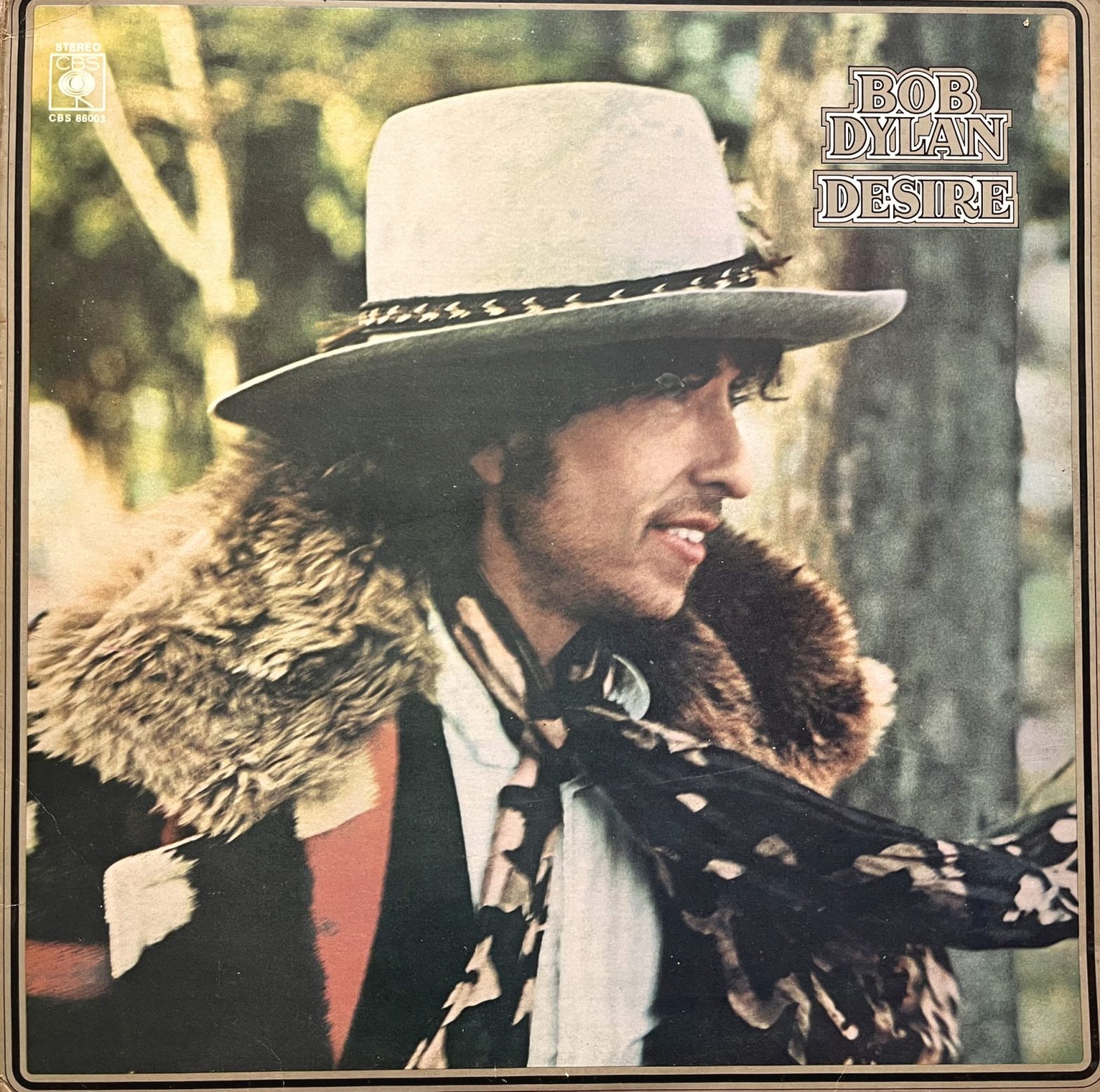
Bob Dylan – Desire

My cover of the vinyl album Desire by Bob Dylan released on CBS in 1976 showing Dylan in hat on the photp
Bob Dylan- Desire 1976

Bob Dylan – Desire

It is time I introduced a Dylan album into my retrospective look back at my vinyl collection. I was late getting an appreciation of the man. I was only ten or eleven years old at the time of his first coming and just as with the Beatles he passed me by – football and cricket were more interesting than music. My first introduction to him bizarrely was from someone’s inexplicably purchased copy of ‘Self Portrait’. Needless to say, I was unimpressed. I was aware of the cover versions of his songs by others, particularly Fairport Convention who I was a devotee of in my early musical education.  Other than hearing him on ‘Concert for Bangladesh’ I remained aloof from his catalogue. You may recall back in the day there used to be record clubs that offered cut price vinyl and other offers, wanting you to take at least one record a month. I found that an easy way of expanding my collection, sometimes with limited success, but one month I took a copy of ‘Bob Dylan’s Greatest Hits’. Even then, despite the gems contained, I did not get too excited about him, it did not grace my turntable as often as it should have done. In fact, it was his collaborating band – The Band – that I was enjoying more and for that reason Dylan’s live album of his ‘comeback’ US tour with them was the first real purchase I made of a Dylan album.

He was near to producing the album that set me on the path to discovering his music and his importance as an artist to just about anyone who ever aspired to sing and play from the sixties on. It was ‘Blood on the Tracks’ that just totally opened my mind to his genius. It is still in my top three album in my collection, played just as often today as it always has been. However, I thought I would start my retrospective with ‘Desire’. Not in my top three but in many ways more interesting as an album and an insight into how he works as a musician and controls the production. ‘Desire’ is a challenging album, musically and in the subject matter of some songs. Dylan is being to his audience the Picasso or Dali of the music world. How much the collaboration with Jacques Levy adds to this is not clear but you do have to suspend a degree of reality and perhaps prejudice when taking in some of the lyrics.

Inside sleeve of the album Desire by Bob Dylan from 1976 showing the artist and the musicians listed including Emmylou Harris
Inside sleeve of Bob Dylan’s Desire album

At first listening (or you may still think at the 500th listen) ‘Desire’ is a sloppy album but fascinating, a curiously under rehearsed mostly live take collection that has musicians and singers feeling their way around some quirky lyrics and melodies. It is deliberately so. Dylan is at the point of unleashing his Rolling Thunder Revue and this album is the template for all that chaos of creativity. Dylan encourages the collective entourage to make the best of it, contribute as you will, letting them roll with it, maybe roll with the punches is a better expression in view of the opening song ‘Hurricane’. How Emmylou Harris got on this album is anyone’s guess. I suppose there is a certain logic in him inviting her. Emmylou’s work with Gram Parsons has an impromptu feel to it. I cannot imagine Gram spent endless hours rehearsing, so Dylan probably was looking for a similar feel to her vocals. Dylan clearly throws her in at the deep end getting her to work out and follow his harmonies – or not as the case may be. You could find her attempts to do so excruciating, you feel for her as she is not getting much help from him, which was the whole idea. Yet, it works – how it works. Emmylou is magnificent on here, producing a miraculous performance that is a highlight on the album.

So, why is the album somewhat difficult and challenging? Starting with ‘Hurricane’ you struggle to take the narrative totally at face value. Rubin Carter had his negative side and spent time in prison prior to this wrongful conviction. However, Dylan portrays him as a nature loving gentle soul who fights only as a job. It doesn’t ring true. Also, I find a degree of uncomfortableness about calling out living people in such a public way. They may deserve it, though Dylan himself toned down his accusations before recording the album version, although even so he was sued. The case was dismissed so maybe that gives justification for Dylan being so specific and strong in portraying the cast of characters behaviour. Later, Carter had his conviction set aside and he was released. Carter was black, had a history, was getting confident and successful – he fitted the bill to be framed. Dylan saw an injustice and certainly pursued this with vigour. The song itself is powerful and driven hard musically. Still, it is challenging in its subject matter as it focuses on being public judge and jury even though you sense Dylan was correct in most of his character profiles.

Bob Dyland and Emmylou Harris and other musicians on the back cover of the Desire album from 1976 by Bob Dylan
Back cover of the Desire album by Bob Dylan from 1976

More problematic is the 11 minute long ‘Joey’. The song draws you in as the narrator tells this sympathetic tale of an Italian clan chief, a benevolent family head. In life he was not. It is impossible to square this circle no matter how Dylan paints this picture over a long-drawn-out epic song. With Carter you feel sympathy even though Dylan’s portrait is over sentimental. With Mafia boss Joey Gallo you cannot feel warmth, quite the reverse. This makes Dylan’s lionizing the guy strange and incomprehensible.

At the other end of the scale, we also have another problem with the contradictory lyrical nature of this album. ‘Mozambique’ simply oozes sunshine and warm sandy beaches as it breezes along in a gorgeous musically rich fun way. Even so this is such a weird subject for Dylan to have taken on. Is he being simply naïve or just plain provocative with all these three songs? When the forces of FRELEMO took control of the country after years of struggle there followed a long and brutal civil war. I belong to a social group that suffered dreadful persecution and suffering there at that time. Dylan must have been aware of the tragic civil unrest in Mozambique. The song is joyous, but can you see past the reality of the situation that pertained at that time? – I find that hard.

So, we have three songs that seem flawed in subject matter and portrayal. You can’t ignore them though and this is Dylan being the artist with something to say. Considering we are still discussing it nearly fifty years later shows the strength of this writing despite any flaws we may pick in it.

The problems continue but in a different way. ‘Sara’ is one of Dylan’s most beautiful and personal love songs. I love it. Maybe it is a bit over the top at times – ‘Glamorous Nymph with an arrow and bow’ is pushing the envelope a bit. It is though overall lyrically and musically exquisite. Dylan confirms that his wife Sara was the ‘Sad Eyed Lady of the Lowlands’, this being one of the few times that he gives a definite insight into his lyrics. Being so personal makes this a powerful song that portrays a strong and vital relationship for him, a love of his wife and his children. No doubt this family unit got him through difficult times after he disappeared from view in the mid-sixties. The problem for us peering into this scene of domestic bliss is that this is on an album immediately after ‘Blood on the Tracks’ where he laid his relationship problems out in vivid Technicolor for all the world to hear. If this song had appeared in the early seventies, then we could happily suspend disbelieve. Being on ‘Desire’ and immediately prior to Sara and Dylan divorcing it barely makes sense. I prefer to look on this as Dylan facing reality with regret, what he had he loves with a passion just as the narrator in Springsteen’s ‘The River’ – but both have lost what they had. In many ways a sad song, poignant because of its timing, but a truly beautiful one.

The overall feel of the album is of crisp musicality and a lot of that is due to the extraordinary fiddle playing of Scarlet Rivera. Said to have been hired by Dylan after he stopped her in the street as she made her way with her violin case, she adds atmosphere to this album in a way that echoes the sound of the Rolling Thunder Revue. Her playing is loose but all consuming on these tracks. You sense she is put in the studio and told to just fit in where you will. There is no question that a producer who had total control would have edited and refined her contribution but that would have been a mistake when you take the album as a whole looking back over the years. Take ‘Isis’ for instance. One of Dylan’s finest songs, taking you on an extraordinary lyrical journey. On this you really can feel the spontaneity of Rivera playing as she slips in an out of the lyric. You can imagine her concentrating on Dylan’s delivery and picking her moments to add atmosphere and colour to a meandering but captivating song. Is she the greatest violinist that Dylan could have employed. Well, no, but that is not what he wanted. He got just the perfect musician for this album.

Emmylou Harris clearly faced the same issues that Rivera did. She must have followed Dylan intently to try to marry her voice to his unpredictable vocal.  You can hear on ‘Desire’ that she is straining to keep up with him, straining to harmonize in the way that she would interpret the concept. What she did was not perfect harmony by any means, but Dylan was not after that. Again, he got imperfect perfection from Emmylou. He had seen that her work with Gram Parsons had a spontaneity, an unrehearsed quality that could not be faked. He made her take that to another level entirely on here, but it worked. As with Rivera it is the quality of their contribution that round out the atmosphere of the album. ‘One more cup of Coffee’ and ‘Oh Sister’ are amazing collaborations and Emmylou sounds like a star pupil taking an oral exam quaking before the most demanding of examiners. She passes, she surely passes.

Like many who listen to ‘Desire’ I have issues with it, but it is irresistible. I return to it often. It screams of its time and takes me back to that mid seventies time that we all of a certain age found changed us for better or worse. I think Dylan felt this was a crossroads for him also. It would be sometime before he produced anything approaching the quality of his work in the seventies. Having missed his early work, albums considered his masterpieces, I found ‘Desire’ pivotal in ensuring that Dylan would be a mainstay of my musical loves in my vinyl and later CD collections. He remains fixed there. Is ‘Desire’ up there in that top 20 of all time albums. Perhaps not, it is too eclectic and random for that. It is though in there as regards importance in my musical education – it made me think and still does.

A contradictory but wonderful piece of art.  

Showing a few album covers dating back to the 1970s including Carole King Emmylou Harris Ralph McTell Neil Young Joni Mitchell and others
Please click on link to read more
CBS vinyl album Desire by Bob Dylan
Vinyl record of the 1976 album Desire by Bob Dylan

Please Enjoy my Travel, Music & Ancestry Books on Amazon – FREE on Kindle Unlimited https://bit.ly/bookneal

Ralph McTell – Spiral Staircase

Colourful cover of the 1969 album by Ralph McTell called Spiral Staircase on Transatlantic records
My Vinyl copy of Ralph McTell’s Spiral Staircase

Ralph McTell – Spiral Staircase

Before we headed out for a session at our local tennis club, my friend Chris would want to play an album. Our pre-exercise ritual. His brother was an enthusiastic and talented acoustic guitarist. We weren’t but wished we could pick the strings. We were better than him at tennis though – can’t have everything. I am certain this album came courtesy of Chris’s brother’s collection. He certainly aspired to play like Ralph. We were captivated by this early album by McTell, although as 16-year-olds maybe we wouldn’t have mentioned it to the ‘cool’ glitter and the rouge kids. Happily, I have never grown tired of this album or Ralph as a performer over these last fifty years. Despite having a loyal following and being a national treasure as they say, I still feel Ralph is seriously underrated in the world at large. Take his guitar playing. Is there a more beautiful player that picks every note with such wonderful clarity and distinctiveness? Only a couple of notes are needed for me to know it is Ralph playing on a track. It was this crisp, atmospheric playing that caught the attention of our young inquisitive minds.

I first saw Ralph in concert on February 10th, 1974, at Preston Guild Hall – guest stars Prelude. It was far from the last time, in fact, I have seen Ralph perhaps more times than any other performer. That night was magical, the first solo performer I had seen. The standout quality was just how comfortable he seemed on stage, holding us in his hand with just his guitar, vocals and a gentle easy wit. After the show we sat for a while as the hall emptied, lost in our thoughts, reflecting on the joy of seeing this man in the flesh. By the stage a small cluster of people had gathered. Slowly we made our way down to find out why. By the time we got there only a doorman remained. He said Ralph was letting a few into the dressing room if they wanted a moment or two with him. We certainly did. After a couple of minutes, we were welcomed in by this extremely affable ‘hero’ or ours. I suppose there were about eight of us, but Ralph didn’t seem to mind. Only problem for me was that I was somewhat star struck and I believe absolutely that I made a complete fool of myself, barely able to get an intelligent word out. I have thankfully met him several times over the years and hopefully finally seemed like a normal human being to him. The girls in our party got signed posters from him – I didn’t get anything having slunk behind everyone and out the door. Well – he was a big star to us back then, that’s my excuse.

Back to the album. Apart from the music it was the cover that captivated us even though I am sure Ralph would agree it is not the most slick or professional enclosure of a vinyl record. It was the few words on the rear that got our imagination going. Ralph busking in Paris and around Europe sounded so romantic. I suspect the reality was somewhat different but young minds can wander and dream. The liner notes conclude with ‘his second chance to prove it’. We first listened to this album about three years after its release, so by then he had already proved any early promise they felt was still to come.

Listening to it again now fifty years on it still has that feel to it that attracted and intrigued us back then – it sounds so English. Not in a finger in the ear over a pint sort of ancient English folk but writing that was resonant of a time. Somehow Ralph allows in his genius writing to let yourself be transported to a period of your choosing but one that is distinctly England. It seemed the perfect backdrop to our plans to go to the old, faded tennis cub, a place fixed in time – Edwardian England. This album took my mind back at that last summer before the war, an idyll that existed only in the imagination. Ralph conjures up for me that early pre-war and mid-century periods of the 20th Century on this album and also of course in other later songs, particularly on ‘Easy’.

Back cover of Ralph McTell's album Spiral staircase has a write up about Raplh and an early photo of him as a young man with guitar
Back cover of my copy of the vinyl album Spiral Staircase

McTell has a wonderful skill as a writer in that the depth of his writing is complemented by the palatable way he puts across some quite deep and thoughtful material. Some may feel that a song such as ‘Streets of London’ is a lightweight sing a long song, pleasant – but there you go. It is not. If you are feeling in the least bit sorry for yourself then this song will shake you out of that, a lesson learned of showing compassion and discarding our self-pity. It is as, if not more, relevant today, such a classic piece of writing. Like many of Ralph’s songs it is cinematic, best listened to in peace and undisturbed. It can be London of any time period you wish but the message shines through. Just listen but don’t sing a long for a change.

Mrs Adlam’s Angel is a joyous piece of writing. I am back to those innocent early primary school days with my ‘Mrs Adlam’. Don’t we all have one in our memory bank. How life was so simple then. It may not be now, but it is wonderful how a short piece of writing transports us. He follows this with ‘England 1914’, another time travel song, but again deeper than you may feel from a young writer of exceptional maturity.

Ralph is often writing from experience, there is an autobiographical elements to many of his songs. He can do this with such sensitivity even if the memories will not be comfortable to revisit. ‘Daddy’s Here’ is the best example of this on here. His own early issues with an absent father are atmospherically dealt with on this track. With some beautiful poetry he conveys the fears and hopes of a young child being brought up and loved by a single mother. A warm relationship with his brother is a great comfort. Such a delightful and moving word picture of a song. Poignant also in that he has recently lost his brother.

We can go on but let us leave you with plenty to discover on this treasured piece of vinyl. I must conclude though by mentioning the final track, one of my especially favourite songs of all time, from anyone – ‘Terminus’. Clocked at just 1 minute 54 seconds he somehow constructs a vivid full film experience that in the right script writers hands a full-length movie will emerge. Where are they? – I put them at Euston Station, but this could be a ‘Brief Encounter’ moment with an irredeemably sad ending. Here they stand on the platform, plans made have all gone, words no longer can pass between them. Yet only the previous night these lovers were close. He finds a piece of paper blowing in the wind to be a needed distraction from the reality that cannot be faced. We have all been there – who hasn’t found reading a crisp packet so terribly interesting. But she is gone, the words that could have helped are so clear but too late. A brief encounter on the platform has him confirming he is ok, but clearly he is not. He fools himself into thinking that these sad scenes happens all around him, life must go on. Will he be alright, we don’t know but there must be a sequel surely – Terminus 2 on the big screen. A truly great song – gorgeously written.

This album is an early one in McTell’s career, it is by no means perfect. There are a couple of lightweight songs on here. There are though such wonderful, melodic, moving songs on this vinyl that a couple of fillers do not detract from the overall experience of one of the finest albums from any British songwriter. Back on the turntable it goes.

vinyl copy of the Transatlantic album Spiral Staircase by Ralph McTell
My well worn vinyl copy of Spiral Staircase

‘Streets’ of course was McTell’s one massive hit. Not that fame sat comfortably with him. His tour following his chart success in 1975 I remember well even if he would perhaps rather forget it. Clearly ill at ease with a band, he played his way through some of his strongest material to date but to an audience that must have seemed alien to him. I caught his show at Southport and the audience appeared to have shed about 10 years on average. In fact, I had the feeling that the last record many had bought was a Bay City Rollers offering. I genuinely thought they might start screaming and that would have freaked him out. He bailed out after this and regrouped. We can be thankful he did to continue back on the path that made him one of our most loved performers.

Now Available on Amazon for Kindle or in Print
Showing a few album covers dating back to the 1970s including Carole King Emmylou Harris Ralph McTell Neil Young Joni Mitchell and others
The start of my review of the vinyl collection from my younger days

Please Enjoy my Travel, Music & Ancestry Books on Amazon – FREE on Kindle Unlimited https://bit.ly/bookneal

Alan – A Young man lost at Salerno 1943

Alt="photo of Salerno Beach landings September 1944"
Landing on Salerno Beach Italy September 1943

Please Enjoy my Travel, Music & Ancestry Books on Amazon – FREE on Kindle Unlimited https://bit.ly/bookneal
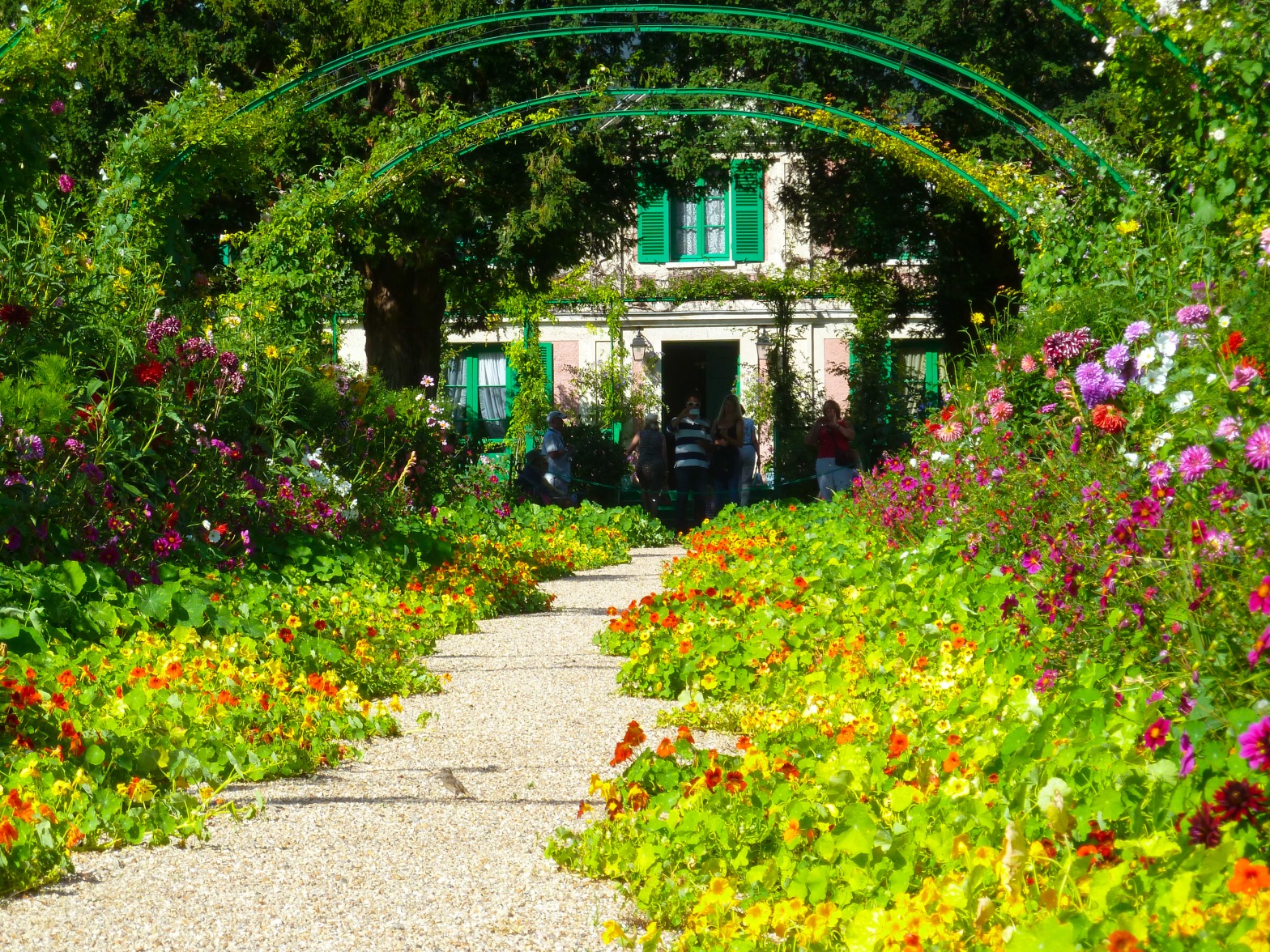
After the death in 1919, at a time when John Atherton was away on service as an army driver, of his young son Roger it took some time for him to come to terms with his son’s death. On his release from the army John settled back with Sarah in the family home in Bury Street. Shortly afterwards they were able to obtain a house on Vale Street in Darwen. This location is just around the corner from Bury Street so the tragic memories were still vibrant in this area for the family. John and Sarah miss having a young child happily playing around the house and the memories they feel could only be softened by having another child.

In 1924 Alan is born to them and they are thankful that some great comfort comes from this. Alan is an unusual boy in the sense that he is not as small in stature as the Atherton family tend to be. In fact in his teenage years he will go on to become an accomplished weightlifter in the town. Darwen, in fact, has had a long tradition of excellent sportsmen in this field. Back in my youth I can remember the celebrity type status afforded these strong men who represented the town in hard fought competitions. Where these genes come from to be found in Alan I can only speculate, but perhaps by 1924 the Atherton family were not quite so poor. Maybe their diet had improved substantially causing Alan to be a healthy boy. He is a person that is well liked in the town and although quite reserved in character he makes a good impression on people. He is clever and has an excellent future ahead of him.

Alan is well capable of being able to continue to bring the Atherton’s farther out of the poverty they have endured up until the Great War. The young man is a respected member of his local church and helps out with the youth groups there. He has no shortage of female admirers but sadly he will never get the chance to marry and have children. The outbreak of World War 2 changes everything for Alan and the people of Darwen. Many men enlist straight away. The town will also be affected by German bombing raids during the course of the war. Several people are killed in Darwen in 1940 when bombs are dropped. There is a terrible incident when a bus going up Marsh House Lane hill is machine gunned by enemy aircraft coming down the valley. Part of the reason for Darwen and Blackburn being a target for German bombers is the close proximity of the ROF armament factories and their locations are well known to the Nazis, but despite that they never actually make a direct hit on the factories. Darwen like so many towns in England joins in trying to reach the target of raising funds for a Spitfire aircraft and the town, despite it being a low income area, achieves its objective. Today there is a large silver statue of a Spitfire in the centre of town commemorating the determination of the townspeople to raise the funds.

On enlisting for service Alan initially joins the RAF but his stay there is a short one. My grandfather John Thomas Atherton also joined the RAF; he would have been around 32 years old at the time. His RAF service is shrouded in mystery, on ground support rather than training as a pilot but more research will eventually uncover the facts, unless it was top secret of course.  (More research did uncover this.) My grandfather was based on Walney Island, just off the coast from Barrow in Furness. He was indeed employed as ground crew, keeping the aircraft flying. However, I now know that the events on Walney Island were another major contributor to his air of sadness and lack of zest for life. As well as being used as a RAF base for aircraft, I learned from my father that aircrew bodies were returned to Walney Island. My grandfather had the job of processing these bodies and bagging them up for onward travel for burial. This would have been a harrowing job considering the state of the the remains of these pilots and crew. That explained a lot about him.

Alan soon becomes Alan Atherton, Ordinary Seaman D/JX 36830. He is posted to North Africa in 1943 at the Combined Operations Base, HMS Hamilcar in Djedjelli (Djidelli) Algeria. Despite it being seemingly named as a ship, HMS Hamilcar is a land base, specifically for the landing craft that are to be used in operations similar to D-Day storming the beaches of Sicily and Salerno. Alan is specifically in training for being part of the landing craft crew for the Allied landings on the Salerno beaches. Unfortunately for the crews of these floating tubs, there will be no element of surprise to the enemy in the actions planned for the coast of Italy. The African base at Djidelli is a busy one and preparations are constant and thorough. Alan does have the opportunity for some rest and recreation and visits to the town are occasionally possible, but much of the entertainment on the base will be watching American movies and obtaining any beer that they can source to kill the boredom of the repetitive nature of the preparations for the invasion of Italy. Alan and his colleagues always laugh off any dangers, they are young. Alan is not even 20 years of age, still a teenager, but the dangers are real and ever present in the mind. Stories of early casualties are always filtering through and sometimes they are be confronted with the reality as wounded pass back from the front through the base and other allied areas of North Africa. It is a long way from the small industrial town of Darwen. It was a hard life there to a degree, but it was familiar and comfortable in its way, now the brutal war has transformed Alan’s life totally and his immediate course in life is set and determined for him by others. His future is in the hands of the commanding officers, he must stay on the course they have set no matter what it may bring.
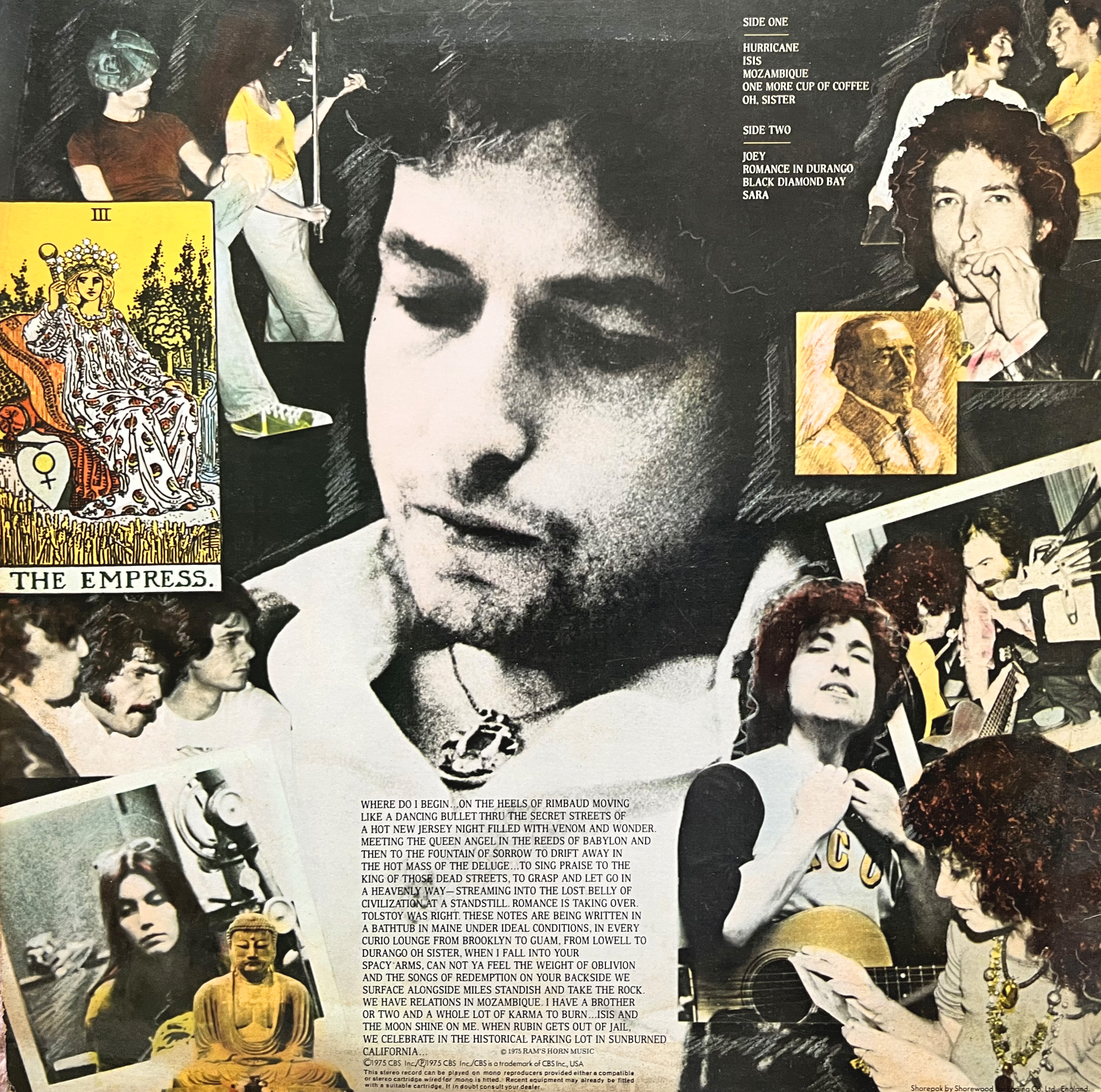
Alan leaves the base on the North African coast on Landing craft LCT581 around the 6th of September 1943. The bulky landing craft are carried by ship part of the way thankfully but even that still leaves a journey in unpredictable seas into the bay at Salerno of around 250 kilometres for Landing Craft LCT581. These vessels are basically just basic troop and ammunition carriers, they have no luxuries or frills about them, they are just a glorified human cattle truck. The journey on D-Day for similar landing craft will be slightly shorter but as we know from these more well documented landings the conditions on a landing craft are horrendous with most men being seasick on this bobbing metal tub that would be tossed without any means of compensating for the roll and heave of this very basic sea craft. The occupants of the craft are in a sorry state by the time they were well into the bay at Salerno, but well aware of the reality of the situation, the fact that their lives are now on the line. This is no sporting competition where you may have a few initial nerves, this is life and death. Part of their convey was already in action in front of them on this day, Friday the 10th September 1943.

During the allied landings at Salerno in Italy we see on the beach soldiers coming from a landing craft
US troops coming onto the beach at Salerno Italy in September 1943

There is to be no tactical surprise as they head into the beaches at Salerno. In fact, the German’s are totally prepared and confident that they will repel the invaders with ease. So much so that the convoy coming into the beach is met with taunts of invitations to surrender, but of course the landing craft continue into the theatre of battle. Salerno will be a difficult and frustrating battleground for the Allies. For several days the positions will be set as defensive on the beachhead. Alan is going into a fearsome place and the German’s also have, unlike most of the time in Normandy, a degree of air power to call upon as they strafe the beaches when the Allies are attempting to dig into the beachhead. Alan never gets that far. His Landing craft ironically performs perhaps better than any other that day coming on to the fiery beaches of Salerno. Only one member of that group of personnel on Landing Craft LCT 581 loses their life that day – it was young Alan Atherton from Darwen, Lancashire, my great uncle. How he dies is unclear. He is buried on the beach at Salerno and his body is never recovered.

There is a large military cemetery at Salerno for the Allied dead of that campaign and Alan is not among them. A young life of great promise, a man well loved and respected by his family and the people of his hometown is gone. John Atherton, Alan’s father, had been a widower when Alan enlisted but had just a few weeks before Alan’s death remarried to a lady named Ethel Walsh as we found out earlier. Joy and sadness seem to be inextricably linked to John’s path in life and this combination of the two in a few short weeks is particularly tragic. It was difficult to grieve for John and the family, there was to be no return home of Alan’s body and it would be some years before there would be any memorial to Alan. There was an air of sadness as we know about my grandfather John Thomas and suffering this death of his young brother, a boy he had been so protective of as a much older brother, hit him very hard. For him life became a serious matter. He would never openly be seen to be ‘having a good time’, all the joy had gone, and he raised his family without any sense of happiness. But he raised them well and took them a little farther out of poverty. That air of melancholy would remain with him but this was in stark contrast to my grandmother Florrie, who along with her sister Ethel in tow, was the life and soul of any room or street they occupied, their crazy laughter seeming never to be stifled for very long. How I always thought this must have grated on my grandfather who had lost so much. I for one could never quite understand where or how they met – two peas in a pod – I don’t think so. Alan Atherton is recognized and commemorated by the country. I visited that spot in 2014 and have been back since then.

Alan is on Panel 101, Column 3 of the Plymouth Naval Memorial maintained by the Commonwealth War Graves Commission. It is very moving to visit the memorial despite Alan being only a reference on a plaque, not having an actual grave. When you walk around the memorial in Plymouth there are always people around it searching for a reference on the walls that is relating to an ancestor. A slightly surreal experience as often your thoughts are interrupted by someone who cannot work out the method of locating a plaque and you break away to help before returning to contemplate your own ancestor’s life and death. Alan is someone I never knew but he is an Atherton, a good man, and someone who went through horrors that fortunately have been spared to any of his family since that time.

A true story of family survival against all the odds – it has a happy ending I promise